As an Amazon Associate, we earn from qualifying purchases. Some links on this site are affiliate links at no extra cost to you. Our recommendations are based on thorough research and editorial judgment.

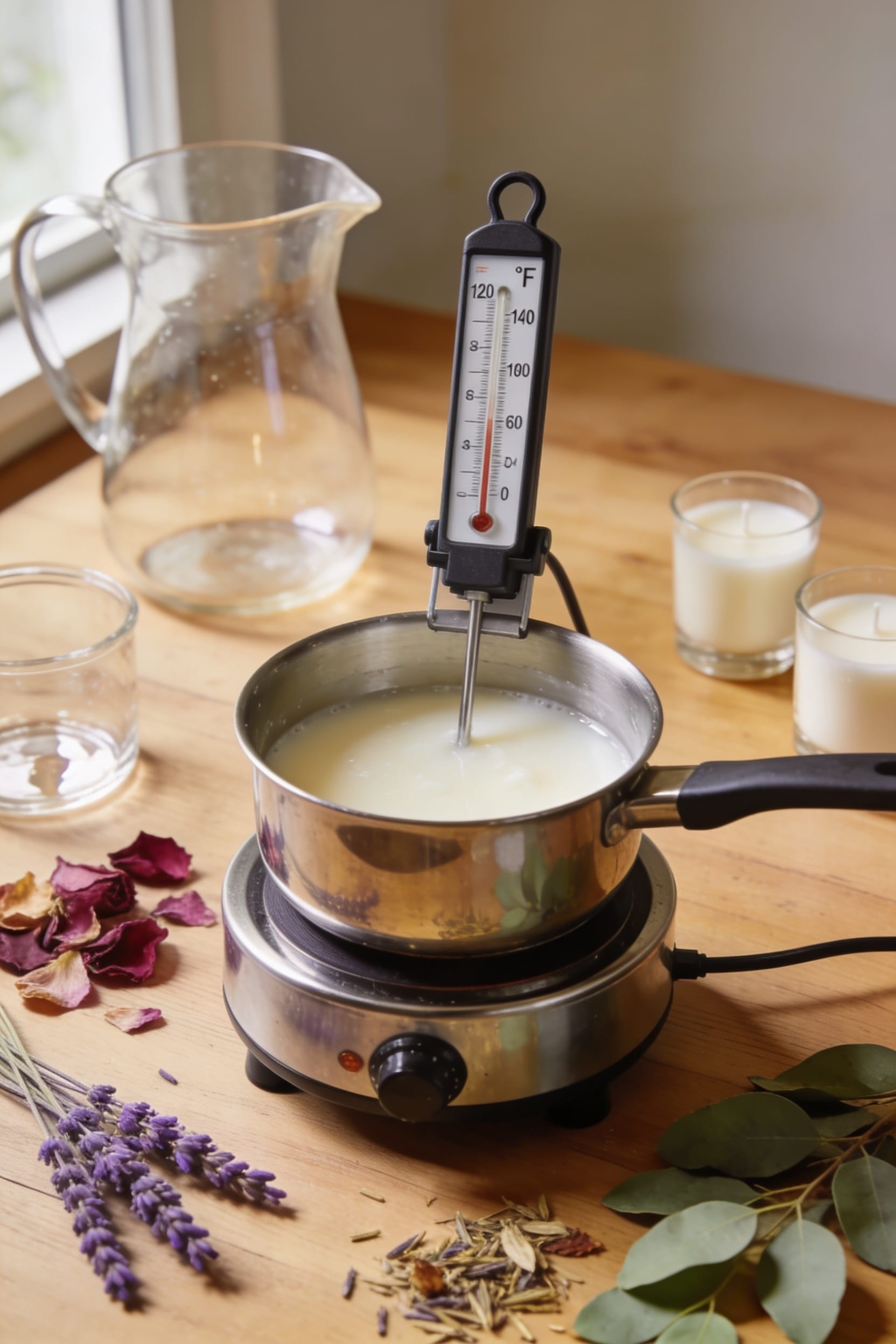
Soy Wax Pour Temperature: The Ideal Range for Smooth Candles

Pour your soy wax between 120–140°F for that glass-smooth finish you’re after—I usually aim for 135°F. Go hotter than 140°F and you’ll get cracks and poor adhesion to the container. Drop below 120°F and you’re looking at rough surfaces and visible layers, which is frustrating after you’ve waited for cure time, the weeks it takes fragrance and wax to fully bond. Preheating your containers to 100–125°F makes a real difference too. The specifics shift depending on whether you’re using pure soy or a blend, so there’s more nuance worth understanding.
Key Takeaways
- The ideal pour temperature for smooth soy candles is 120-140°F, with 135°F targeting a glass-smooth finish.
- Pouring hotter than 140°F causes cracking and poor container adhesion; below 120°F produces rough surfaces.
- Preheat containers to 100-125°F before pouring to improve wax adhesion and reduce surface imperfections.
- Pure soy melts around 120-140°F, while blends average 124°F but can range to 145°F depending on additives.
- Use a digital thermometer with 0.1°F accuracy placed directly in melted wax for consistent temperature measurement.
What Temperature Should You Pour Soy Wax At?
If you’ve ever poured soy wax and ended up with a surface that looked like the moon’s cratered landscape, you’ve probably poured too hot or too cool—and I say this from experience. The sweet spot lands between 120-140°F, though most candle makers target around 135°F for that glass-smooth finish. Pouring hotter than 140°F causes cracking and poor adhesion to your container. Too cool below 120°F? You’ll get rough surfaces and visible layers. Pre-heat your containers to 100-125°F to help the wax adhere properly. Temperature matters more than you’d think, especially when paired with solid wick selection—your wick needs to match both your wax choice and container diameter for even burning. Get the pour temperature right first, then dial in your wick.
Recommended Products

TWENTY POUNDS of PREMIUM FLORIDA SPRING BLOSSOM BEESWAX: 100% Natural, clean burning, sweet floral, with the honey-like fragrance typically associated with beeswax, cosmetic ready and suitable for food contact. Our pure beeswax bars are perfect for a wide variety of applications. Packaged in a one-pound bars (5″ x 3.5" x 1.75").

✔UPGRADE CADNLE CRAFT, BOLDER CREATIONS: With Leerie D6 digital wax melter, you're not just upgrading your equipment—you're upgrading your entire crafting experience. With the 12 lbs capacity to melt up to 48 4oz candles at a glance, without the constant need for refills or multiple melting sessions. D6 Wax Melter is your craft room's new best friend, whether you're a DIY enthusiast looking to make candles for gifts or a small-batch producer aiming to grow your business.

【UPGRADE VERSION】TOAUTO V3 Wax Melter with stainless steel ball valve and upgrade inner tank design -- will not freeze up with wax inside the pot, NOT CLOGGY, NO NEED HEAT GUN ANYMORE! If you have a medium consistency of candle orders, this is well worth it to make things easier.If you are thinking of starting a small candle business this is ideal.
Understand Temperature Differences: Pure Soy vs. Blends
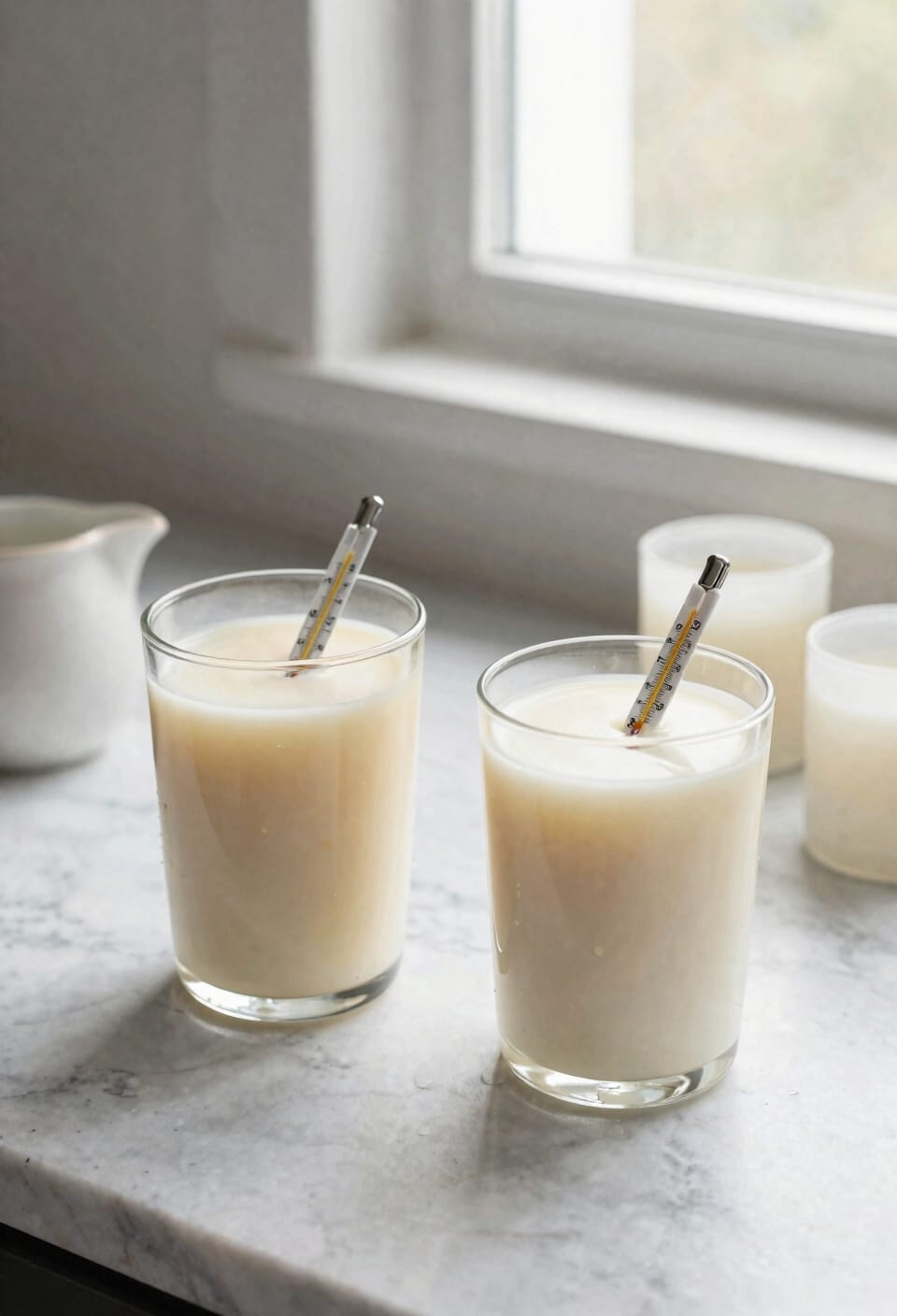
Now that you’ve nailed your pouring temperature, here’s where things get a little trickier: pure soy wax and soy blends don’t behave the same way when they’re melting down. Pure soy—that’s 100% soy with zero wax additives—melts around 120-140°F, making it softer and more forgiving for container candles. Blends, though? They’ve got wax additives mixed in, and that changes everything. Container blends average 124°F but can range up to 145°F depending on their soy composition and what else is in there. I’ve learned this the hard way: pouring pure soy at blend temperatures causes cracking. Know your exact wax type, check the manufacturer specs, and adjust accordingly. It’s the difference between a smooth pour and a frustrating mess.
Pre-heat Containers and Melt Your Wax
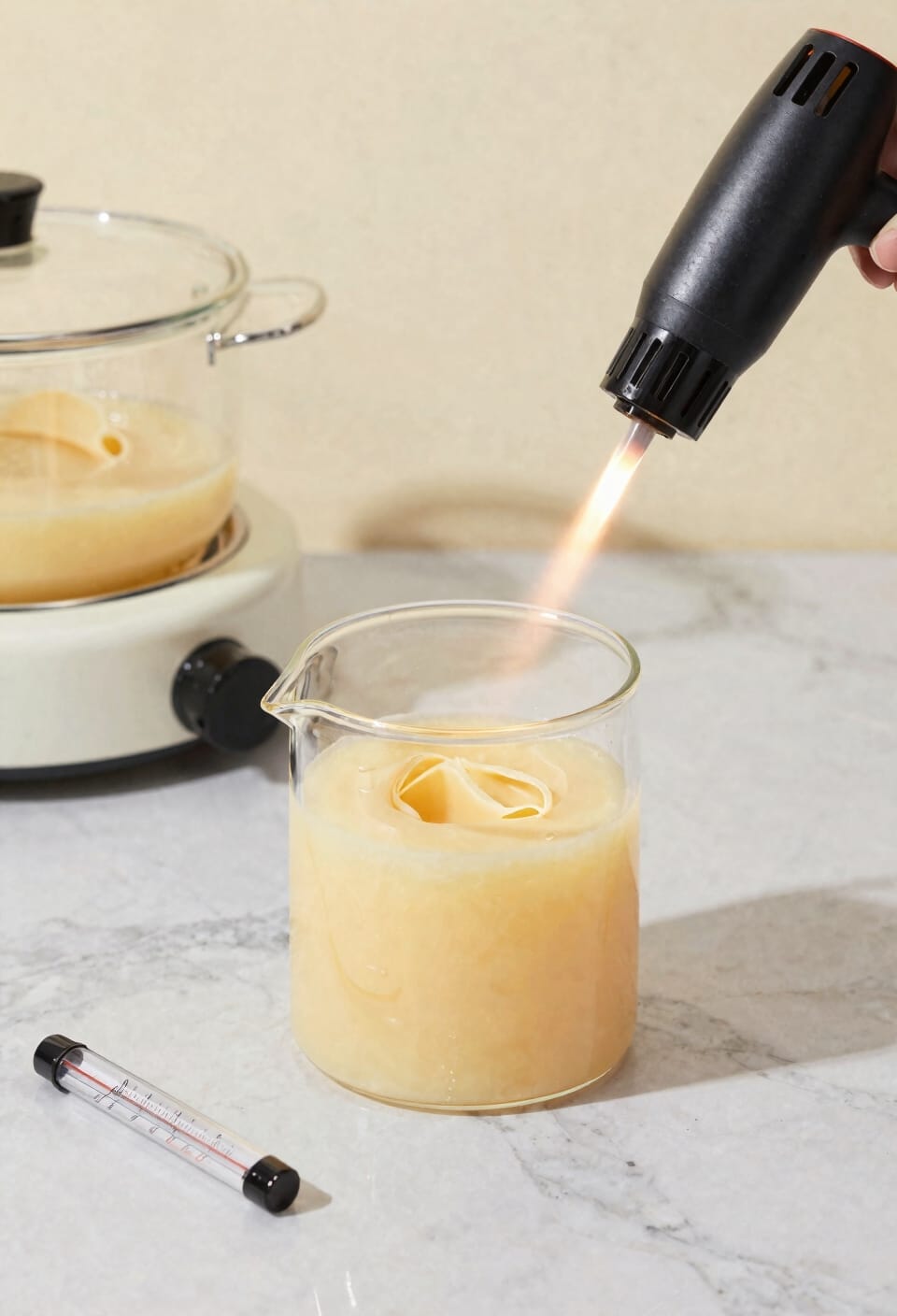
Before you pour a single drop of melted wax, you’ve got two jobs to handle: get your containers warm and get your wax fully liquid. I learned this the hard way after watching perfectly melted wax seize up the moment it hit a cold jar—total waste.
Here’s the thing: preheating containers to 100-125°F improves wax adhesion and reduces imperfections like sinkholes and rough patches. You can use preheat methods like placing jars in a warm oven or running hot water over them. Meanwhile, melt your soy wax to 170-185°F to fully liquefy it. This dual preparation guarantees smooth pours and proper fragrance incorporation. Trust me, those two steps make the difference between amateur and polished candles.
Fragrance Oil Temperature: When and How to Add It
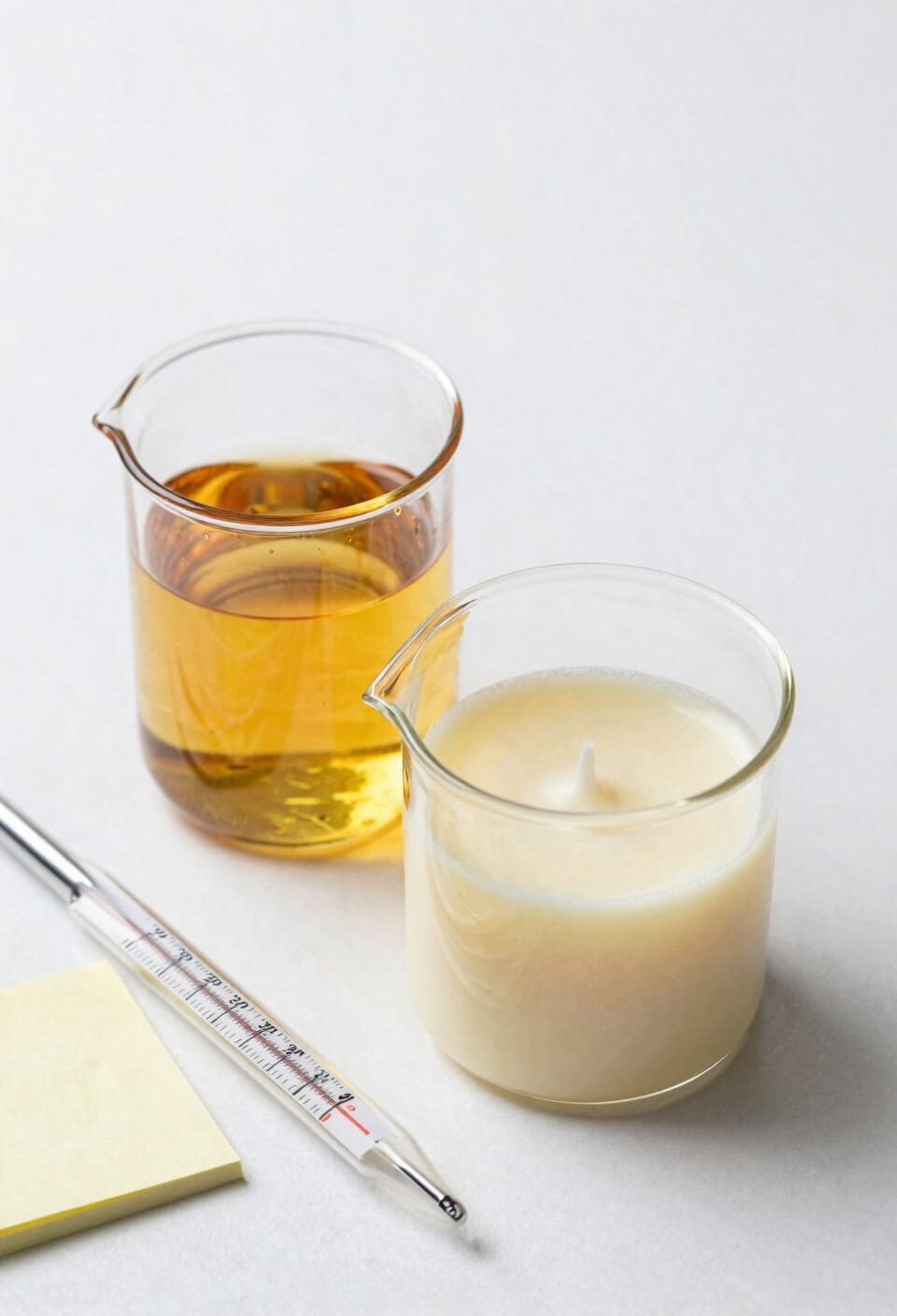
You’ve got your containers warming and your wax melting—now comes the part where a lot of candle makers get nervous, and honestly, that nervousness is justified. Adding fragrance oils at the wrong temperature can literally evaporate your scent before it bonds with the wax, wasting money and effort.
I heat my wax to 170-185°F before adding fragrance oils. That temperature range lets the oils bind properly without flash-evaporating (which is when they burn off into vapor). Once I’ve stirred in my fragrance load—typically 6-10% by weight—I let things cool slightly, avoiding cooling agitation that creates air bubbles.
Then I wait for that wax to drop to 120-140°F before pouring. This prevents fragrance bloom, where oils separate from the wax, creating uneven scent distribution throughout your finished candle.
Avoid Temperature Mistakes and How to Fix Them
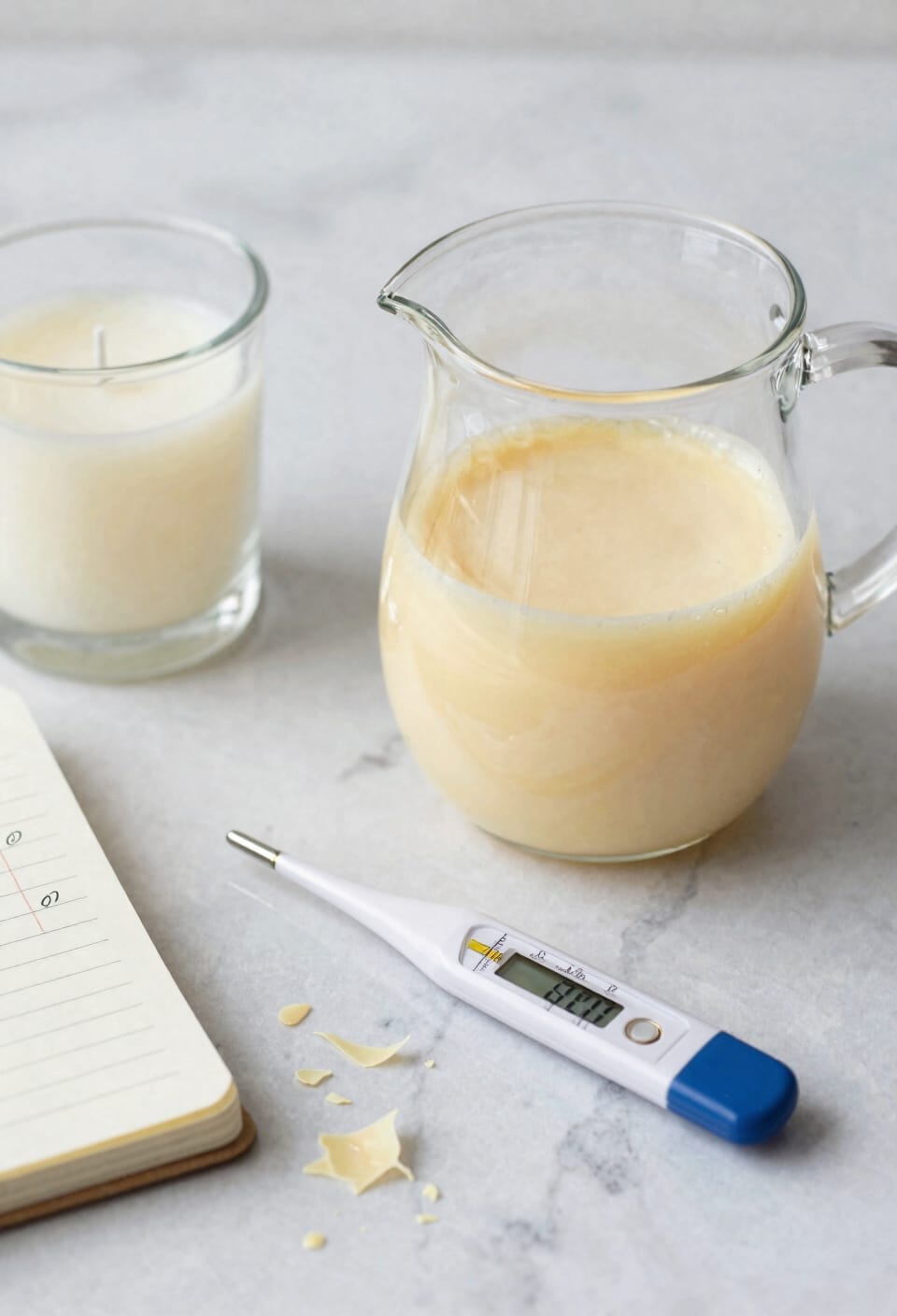
Since temperature control is where most candle makers’ good intentions hit a wall, it helps to know exactly what happens when things go sideways—and more importantly, how to salvage a batch before you dump the whole thing. Overheating prevention starts with respecting that 200°F ceiling—push past it and your wax yellows, fragrance burns off, and you’ve basically ruined the whole pour. If you’ve overheated, cool it down slowly before trying again. For sinkhole repair, that annoying crater that forms as wax cools unevenly, reheat your candle to 170°F and pour a thin layer of wax at 130°F directly into the depression. It’ll bond seamlessly. You’ve got this—most mistakes aren’t permanent.
Recommended Products

Fast Melt 80 Candles at A Time: The TOAUTO WMF-10L digital wax melter can handle a rush order for bulk candle production. It can melt 10 quarts of candle wax and create 80 4-ounce candles at a time, significantly reducing production time and making mass production easier.

【Natural Soy Wax Flakes】Our soy wax flakes comes from organic farms, enriched with natural soy, without additives, harmless and pure, it is your ideal soy wax for candle making.
Get Consistent Results With the Right Thermometer
Getting consistent results comes down to one simple truth: a cheap thermometer will cost you way more than its price tag suggests. I’ve watched good wax go bad because someone trusted a dollar-store dial. You need a digital thermometer with 0.1°F accuracy, ideally spanning 75°F to 400°F. Probe placement matters enormously—stick it directly into melted wax, not touching the container sides, or you’ll get false readings that throw off everything downstream. Do calibration checks monthly using ice water and boiling water to verify accuracy. Look, I can’t overstate this: precise temperature control is what separates beautiful candles from disappointing ones. Invest thirty dollars now. Your future pours will thank you.
Recommended Products

Accuracy and durability you can rely on for years to come: Our temp gun won’t give you wildly inaccurate readings, burn up batteries, or die in the first week. The ennoLogic temperature gun is a professional instrument that will give you accurate readings for years, whether you’re relying on it for food safety inspections of freezers and hot food stations, HVAC work, BBQ, cooking, or home improvement projects. Not for medical use, and not for body temperature.

High Accuracy Dual Measurement System: Non-contact laser measurement and k probe contact measurement with dual laser point orientation and adjustable emissivity(0.1-1.0) for more accurate measurement, the laser thermometer gun can accurately measure the temperature of -40℉-3632℉ (-40-2000℃) with a high accuracy of 2% on average, and k probe measures At 14℉ - 932℉ temperature with a high accuracy of 1.5% on average, you will get a more accurate heat measurement with this industrial thermometer

Complete Candle-Making Toolkit at Your Fingertips:From precision tools like the digital scale to pro tools like the wick trimmer and heat gun, this all-in-one kit covers every step of the process. Whether you’re fixing imperfections, trimming wicks for a clean burn, or measuring out the perfect fragrance ratio, this kit simplifies even the most detailed aspects of candle making.
Frequently Asked Questions
How Long Does Soy Wax Take to Cool From Melting Temperature to Pouring Temperature?
I can’t give you an exact cooling timeframe because the knowledge provided doesn’t specify melting timeframes or cooling rates. You’ll need to monitor your wax’s temperature drop from 170-185°F down to your target pouring range of 120-140°F using a digital thermometer.
Can You Reuse Soy Wax Left Over From Previous Candle-Making Projects Safely?
I’d recommend reusing your leftover soy wax, but you’ll need careful leftover storage to minimize contaminant risks. Strain debris, store in airtight containers away from dust, and inspect for discoloration before remelting.
What Should You Do if Your Soy Wax Has Already Turned Yellow From Overheating?
I’d recommend you discard that batch—overheated, yellowed wax won’t perform well. If you’re reluctant to waste it, you could blend dye to mask discoloration, though the compromised quality remains problematic.
Does Humidity or Room Temperature Affect How Quickly Soy Wax Cools Before Pouring?
I’ve watched soy wax cool like molasses in a blizzard when room humidity and ambient temp drop dramatically. You’ll see cooling accelerate markedly as your room’s humidity rises and ambient temperature plummets lower.
How Much Does Fragrance Oil Weight Affect the Total Pouring Temperature Requirements?
I’ve found that fragrance concentration—typically 6-10% by weight—doesn’t materially alter your pouring temperature requirements. What matters more is oil viscosity; heavier oils demand you maintain that 120-140°F range consistently.
Conclusion
Think of pouring soy wax like sailing—you’ve got to read the conditions before you set out. I’ve watched temperature become the difference between glassy perfection and cratered disappointment. You’re the captain here. Nail your thermometer, respect the numbers, and you’ll navigate to smooth, beautiful candles every time. That’s it. That’s the whole thing.