As an Amazon Associate, we earn from qualifying purchases. Some links on this site are affiliate links at no extra cost to you. Our recommendations are based on thorough research and editorial judgment.

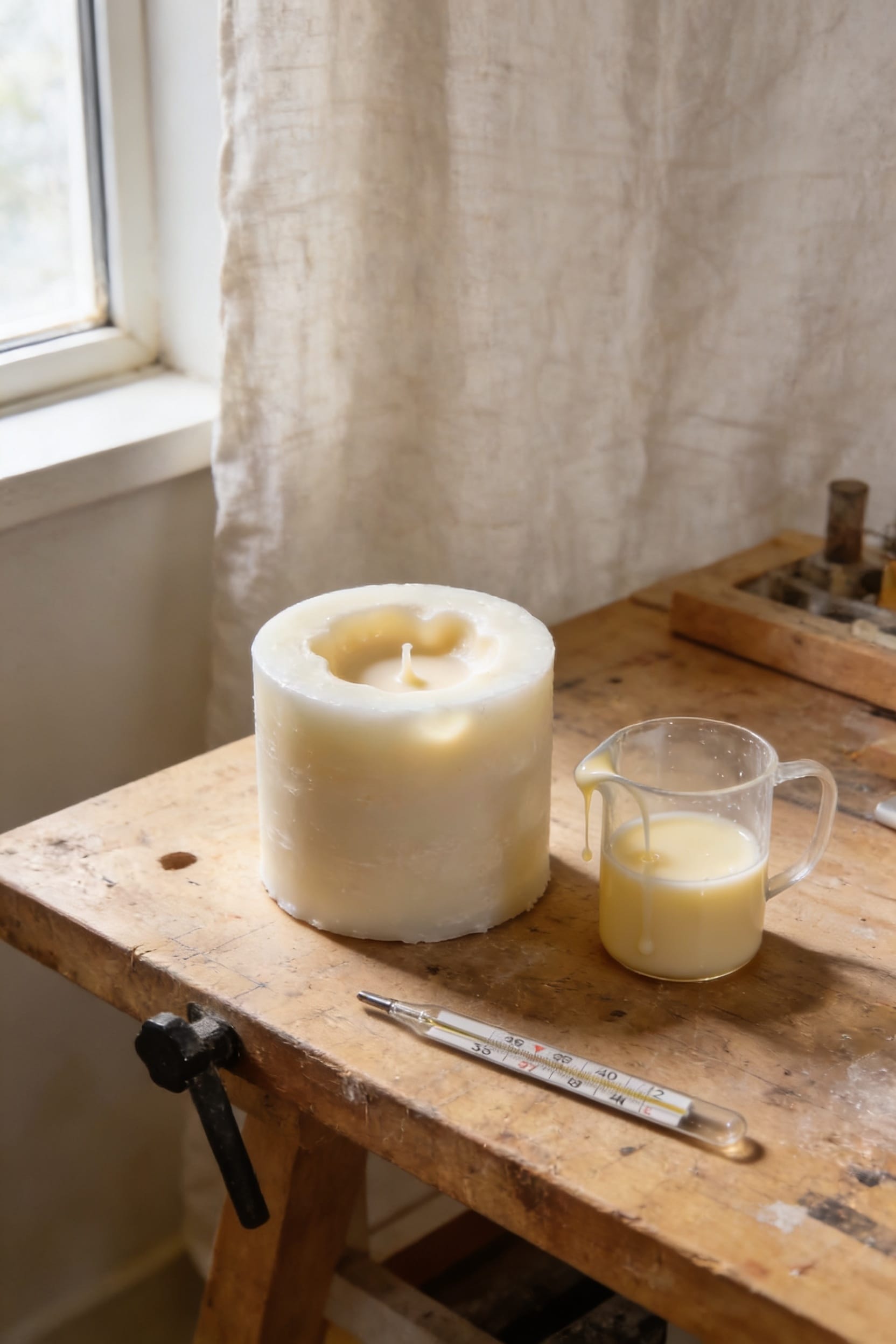
Soy Wax Shrinkage: Why It Happens and When to Do a Second Pour

Soy wax shrinks 5-10 percent as it cools because the oil molecules contract unevenly during solidification—you’ll spot sinkholes around the wick or gaps pulling from container walls. Pour temperatures above 170°F amplify this problem by creating dramatic temperature swings. The fix? Wait for complete cooldown, then do a second pour at around 120°F, filling just the depressions with a thin layer. Temperature control and fragrance timing prevent most shrinkage before it starts, though understanding the why behind it changes how you approach your next batch.
Key Takeaways
- Soy wax shrinks 5-10% during cooling due to oil-rich composition and uneven crystal structure formation during solidification.
- Pouring temperatures above 170°F create dramatic temperature gradients that increase sinkholes, gaps, and surface cratering as wax cools.
- Visual signs of shrinkage include sinkholes around the wick, gaps between wax and container walls, and pitted surfaces.
- Perform a second pour only after complete cooldown, using fresh wax heated to 120°F to fill depressions without new shrinkage.
- Prevent shrinkage by pouring between 120-130°F, maintaining consistent 65-75°F environment temperature, and avoiding rapid cooling conditions.
Recognizing Soy Wax Shrinkage: Sinkholes, Gaps, and Surface Flaws
When you pull a candle from the mold or let it cool on your counter and spot that telltale crater in the top, or worse, a gap running between the wax and the container wall—yeah, that’s soy wax shrinkage doing its thing, and I’m guessing it’s not the first time you’ve seen it. A visual inspection after full cooldown reveals the damage: sinkholes forming around the wick, edges pulling away from walls, or rough, pitted surfaces. Poor edge adhesion means the wax contracted unevenly, pulling inward as it solidified. These flaws signal that something went wrong during cooling—either the pour temperature was too high, the room was too cold, or both. The good news? You’ll catch these issues early enough to grab that second pour opportunity.
Recommended Products

CANDLE MAKING SUPPLY KIT: 50lbs soy wax, 500 cotton wicks, 500 glue stickers, 10 metal wick holders. Includes Everything you need to make your own candles.

NATURAL SOY WAX BEADS - Best candle making supplies make the best soy candles! These safe, ethically produced, microwavable and paraffin-free soy wax beads are smooth and creamy in appearance, perfect for votives, pillars, tealights, tarts and melts.

All-In-One Starter Kit – Everything you need to dive into candle making! Our Hearth and Harbor soy candle wax for candle making includes 45 lbs of smooth soy wax flakes, 100 cotton wicks, 100 adhesive stickers, and 2 centering tools. Perfect for beginners or seasoned DIYers.
How to Fix Shrinkage With a Second Pour
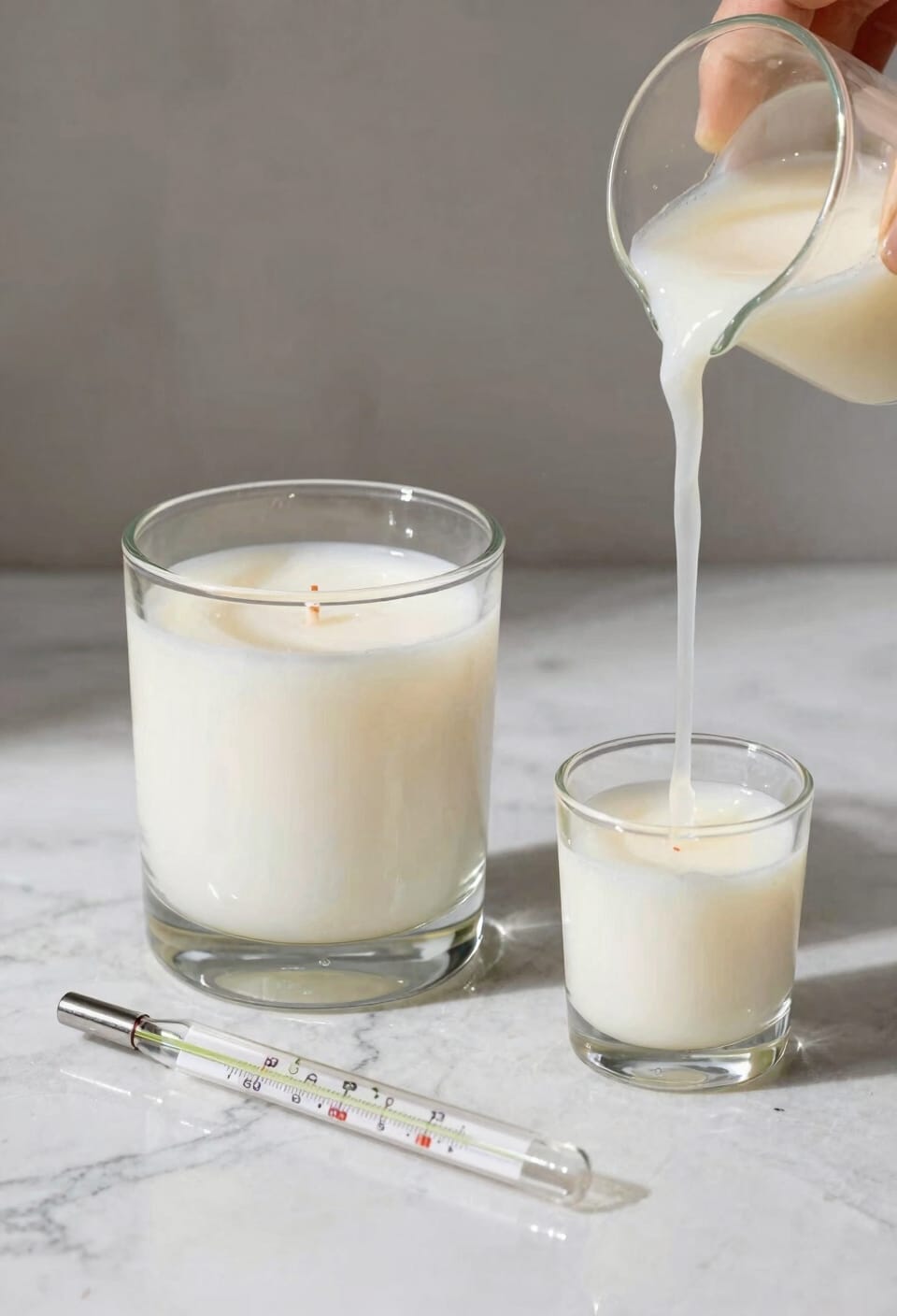
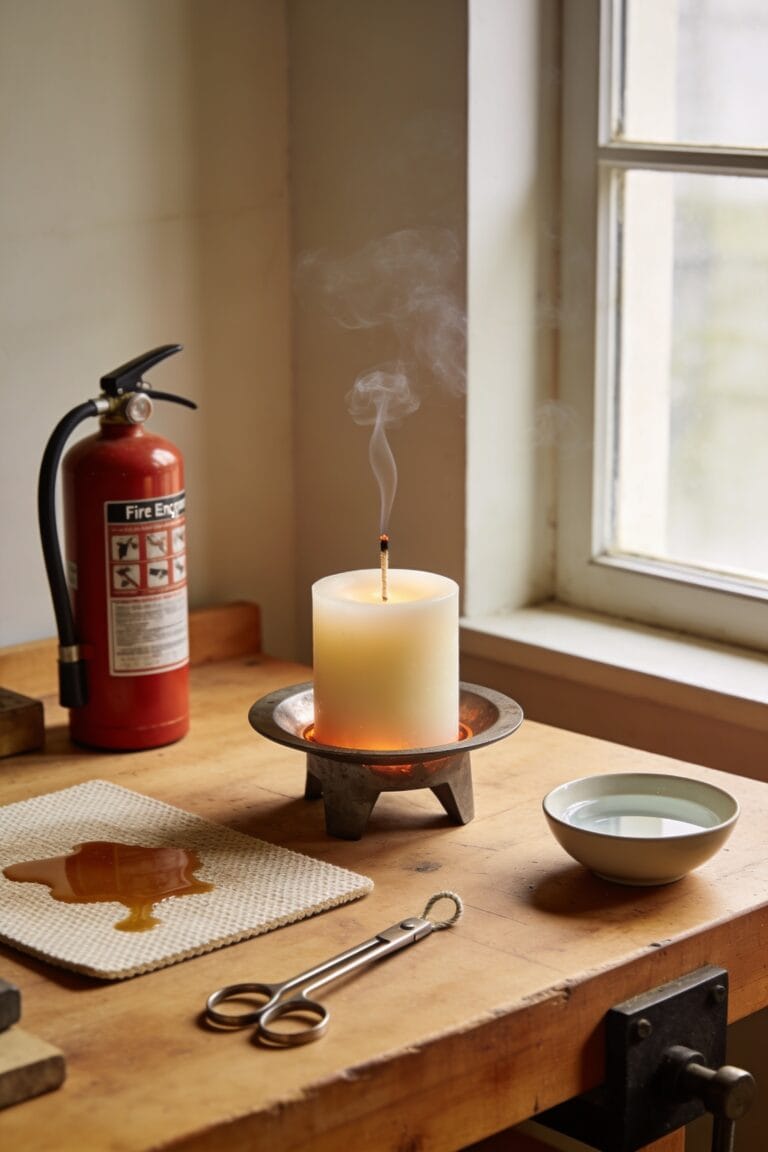
Now that you’ve identified those sinkholes and gaps, here’s the good news: you’re not throwing the candle away, because a second pour is your cleanup crew. Here’s the thing: wait until your candle’s completely cooled—I’m talking room temperature—before you touch it. Check that wick centering is still solid; if it’s shifted, gently adjust it before pouring again. Your topping technique matters here. Melt fresh soy wax to around 120°F, slightly cooler than your first pour to prevent new shrinkage. Slowly fill those depressions, letting the wax bond with what’s already set. You’ll likely need just a thin layer, not a full re-pour. Let it cure again, and you’ve got yourself a salvaged candle.
Recommended Products

【UPGRADE VERSION】TOAUTO V3 Wax Melter with stainless steel ball valve and upgrade inner tank design -- will not freeze up with wax inside the pot, NOT CLOGGY, NO NEED HEAT GUN ANYMORE! If you have a medium consistency of candle orders, this is well worth it to make things easier.If you are thinking of starting a small candle business this is ideal.

NATURAL SOY WAX BEADS - Best candle making supplies make the best soy candles! These safe, ethically produced, microwavable and paraffin-free soy wax beads are smooth and creamy in appearance, perfect for container candles, tealights and melts.

COMPLETE POTTERY + CANDLE MAKING SET: Includes all pottery sculpting & candle making supplies you need to easily craft a beautiful custom candle at home. The perfect beginner arts & crafts gift, hobby idea, and romantic date night surprise.
Why Your Soy Wax Shrinks
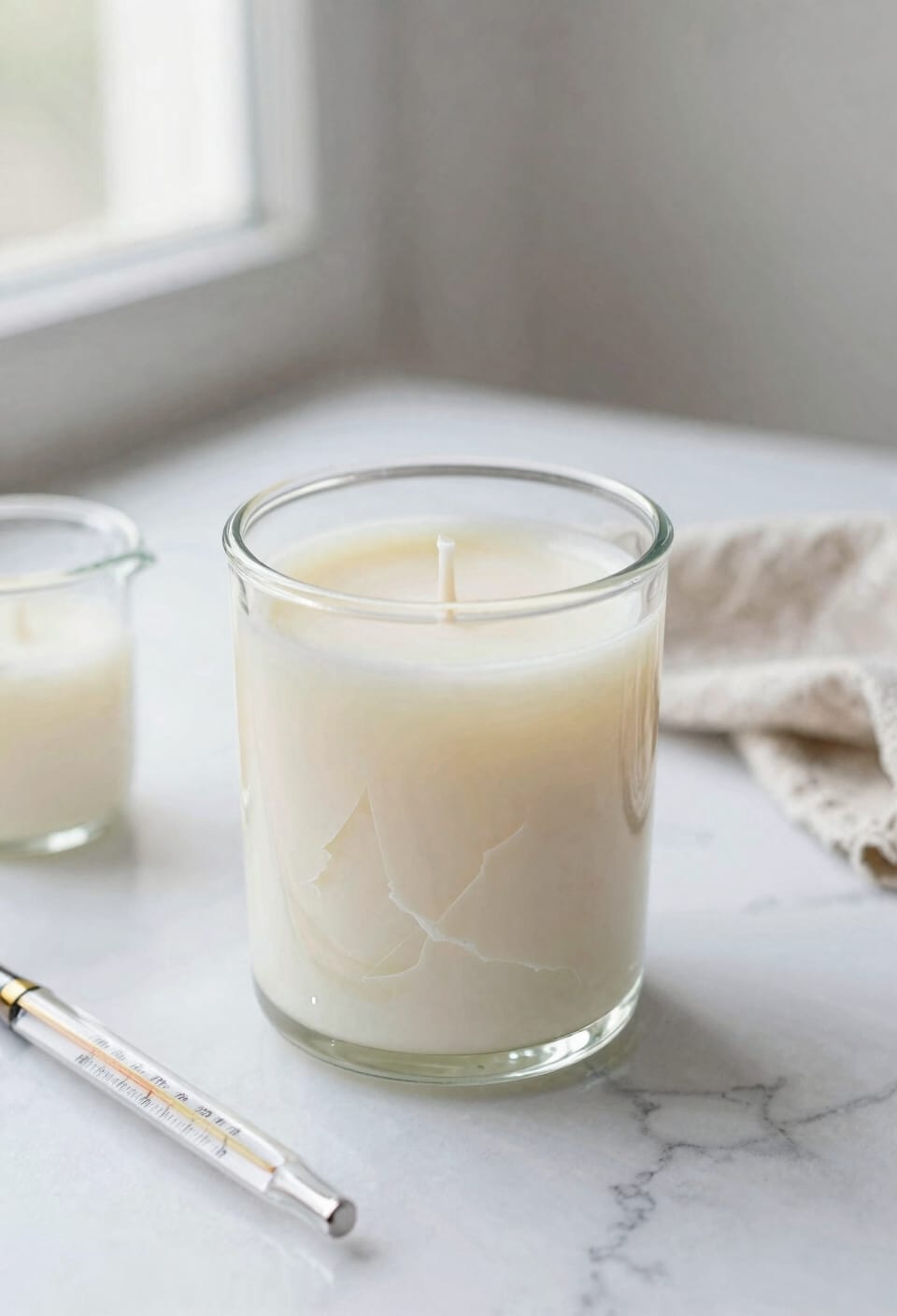
Because soy wax softens as it cools, it doesn’t just solidify the way harder waxes do—it actually pulls away from itself, shrinking anywhere from 5 to 10 percent as that volume loss happens. Here’s the thing: soy’s soybean composition makes it naturally pliable and oil-rich, so as the crystal structure forms during cooling, those oil molecules contract unevenly. You’re looking at two distinct phases—initial shrinkage right after pouring, then secondary contraction as everything cools fully. Add high pouring temperatures into the mix, and you’ve amplified that swelling-then-contracting cycle dramatically. The wax expands when hot, then compresses as it solidifies, leaving sinkholes and gaps. Compare this to beeswax’s 1-2% shrinkage rate, and you’ll see why soy demands more attention and patience from you.
Recommended Products

CANDLE MAKING SUPPLY KIT: 30lbs soy wax, 300 cotton wicks, 300 glue stickers, 6 metal wick holders. Includes Everything you need to make your own candles.

NATURAL SOY WAX BEADS - Best candle making supplies make the best soy candles and melts! These safe, ethically produced, microwavable and paraffin-free soy wax beads are smooth and creamy in appearance, perfect for tarts, tealights and melts.

All-In-One Starter Kit – Everything you need to dive into candle making! Our Hearth and Harbor soy candle wax for candle making includes 25 lbs of smooth soy wax flakes, 100 cotton wicks, 100 adhesive stickers, and 2 centering tools. Perfect for beginners or seasoned DIYers.
Temperature and Fragrance: Hidden Shrinkage Triggers
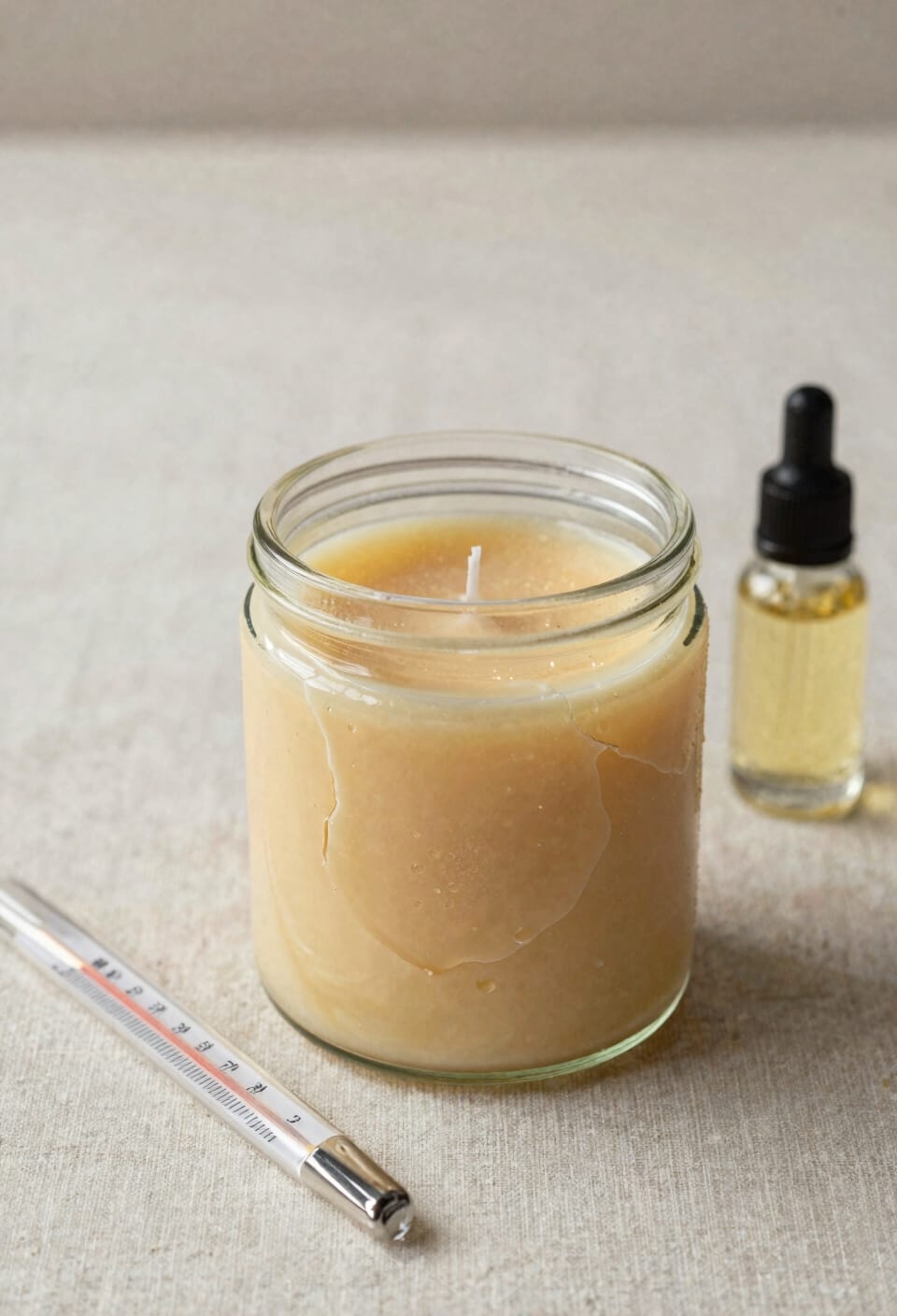
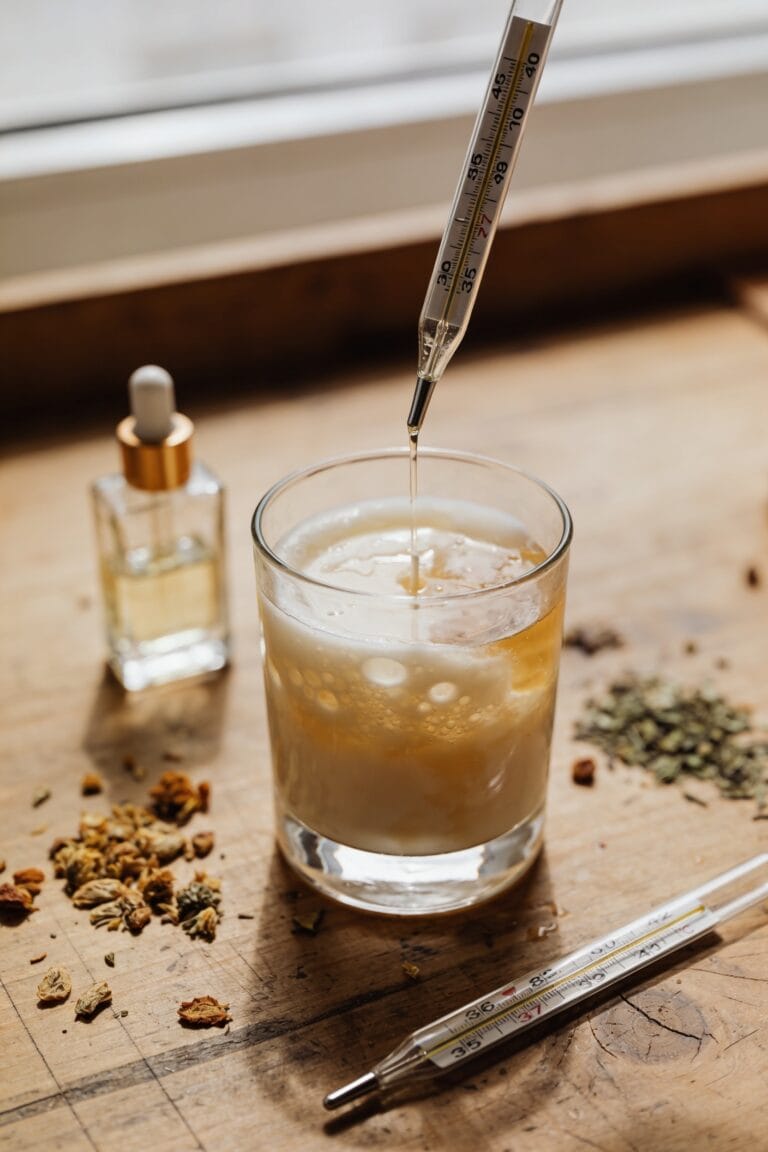
Two culprits hiding inside your candle pour are cranking up shrinkage without you even realizing it: temperature and fragrance oils. Pour your soy wax too hot—say, above 170°F—and you’re setting yourself up for dramatic temp gradients where the top solidifies while the bottom’s still molten. That creates hollow centers and nasty gaps. Fragrance interaction makes things worse. I’ve learned the hard way that adding fragrance oils at the wrong temperature accelerates contraction markedly. You want to add them around 170°F using candle-specific oils, not just any fragrance you find lying around. Keep your pour temperature between 120-130°F, and you’ll notice fewer sinkholes and wrinkles. It’s a small adjustment that prevents major disappointment later.
Recommended Products

✔UPGRADE CADNLE CRAFT, BOLDER CREATIONS: With Leerie D6 digital wax melter, you're not just upgrading your equipment—you're upgrading your entire crafting experience. With the 12 lbs capacity to melt up to 48 4oz candles at a glance, without the constant need for refills or multiple melting sessions. D6 Wax Melter is your craft room's new best friend, whether you're a DIY enthusiast looking to make candles for gifts or a small-batch producer aiming to grow your business.

Large capacity: The wax melter can melt 4.5 Qts of candle wax and make 18 8-ounce candles at a time, greatly reducing your production time and making mass production of candles so easy.

What you'll get: The candle making kit includes a digital wax melter, 3 colored dyes, 3.5-inch candle wick, 6-inch candle wick, 2 spoons, a candle wick placement tool, 4 candle wick holders, one measuring cup and detailed instructions make it ideal for beginners.
Prevent Shrinkage: Temperature, Cooling, Additives
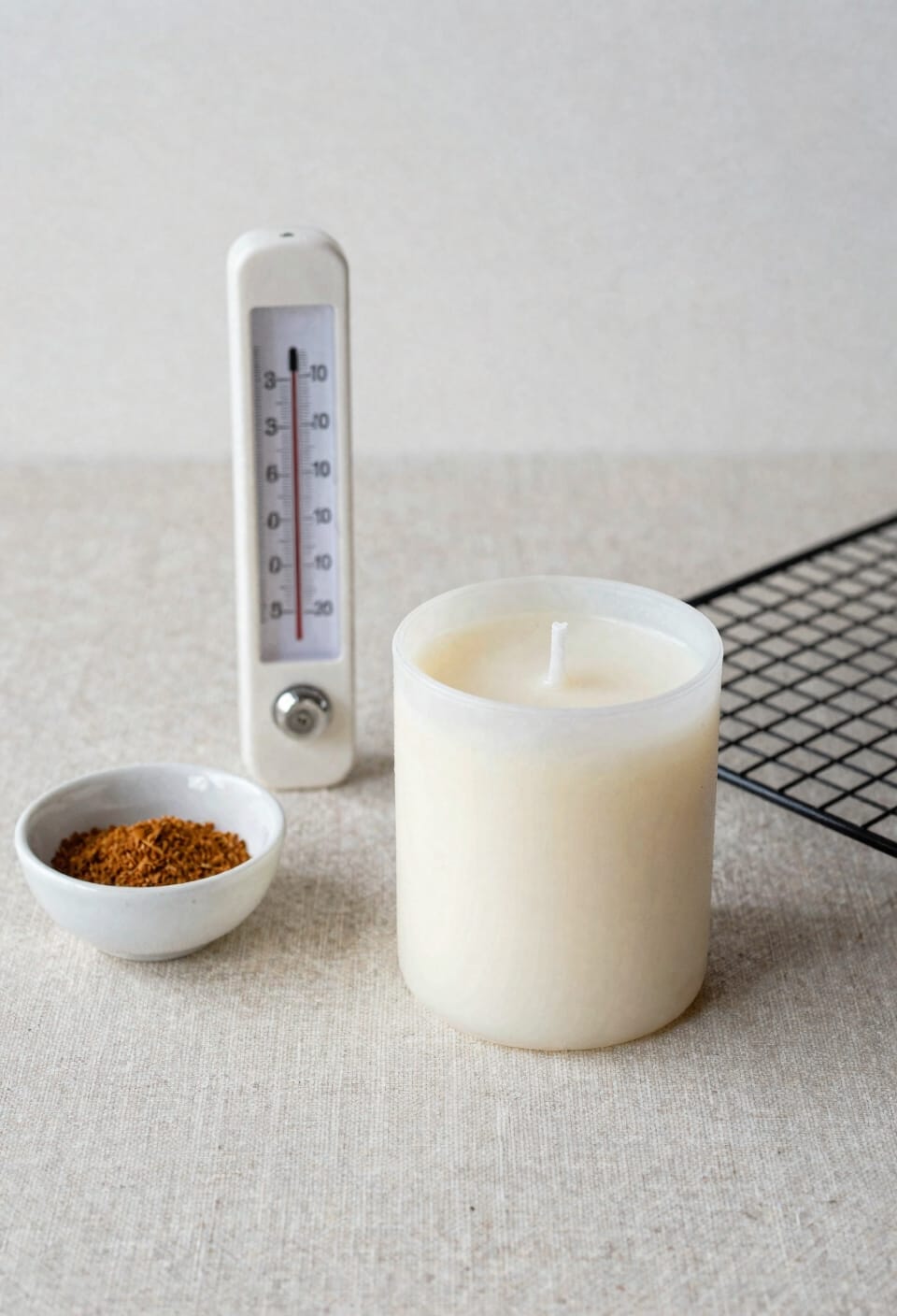
Keep your environment consistently cool, around 65-75°C, to prevent rapid contraction. If you’re using additives like stearic acid for hardness, understand lipid compatibility; not all additives play nicely together without amplifying shrinkage. Go light on microwaxes. A second pour at slightly lower temperature fills remaining voids without creating fresh shrinkage problems. You’ve got this.
Recommended Products

PREMIUM COSMETIC GRADE EMULSIFYING WAX NF: Is a Non-GMO gentle emulsifying and conditioning agent, perfect for both hair and skin applications. It leaves skin feeling silky smooth and conditions hair like no other emulsifier available. Leaving skin with a lovely, silky and powdery feel, emulsifying wax NF is a must-have for luxury cosmetic formulations. 100% natural plant derived.

Stearic Acid Wax 1Kg

Direct Candle Supply’s stearic acid is a cosmetic grade palm based, triple pressed stearic acid.
Frequently Asked Questions
How Does Soy Wax Shrinkage Compare to Other Wax Types Like Paraffin and Beeswax?
I’ve found soy wax shrinks 5-10%, similar to paraffin but more than beeswax’s 1-2%. However, soy offers better scent throw and burn time, making the shrinkage trade-off worthwhile for quality candles.
What Is the Typical Shrinkage Rate Percentage for Soy Wax Candles?
You might think soy wax shrinks minimally, but I’m telling you it doesn’t. I’ve found soy wax typically shrinks 5-10%, which is our standard shrinkage range—quite significant compared to beeswax’s mere 1-2% typical percentages.
Can Fragrance Oils Be Added After Pouring to Reduce Shrinkage Issues?
I’d advise against post-pour scenting as fragrance layering after pouring won’t reduce shrinkage. You’ll want to add fragrance oils at 170°F during the initial pour using candle-specific oils to minimize contraction issues effectively.
How Long Should Soy Wax Cool Before Performing a Second Pour?
I’d recommend you let your soy wax cool completely before performing a second pour. I’ve found that waiting for full cool-down guarantees proper pour timing and prevents new shrinkage issues from forming.
Does Container Size or Shape Affect How Much Soy Wax Shrinks?
Yes, container geometry and thermal conductivity markedly influence shrinkage rates. Larger containers cool more slowly, reducing uneven contraction, while narrow vessels experience faster cooling and greater shrinkage issues.
Conclusion
Look, I’ve poured enough soy candles to fill a medieval castle’s worth of sconces, and shrinkage still catches me off guard sometimes. You’ve got the tools now—patience, proper temperatures, maybe a second pour in your back pocket. Master these techniques and you’ll transform those sinkholes into flawless surfaces. Your candles deserve it. You deserve it.