As an Amazon Associate, we earn from qualifying purchases. Some links on this site are affiliate links at no extra cost to you. Our recommendations are based on thorough research and editorial judgment.

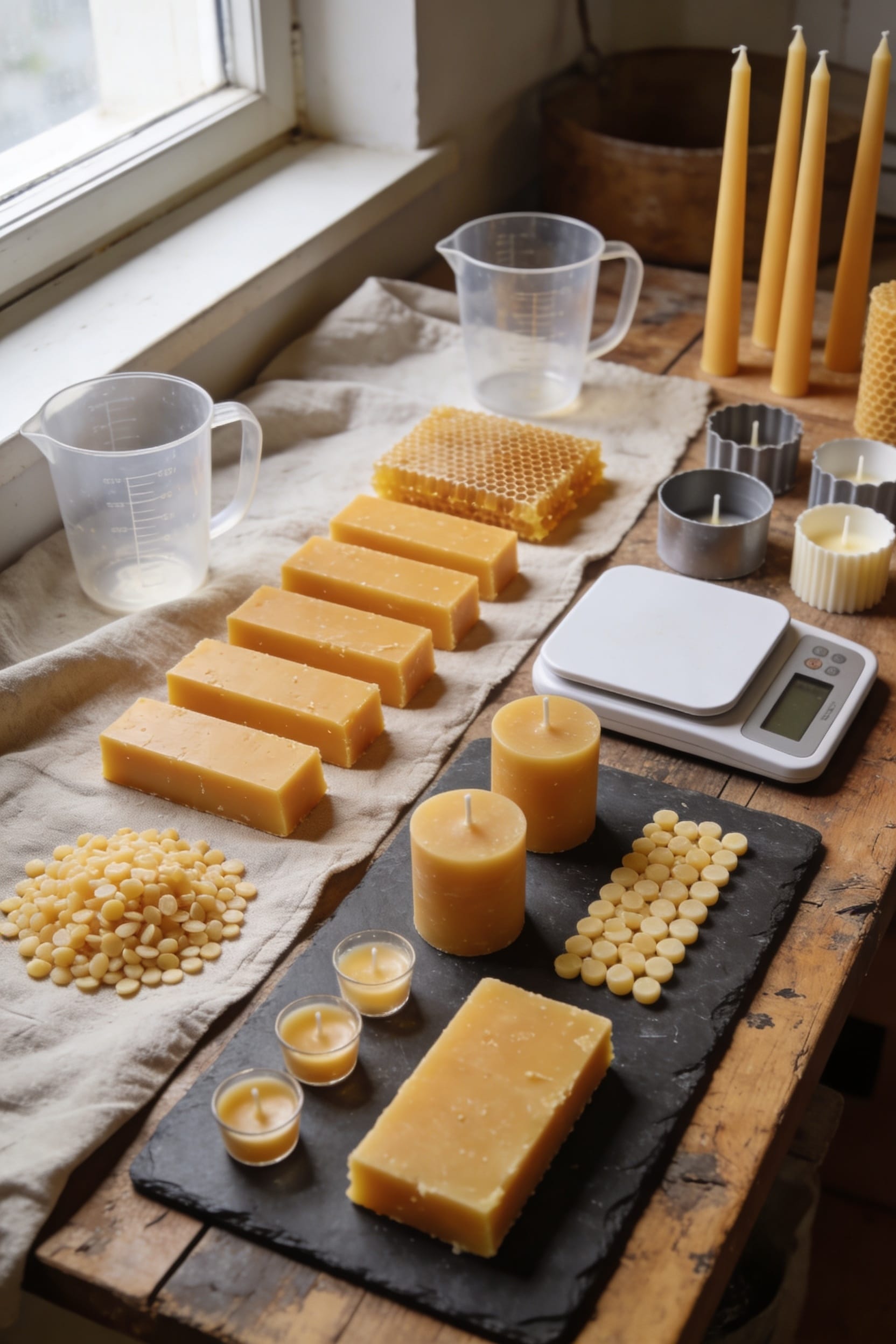
How Much Beeswax Do You Need for Candles? Quantities by Size

One pound of beeswax gives you 24 usable ounces—not the 16 you’d expect from solid weight. That means you can make two 12-ounce candles, three 8-ounce jars, or six 4-ounce containers per pound. The difference comes down to density; melted wax takes up less space than solid beeswax. Before you start pouring, verify your actual jar capacities since manufacturers vary, then weigh everything on a precision scale—never eyeball it. Getting these basics locked in prevents the frustrating shortfalls and mishaps that’ll cost you money and time.
Key Takeaways
- One pound of beeswax yields 24 usable ounces, making two 12-ounce candles, three 8-ounce jars, or six 4-ounce containers.
- Fragrance load percentage affects total wax needed; 6% fragrance load on one pound requires approximately 1.44 ounces of scent oil.
- Use precision digital scales to weigh beeswax, fragrance oils, and additives; never measure by eye to avoid shortfalls.
- Common jar sizes are 4-ounce (testing), 8-ounce (versatile), and 12-ounce (premium); verify actual container capacity before committing to bulk purchases.
- Plan for 10–20% extra beeswax beyond your calculated needs to account for testing, sinkholes, uneven cooling, and pouring mistakes.
Start Here: 1 Pound of Beeswax Yields 24 Ounces
One pound of beeswax doesn’t actually give you a full pound of usable candle wax, and I wish someone had told me that before I melted down my first batch and wondered where half my material went. Here’s the thing: beeswax conversion is straightforward once you understand it. One pound yields 24 ounces of actual wax volume—that’s the volume clarification that changes everything. The remaining ounces account for density differences between solid beeswax and melted wax. So when you’re planning your candles, work with that 24-ounce figure, not the original 16 ounces. This means you’ll get two 12-ounce candles, three 8-ounce jars, or six 4-ounce containers per pound. Now you know exactly what you’re working with before you fire up the heat gun.
Quick Chart: How Many Candles per Jar Size
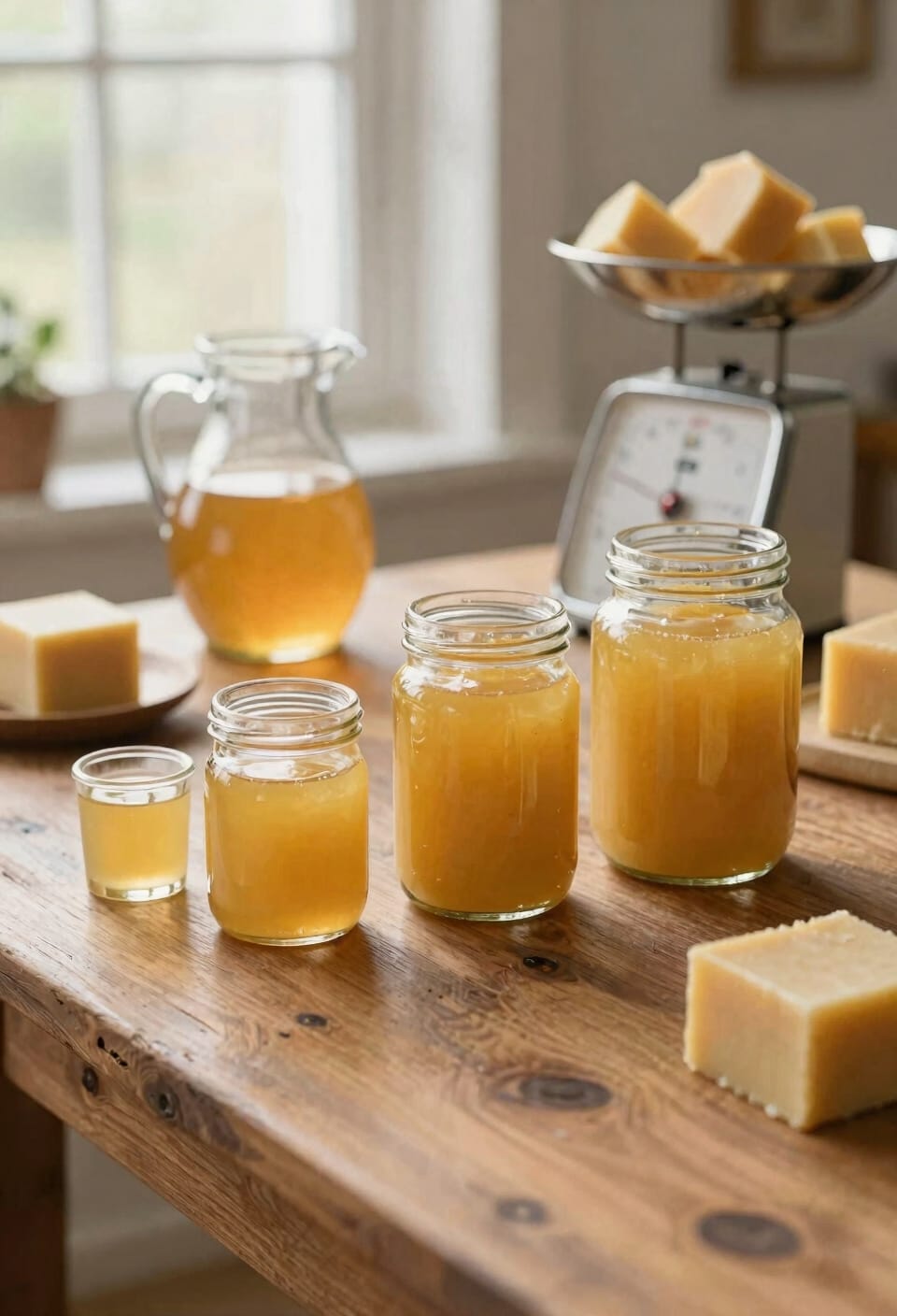
Now that you know you’re working with 24 ounces of usable wax from each pound of beeswax, the next move is matching that volume to your actual containers—because picking the wrong jar size is how you end up with either half-empty candles or wax pooling all over your workspace. Here’s what I’m working with: two 12-ounce jars, three 8-ounce jars, or six 4-ounce jars per pound. I verify each container’s actual capacity first, since manufacturers sometimes oversell. Wick sizing matters here too—your jar diameter determines wick thickness, which affects burn quality. Consider colorants compatibility with beeswax, especially if you’re adding dyes. Plan for 10–15% extra wax for inevitable mishaps and testing.
Recommended Products

45 LB Case All-natural container blend that is predominately coconut and fortified with vegetable waxes. The wax adheres with a smooth finish and receives color well. Coconut 83 has an excellent fragrance release (cold and hot throw) with a cooler burn profile when dialed in with balanced wicks.

NATURAL SOY WAX BEADS, PARAFFIN-FREE: Freedom Soy Wax Beads are made from USA Midwest-grown soybeans, natural, paraffin-free, beeswax-free, and free of animal products. Soy burns cleaner and longer than paraffin, producing a safer candle your household can enjoy with confidence. Carefully sourced and proudly made in America for candlemakers who care about what goes into every pour and every burn.

FOR BEGINNERS AND EXPERTS ALIKE: Wax in bead form is the hassle free way to make soy candles – wax beads quickly melt, so you can pour the candle wax and start your next batch easily! Ideal for those who are new to DIY candles.
Calculate Beeswax for Any Batch Count
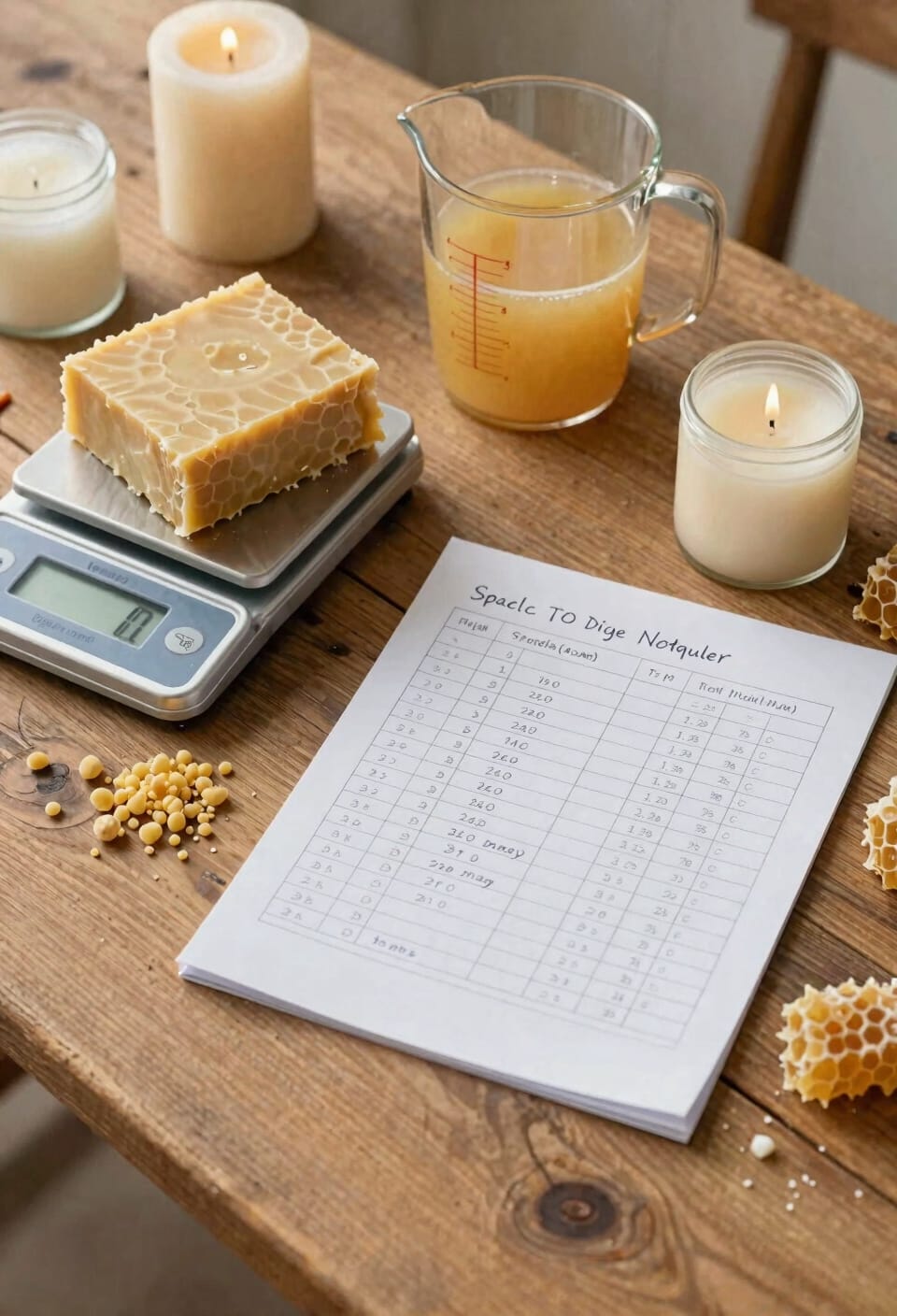
Once you’ve locked in your container size, the math gets a lot friendlier—because scaling a recipe isn’t about reinventing the wheel, it’s just about multiplying what you already know works. Need four 8-ounce candles instead of two? That’s 32 ounces total wax, or 2 pounds of beeswax. Want ten 4-ounce jars? Do the math: 40 ounces divided by 16 equals 2.5 pounds.
Here’s where beeswax sourcing matters—quality suppliers deliver consistent density, which keeps your calculations reliable. Batch timing affects your workflow too. I’d recommend pouring in smaller increments rather than melting everything at once. You’ll nail temperature control, reduce waste, and honestly, it’s less stressful. Fragrance load percentages stay the same regardless of batch size. Just multiply your total wax ounces by your preferred load decimal.
Recommended Products

Yellow Beeswax is a natural wax formed by honey bees. The wax is discarded by the worker bees in or at the hive. The hive workers collect it and use it to form cells for honey storage. It becomes colored yellow from the pollen. Our 100% pure natural yellow beeswax is in pellet form, which makes working with it easy. Save time with no messy clean up from having to grate it.


🐝[Sustainable Alternative] Natural and sustainable alternative to traditional hunny bees wax melts. These melts offer a clean burn and a warm, inviting scent that's perfect for any home. 50 lbs white beeswax pellets available to fulfill all needs.
How Fragrance Load Changes Your Beeswax Needs
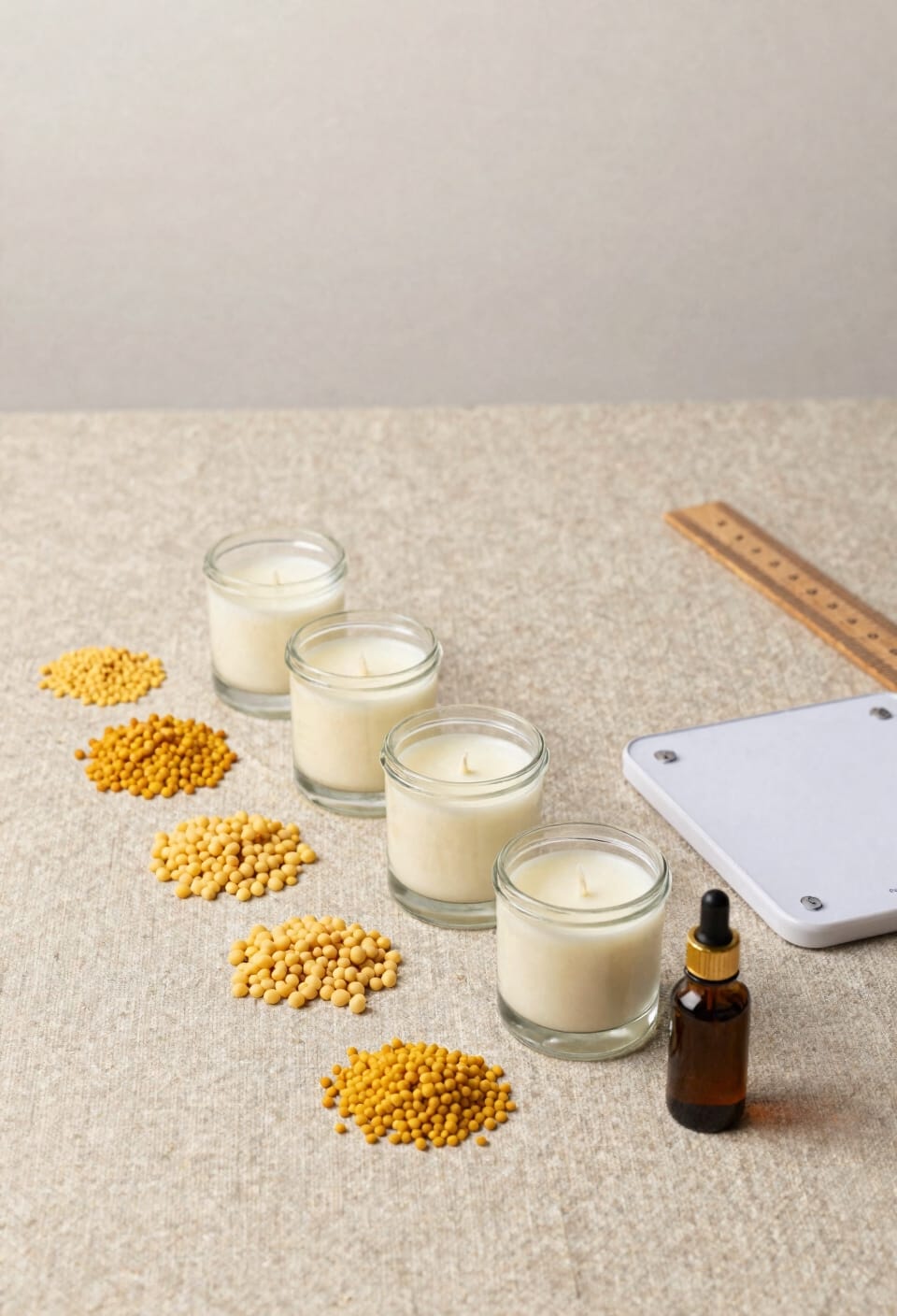
fragrance load—the percentage of scent oil you add to your melted wax—doesn’t just change how your candle *smells*, it actually changes how much beeswax you need to buy in the first place.
I learned this the hard way. When you increase fragrance load from 6% to 10%, you’re adding weight that displaces wax volume. That means fewer candles per pound. You’ll also need to recalculate fragrance retention—how well the scent stays locked in your wax during curing and burning—because heavier loads affect wick sizing too.
A thicker wick handles higher fragrance loads better. I’d recommend testing at 6% first, then scale up gradually. Track everything. Your future batches depend on it.
Recommended Products
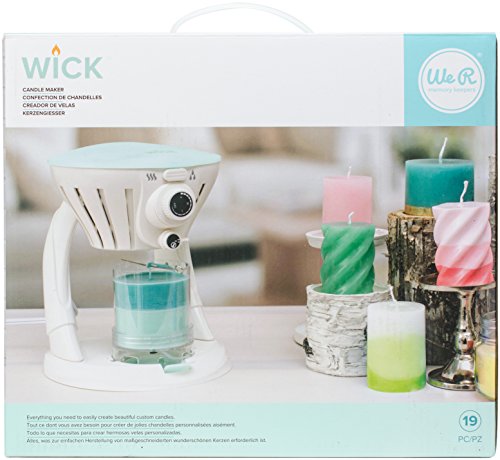
COMES WITH EVERYTHING YOU NEED: This kit includes 3 lbs of Paraffin Wax, 72 inches of cotton wick, 3 candle rubber stoppers, pigment (red, yellow, blue, white), 3 candle molds with base, and a color mixing chart
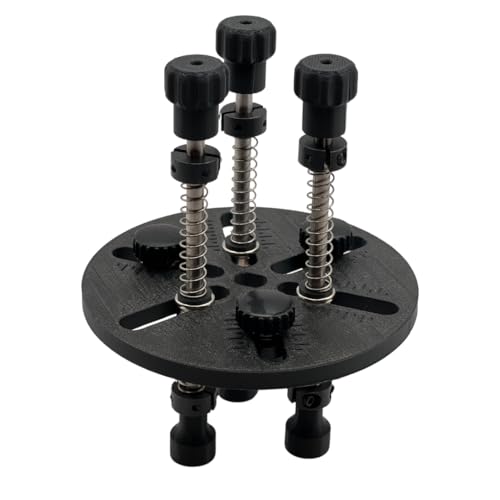
✔ ADJUSTABLE FOR ANY CANDLE JAR – Expandable arms fit jar openings from 2-1/2″ to 4-5/8″ wide, making it perfect for single, double, or triple wick candles in nearly any container.

Beeswax candle kit: Orange Wax Melter with LED Display 1pcs,5lbs natural beeswax,8in candle wicks 30pcs,6in candle wicks 30pcs,3.5in candle wicks 30pcs,beeswax wicks 30pcs,wick stickers 100pcs,wick holder 10pcs,measuring cup 1pcs,manual instruction 1pcs.Includes Everything you need to make your own candles.
Pick the Right Jar: 4-oz, 8-oz, or 12-oz
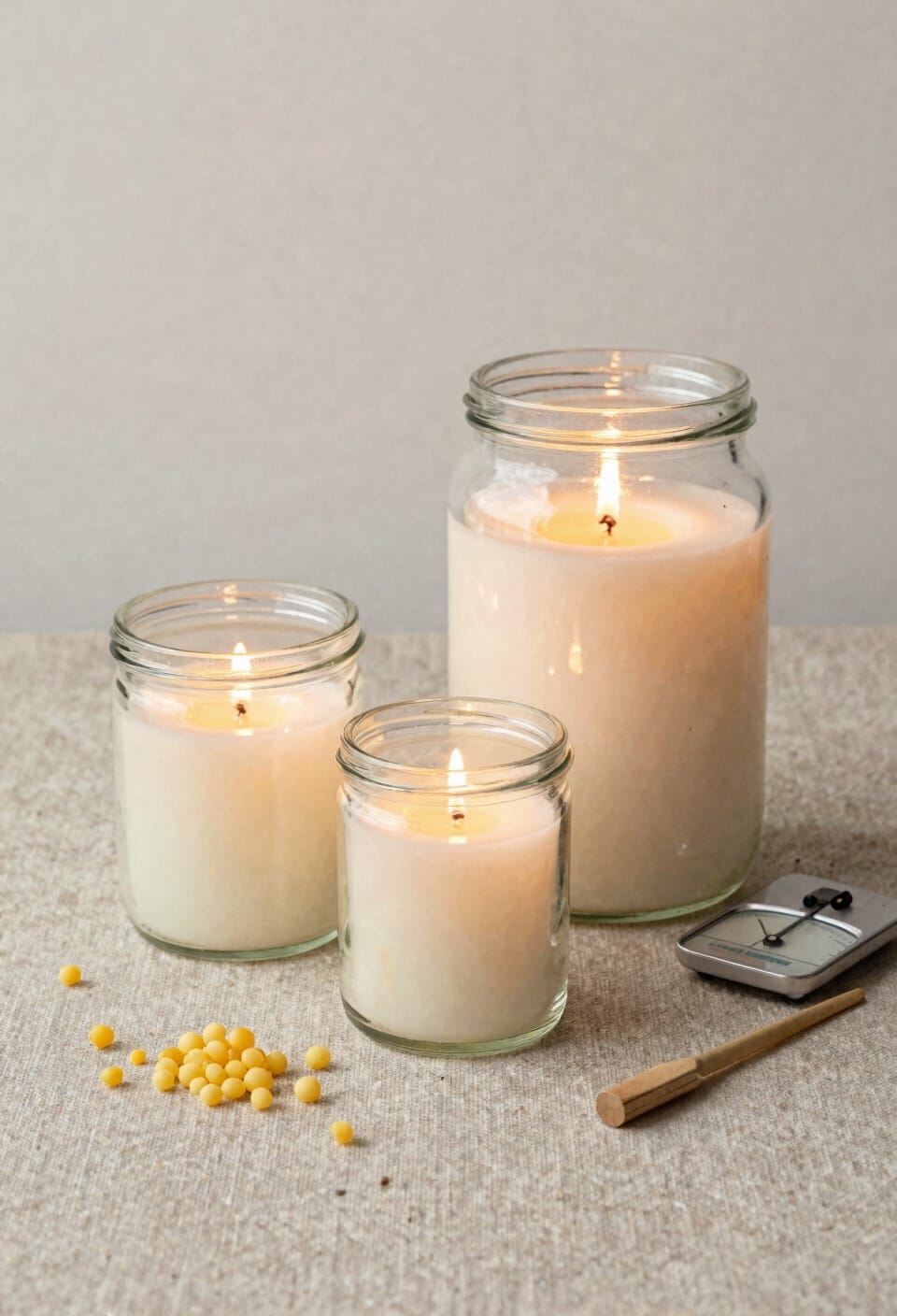
Three jar sizes dominate the candle-making world, and honestly, which one you pick matters way more than it seems at first. Your jar selection affects everything—from how much beeswax you’ll need to how your finished candle actually performs. Four-ounce jars are perfect for testing new fragrance loads or gifting. Eight-ounce containers hit the sweet spot for most home makers; they’re versatile, affordable, and offer reasonable burn time without excessive waste. Twelve-ounce jars demand more wax but create impressive, long-lasting candles that justify premium pricing. Before committing, verify lid fit on your chosen containers and consider label design space. Mismatched lids look amateur. Think through burn time expectations too—larger jars mean longer enjoyment, which some customers prefer despite higher costs.
Recommended Products

【Glass Candle Vessel】 30 Pcs empty candle containers, 30 Pcs jars with bamboo lids, The perfect container for making candles.

Versatile Sizes: these mason jar are about 3 different sizes, 4 pcs 3.4 x 6.58 inches in bottom diameter and height, and the capacity is about 25oz, 8 pcs 3 x 4.8 inches in bottom diameter and height, and the capacity is about 12oz, 12 pcs 3.2x 3.5 inches in bottom diameter and height, and the capacity is about 10oz, No more buying separate packs, enjoy ultimate versatility for organizing your kitchen, pantry, and craft room

Package Include: you will get 12 pack soy wax citronella candles come with clear jar, which are made from natural soy wax and essential oils, can effectively restore vitality, relieve fatigue, creating a soothing ambiance
Measure Beeswax Accurately: Scales and Density
If you’ve ever eyeballed beeswax and hoped it’d work out, I’m here to tell you that strategy ends now—accurate measurement is the difference between candles that perform beautifully and batches you’ll end up melting down in frustration.
Invest in precision scales. Digital ones run cheap and eliminate guesswork entirely. Weigh everything: your beeswax, fragrance oils, additives—the works.
Now, wax density matters because it affects how much volume your wax actually occupies. Beeswax yields about 24 ounces of usable wax per pound, but the density factor (typically 0.86) determines how much fills your containers. This is why a 1 lb batch doesn’t magically fill every jar size equally.
Measure by weight, not eyeballing. Your candles will thank you.
Recommended Products

Accurate Portion Control: Save money and maintain consistent portion sizes. This scale displays both imperial (lb/oz) and metric (kg/g) measurements, ensuring precise portion management

Lb/Oz/Kg/grams switchable, Easy Operating, NTEP Approved Legal for Trade, COC #22-007, NSF Certified

[Versatile 5-Unit Conversions & Impressive Capacity] The Bromech high precision scale offers exceptional flexibility with five unit options: kg, g, lb, oz, and lb:oz, featuring a maximum display weight of 30kg (66lb). Whether it's measuring culinary ingredients, shipping packages, or tackling DIY projects, this professional scale adapts effortlessly to your diverse needs—delivering accurate weight displays for both lightweight items and heavier loads alike.
Beeswax Candle Mistakes: Calculation Errors to Avoid
Somewhere between confidently dumping beeswax into a pot and pouring it into jars, most candle makers hit a wall—and it’s usually because the math didn’t get done beforehand. Look, measurement errors are the silent candle killer. You’ll calculate wax needed but forget to account for the density factor of 0.86, or you’ll skip the weight of fragrance oils entirely. Then there’s fragrance miscalculations—adding 2 ounces of scent to a 1-pound batch when you meant 6% load (about 1.44 ounces). Your candle ends up either weak or so heavily scented it’s unwelcome. Use a digital scale. Verify your container volumes. Account for every additive’s weight in your total. Do the math twice. I’ve wasted pounds of good beeswax learning this the hard way.
Scaling Up: Double and Triple Your Batches
Once you’ve nailed your single-batch recipe and realized you’ve got orders piling up or you’re tired of making candles one pound at a time, scaling up feels like the obvious next move—and it is, except the math gets trickier faster than you’d think. When you’re working with batch multiples, don’t just multiply ingredients blindly. Double your beeswax, sure, but also double your fragrance load calculations—that’s the total percentage of scent oil added to wax—since it stays proportional. Your production timeline shifts too. Four pounds takes longer to melt than one, and pouring temperature matters more with larger volumes. Start by doubling, nail that, then triple. You’ll catch scaling mistakes before they cost you serious time and money.
Plan Extra Beeswax for Testing and Mishaps
Now that you’ve got your scaling math down and you’re confident in your process, there’s one thing I learned the hard way after burning through pounds of beeswax on batches that didn’t set right or cooled unevenly in their containers: you need to pad your ingredient order.
I’m talking about ordering 15–20% extra beyond your recipe calculations. Why? Test burns reveal how your candles actually perform—the hot throw (scent release while burning) and cold throw (scent when unlit) might need fragrance load adjustments. Plus, pouring mistakes happen. Uneven cooling. Sinkholes. Contaminated batches.
Keep an emergency backup of beeswax on hand. Trust me, it’s cheaper than panic-ordering at premium shipping rates when you’re running low mid-production. Your future self will thank you.
Frequently Asked Questions
Can I Add Coconut Oil to Beeswax, and Does It Affect Fragrance Load Percentages?
Yes, I can add ½ cup melted coconut oil per 1 lb beeswax. However, coconut dilution reduces scent retention, so I’d maintain fragrance load percentages at 6-10% of your total wax weight.
What Temperature Should I Add Essential Oils to Melted Beeswax for Safety?
I’d add essential oils at a million degrees of caution—between 100-200°F, right at the flash point. You’ll want to monitor the cooling point too, ensuring oils blend safely without burning off before your candles set perfectly.
How Do Additives Like Coconut Oil Change the Total Weight of My Batch?
When I add ½ cup coconut oil per pound of beeswax, I’m increasing my batch’s total weight considerably. I’ll need weight correction since oil dilution reduces beeswax concentration, affecting how many candles I’ll actually produce from that batch.
Should I Test Fragrance Load at 6% Before Increasing to 10% Strength?
Yes, I’d recommend testing at 6% like dipping your toe in water before diving deep. You’ll gauge fragrance stability and scent throw before risking a full 10% load that might overwhelm your candles.
Does Beeswax Density Factor of 0.86 Apply to All Container Shapes and Materials?
I’d say the 0.86 density factor doesn’t universally apply. You’ll need to account for beeswax porosity and container thermal-expansion variations across different shapes and materials when calculating your precise wax amounts.
Conclusion
Look, you might think calculating beeswax is tedious—I get it, math isn’t why you started making candles. But I promise you, spending five minutes with a scale and a calculator now saves you from pouring ten ruined batches later. You’ve got this. Grab your measurements, trust the numbers, and you’ll nail it every single time.