As an Amazon Associate, we earn from qualifying purchases. Some links on this site are affiliate links at no extra cost to you. Our recommendations are based on thorough research and editorial judgment.

Do You Need to Prime Candle Wicks? What It Does and When to Bother

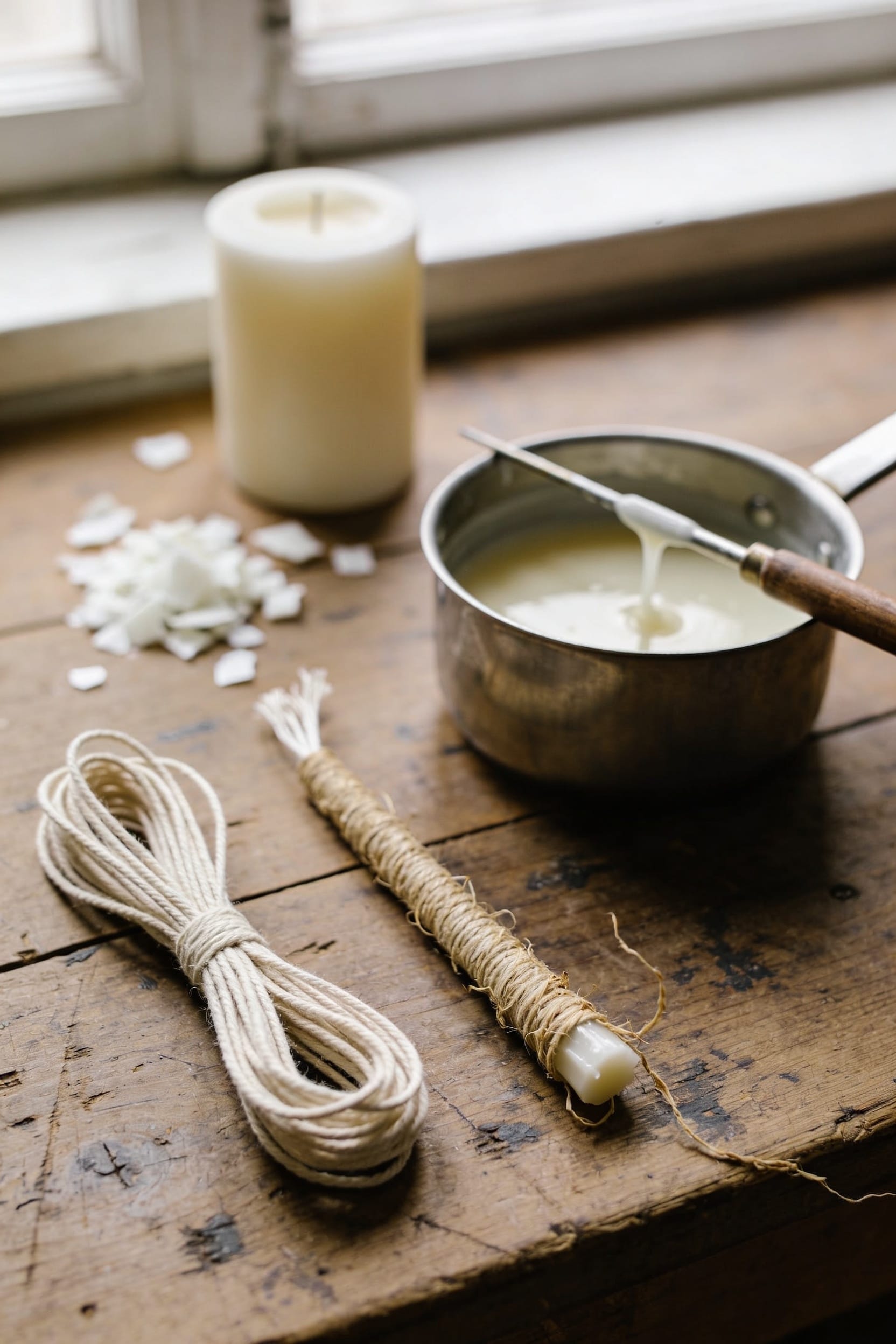
Wick priming—coating raw fibers with melted wax—isn’t always necessary, but it’s essential when you’re making pillars, tapers, or working with raw square braid wicks. Priming replaces trapped air, stiffens the wick so it stands straight, and improves how wax draws upward for even burning. Container candles usually ship with pre-primed wicks, so you’ll skip this step. But if you’re pouring pillars or specialty candles, you’ll want to dip those raw wicks in melted paraffin or soy before assembly. The difference between a sloppy burn and a clean one often comes down to whether you took five minutes to prime.
Key Takeaways
- Priming coats raw wick fibers with melted wax, improving rigidity, capillary action, and consistent burning throughout the candle’s life.
- Raw, soft, fluffy wicks need priming; pre-primed specialty wicks and most container candles should skip this step entirely.
- Pillar and taper candles almost always require priming before assembly, while container candles typically use pre-primed wicks instead.
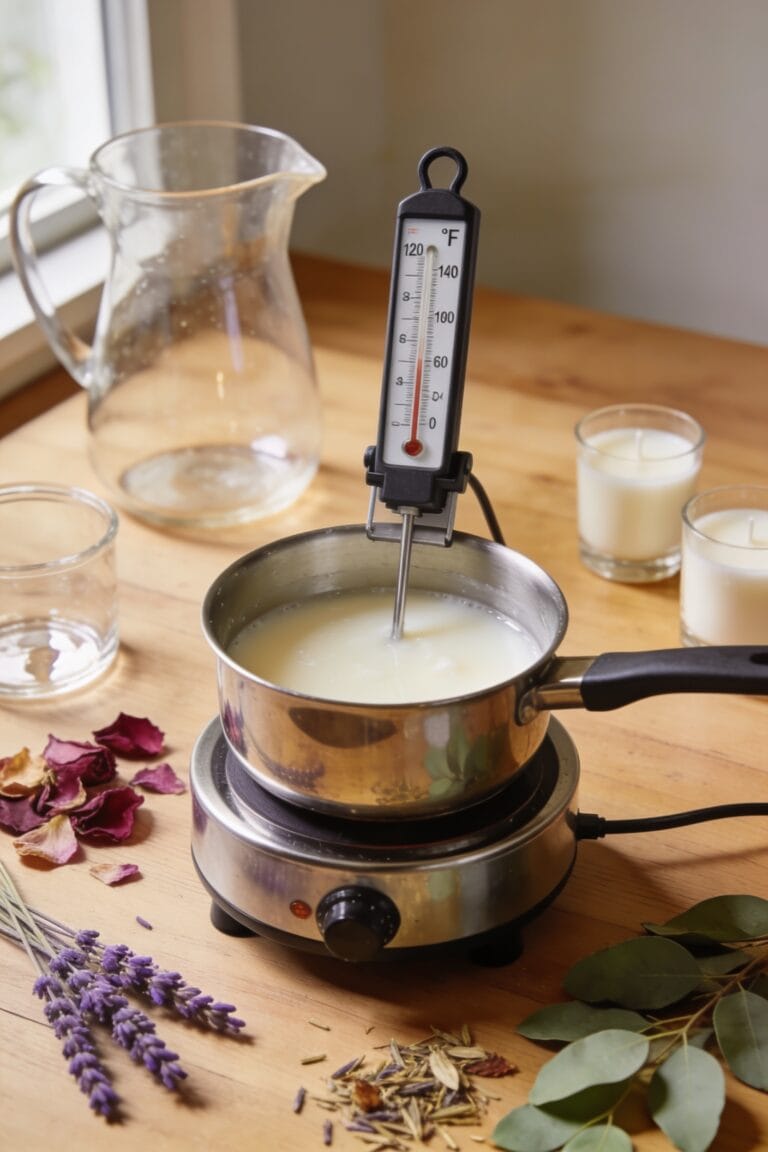
- Use a double boiler to safely melt paraffin or soy wax, maintaining proper temperature for even, consistent wick coating.
- Properly primed wicks feel rigid and firm, burn steadily without excessive smoking, and prevent mushrooming or structural collapse during use.
What Wick Priming Does
When you’re holding a raw wick in your hand—all soft and fluffy like it just rolled out of a cotton ball—that’s when you know it’s time to prime it. Priming coats that raw wick with melted wax, replacing all the trapped air inside the cotton fibers. Here’s what that actually does for you: it gives your wick the rigidity it needs to stand straight in your container and burn consistently. The wax coating improves capillary action—that’s the wick’s ability to draw melted wax upward—which means better, more even burning throughout your candle’s life. You’re also boosting wick durability, preventing collapse or weird tilting during the burn. A primed wick simply performs better, and frankly, that’s worth the few minutes of work.
When Your Wick Needs Priming
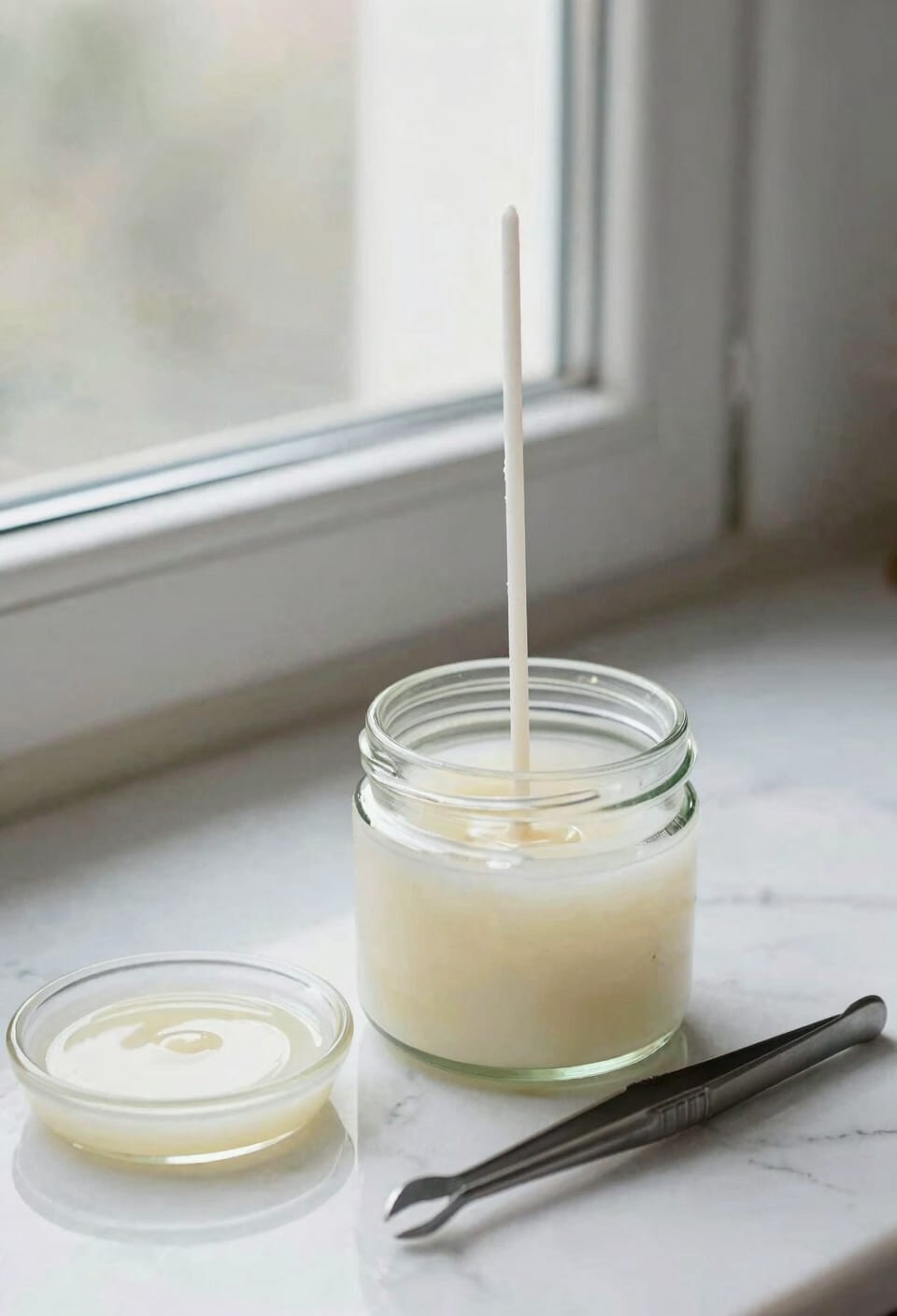
Now that you understand what priming does for your wick, the next question is pretty straightforward: how do you know if yours actually needs it? Look, if you’re holding raw wick that feels soft and fluffy, that’s your answer. It needs priming. On the flip side, if you’ve already got pre-primed specialty wicks sitting in your supply stash, don’t prime them again—you’ll just gunk them up.
Pillar and taper candles almost always demand priming before assembly. Container candles are different though; most use pre-primed wicks, which saves you a step. Check your warranty considerations with suppliers—some guarantee performance only with properly primed wicks. When storing seasonal supplies, keep primed wicks labeled and covered so you know exactly what you’re grabbing come next season.
Priming Methods by Candle Type
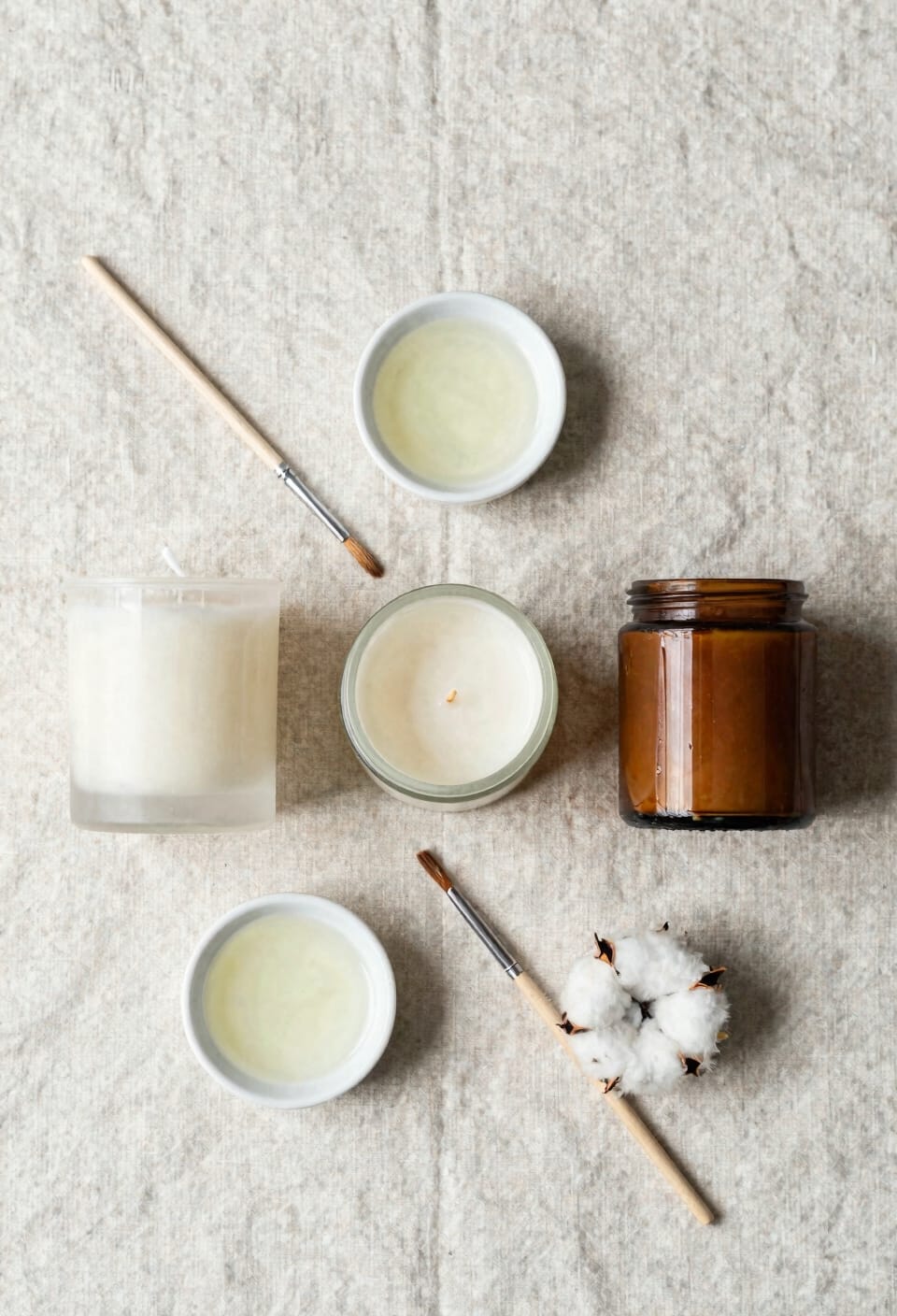
Different candle types actually call for different priming approaches, and I’ve learned this the hard way after more than a few lumpy, poorly burning disasters. Pillar and taper candles absolutely need priming—I dip raw square braid wick in melted paraffin or soy wax for a couple minutes until those soft, fluffy wick textures become rigid and coated. Beeswax works beautifully for tapers especially. Now here’s where container exceptions come in: don’t prime wicks destined for container candles. Your blended wax is too thick, and you’ll end up with a goopy mess that’s honestly not worth the frustration. Container wicks are usually pre-primed specialty types anyway. Match your priming method to your candle style, and you’ll see the difference immediately.
Recommended Products
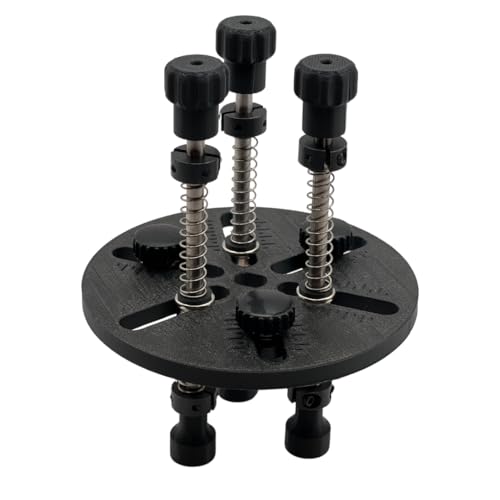
✔ ADJUSTABLE FOR ANY CANDLE JAR – Expandable arms fit jar openings from 2-1/2″ to 4-5/8″ wide, making it perfect for single, double, or triple wick candles in nearly any container.

Size 2/0 Cotton Square Braid Candle Wick.

100% ORGANIC HEMP & BEESWAX: 200ft of standard gauge (~1.0mm) natural beeswax coated hemp twine + 200pcs diameter 16mm wick hole 2.5mm neck height 7mm metal wick sustainer tabs candle making kit.
Best Wax for Different Wick Styles
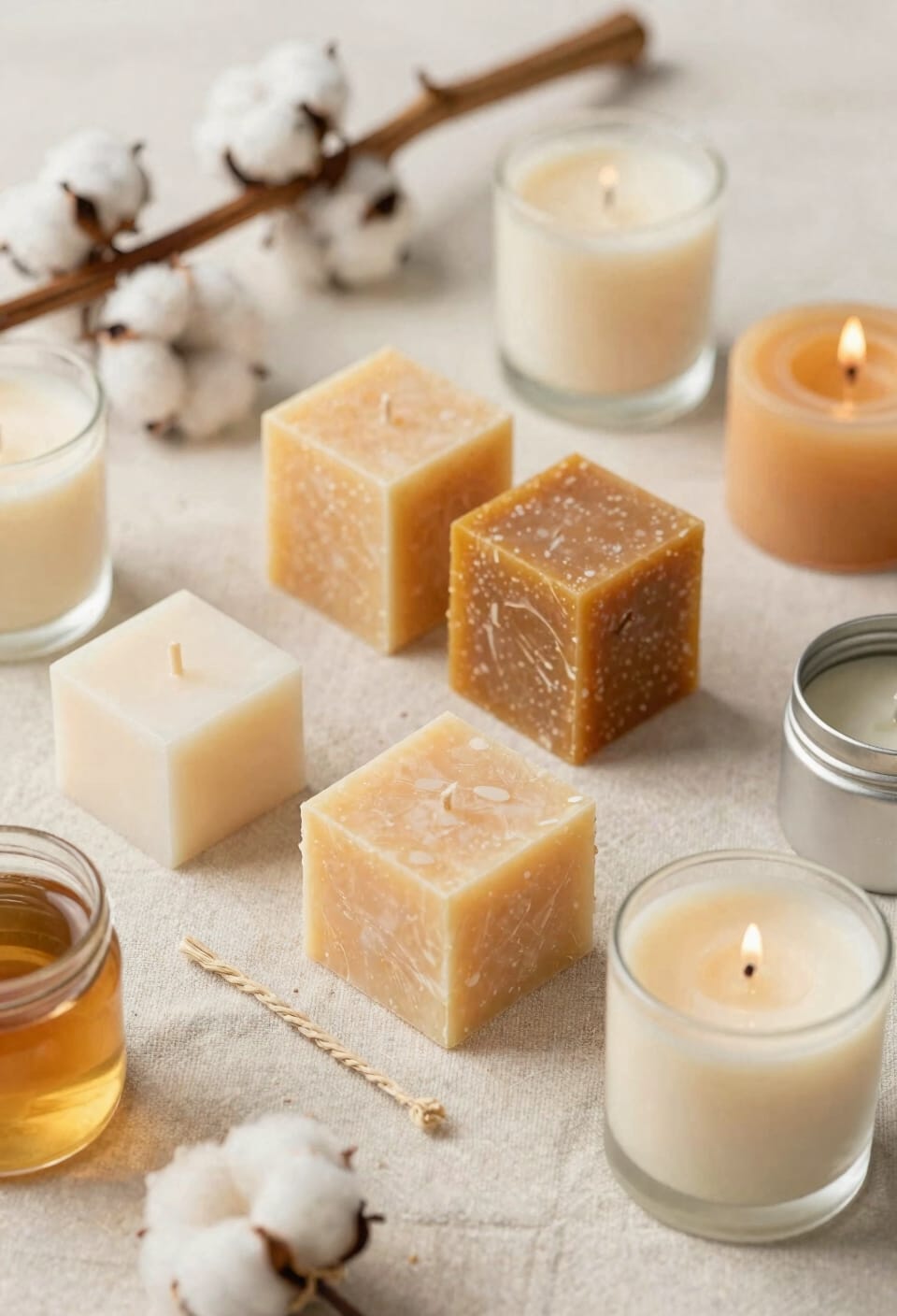
Once you’ve settled on your priming method, the wax you choose matters just as much as the technique itself. Paraffin wax works beautifully for most wick styles because it has a lower melting point and coats evenly without clumping. If you’re working with thicker braid thickness wicks—say, square braid for pillar candles—paraffin gives you that smooth, consistent coating you need. Soy wax is trickier; it’s thicker and can gunk up on finer wicks, making wax compatibility harder to achieve. Beeswax? That’s your premium option. It’s expensive, but it bonds perfectly with natural fibers and creates a rigid, pliable coating that burns like a dream. Match your wax to your wick size, and you’ll nail consistent priming every time.
Recommended Products

99.4% pure paraffin for use in alter candles. Wax free, Colorless, odorless, smokeless.
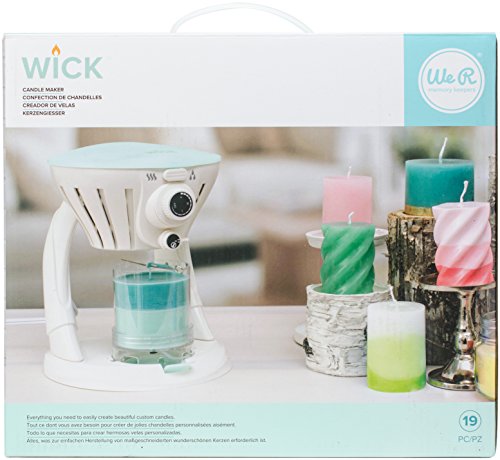
COMES WITH EVERYTHING YOU NEED: This kit includes 3 lbs of Paraffin Wax, 72 inches of cotton wick, 3 candle rubber stoppers, pigment (red, yellow, blue, white), 3 candle molds with base, and a color mixing chart

INNOVATIVE AUTO OPEN LID DESIGN – Unlike ordinary paraffin baths with hand operated lids, KARITE paraffin wax machine is developed with an auto lid that opens when the wax is melted and reached the desired temperature to reduce the cooling time, allowing you to enjoy your relaxing paraffin treatment without prolonged waiting.
Essential Equipment for Home Wick Priming
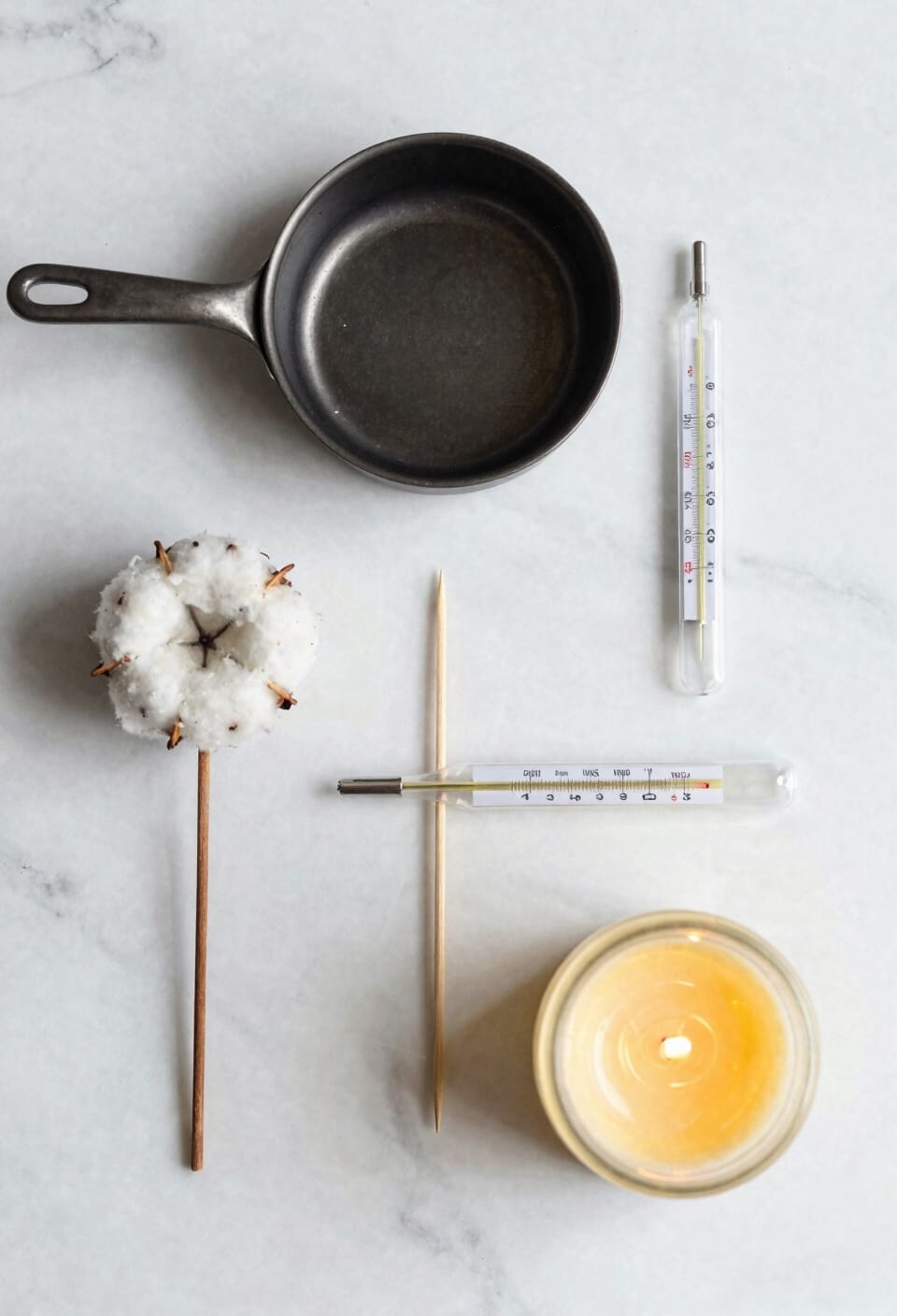
Getting your wick priming setup right doesn’t require a fancy industrial setup—honestly, I’ve primed hundreds of wicks with basic kitchen equipment and gotten solid results. You’ll want a double boiler to melt your paraffin or soy wax safely without scorching it. A wax thermometer keeps everything at the right temperature, which matters more than you’d think for consistent coating. Grab some protective gloves because melted wax sticks to skin and hurts. I use shallow trays or old baking pans to hold wick lengths during dipping. A Presto pot or similar heating device works great for maintaining steady heat. That’s genuinely it. Nothing fancy needed. Your kitchen supplies are totally sufficient for home-scale priming.
Recommended Products

【Premium Material】Our beeswax pellets are sourced from quality farms, carefully selected to ensure high standards.

【Natural Soy Wax Flakes】Our soy wax flakes comes from organic farms, enriched with natural soy, without additives, harmless and pure, it is your ideal soy wax for candle making.

DOUBLE BOILER BAIN-MARIE - Create a gentle, even heating source with the Double Boiler Bain-Marie. It’s perfect for making sauces, custards, and melting chocolate, as well as for scrambling eggs, reheating, defrosting, or keeping food warm.
Pre-Primed Wicks: When You Can Skip the Step
Now here’s where I’m going to save you some time and money: you don’t always have to prime wicks yourself. Many retailers now label pre-primed wicks clearly on packaging, which reflects better consumer education across the supply chain. When you’re buying specialty wicks for container candles, they’ve already been coated at the manufacturing level. Bulk purchases from reputable suppliers often come pre-primed too, saving you the hassle of dipping countless wicks.
The retailer labeling matters because it tells you exactly what you’re getting. If the packaging says “pre-primed,” trust it—don’t prime again. You’ll only gunk things up. Look for this information before buying, and you’ll skip an entire step. Your time in the studio is better spent on pouring techniques and fragrance blending anyway.
How to Tell When Your Wick Is Ready to Use
You’ll want to feel your wick before it hits the wax pot. A properly primed wick should feel rigid and firm to the touch, not soft or fluffy like raw cotton. That wick stiffness tells you the wax coating has done its job—air’s been replaced, structure’s locked in.
Now, flame testing is your real confirmation. Light that primed wick and watch how it burns. You’re looking for a steady, consistent flame without excessive smoking or mushrooming at the tip. If it sputters or collapses, the wick isn’t ready yet. A good primed wick ignites smoothly and holds its shape throughout the burn. Trust what you see and feel—your candles will thank you.
Priming Mistakes That Destroy Burn Quality
Even with a wick that feels firm and burns cleanly, one bad priming decision can wreck everything—and I’ve definitely made them all. The biggest culprit? Overheated wax. Push your temperature too high, and you’ll strip the wick’s structural integrity instead of strengthening it. I’ve watched perfectly good cotton threads become brittle and useless. Then there’s uneven coating—dipping too quickly or at inconsistent depths leaves some sections rigid while others stay soft and fluffy. Your wick’ll burn erratically, guttering like crazy. Another mistake I made repeatedly: priming in container wax blends. They’re too thick, too sticky, and they’ll coat your wick in gloppy mess that prevents proper burning. Stick to paraffin or soy for priming. Get it right, and your burn quality transforms completely.
Recommended Products

CANDLE MAKING SUPPLY KIT: 50lbs soy wax, 500 cotton wicks, 500 glue stickers, 10 metal wick holders. Includes Everything you need to make your own candles.

All-In-One Starter Kit – Everything you need to dive into candle making! Our Hearth and Harbor soy candle wax for candle making includes 45 lbs of smooth soy wax flakes, 100 cotton wicks, 100 adhesive stickers, and 2 centering tools. Perfect for beginners or seasoned DIYers.

NATURAL SOY WAX BEADS - Best candle making supplies make the best soy candles! These safe, ethically produced, microwavable and paraffin-free soy wax beads are smooth and creamy in appearance, perfect for votives, pillars, tealights, tarts and melts.
Troubleshooting Primed Wicks That Burn Poorly
If you’ve primed your wick carefully but it’s still burning like a drunken mess, the problem likely isn’t the priming itself—it’s what happens after. Uneven priming creates weak spots that tunnel or mushroom unpredictably. I’ve seen it happen when the wax coating doesn’t penetrate uniformly through the fibers. Offset wick placement is another culprit—if your wick isn’t centered in the container, it’ll burn lopsided regardless of how perfect your priming was. Check that you’re using the right wick size for your wax type and container diameter. Sometimes poor burn quality traces back to fragrance load (that’s the percentage of fragrance oil mixed into your wax) being too high, which drowns the flame. Start with fifty percent fragrance and work up cautiously.
Recommended Products

SOY CANDLE MAKING KIT FOR ADULTS: Candle making supplies kit includes: natural soy wax for candle making, 2 lb (4 bags, 8 oz each), 1200 mL candle wax melting pot, 2 round and 2 square 8 oz candle tins with lids, thermometer, 4 cotton candle wicks, 4 wick stickers, 4 wooden wick holders, 4 wooden stirring sticks, 1 silicone finger protector, 1 silicone trivet, 4 warning labels, and 4 gift tags with 18” twine, and step-by-step instructions.

🎁【Candle Making Supplies】Candle Making Kit Includes electric hot plate for candle wax melting, 10lbs of organic soy candle wax, 100 cotton candle wicks, 1 stainless steel pouring pot, 2 stainless steel centering devices, 1 stainless steel spoon, 100 candle wick sticker, 1thermometer. DIY candle making kit supplies suit for beginners.
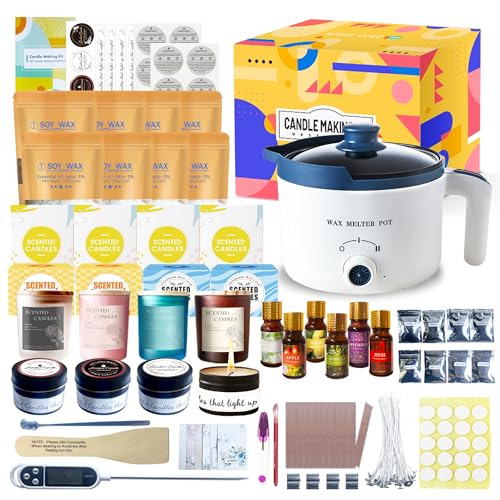
Make Your Own Candle Kit: The scented craft candle wax kit comes in a beautiful giftable box and has lots of extras including packs of soy wax, gorgeous candle jars & tin cans, 6 fragrance oils, 6 dye blocks, beautiful candle labels, wicks, wick sticker, eltectric wax melting pot, mixing spoon, and MUCH more!
Frequently Asked Questions
Can I Reuse Leftover Wax From Previous Wick Priming Sessions?
I’d recommend reusing your leftover wax from previous wick priming sessions. You’ll save money and reduce waste by recycling it into future projects. Just make sure proper wax storage in covered, labeled containers to maintain quality between uses.
How Long Does Primed Wick Stay Viable Before It Needs Re-Priming?
I’ll tell you that primed wick stays viable indefinitely when stored properly. Your shelf life depends entirely on storage conditions—keep them cool, dry, and covered. Environmental factors like humidity can degrade wick composition, so protection matters most.
What’s the Ideal Thickness for a Properly Primed Wick Coating?
I’d recommend coating thickness that matches your wick diameter—typically a thin, even layer that adds rigidity without excess bulk. You’ll want it hard but pliable for peak candle performance throughout burning.
Can I Prime Wicks Using a Microwave Instead of a Double Boiler?
I’d advise against microwaving wax for wick priming due to microwave safety concerns—wax can overheat unpredictably. I’ve found double boilers maintain consistent temperatures, ensuring your wick texture achieves that ideal rigid coating you’re after.
How Do I Remove Excess Wax Buildup From Over-Primed Wicks?
I’d trim the excess wax using wick trimming techniques, then apply gentle heat treatment by briefly dipping the over-primed wick into warm water. This softens and removes stubborn buildup without damaging your wick’s integrity.
Conclusion
Look, I’ve absolutely massacred candles by skipping wick priming—they tunneled catastrophically, burned like miniature infernos, or died pathetic deaths mid-burn. You’re genuinely preventing disaster by taking five minutes to saturate that wick properly. It’s the difference between a candle that performs flawlessly and one that becomes an expensive, smoky paperweight. I’m telling you, prime your wicks.