As an Amazon Associate, we earn from qualifying purchases. Some links on this site are affiliate links at no extra cost to you. Our recommendations are based on thorough research and editorial judgment.

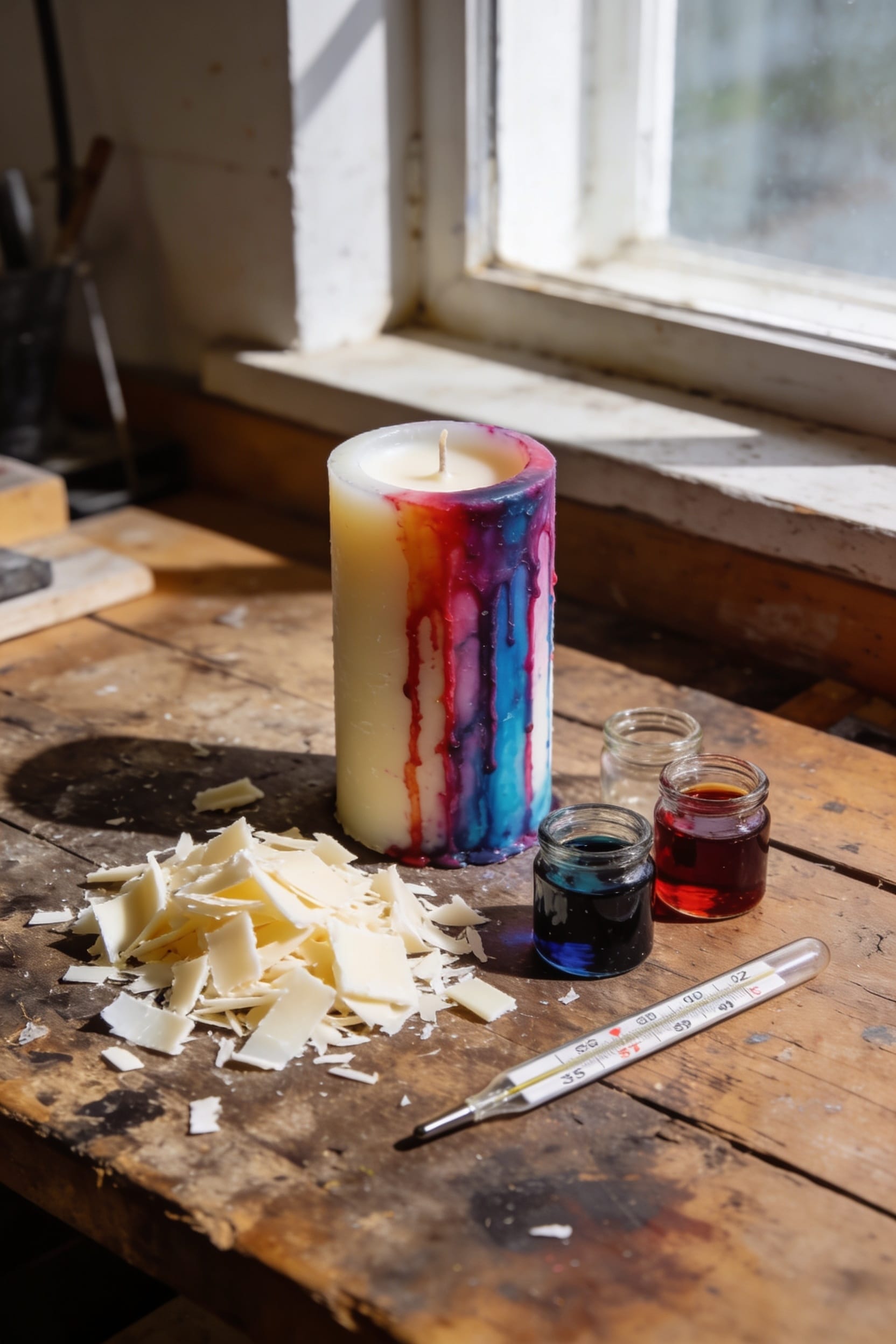
Candle Wax Bleeding Color: Why It Happens and How to Stop It

color bleeding happens when you’ve crammed too much fragrance oil into your wax—most soy maxes out around 10–12% by weight—and that excess oil migrates upward, dragging your dyes along with it. Vanilla fragrances oxidize and yellow over time, while heat and sunlight speed everything up. Stop it by respecting fragrance limits, pouring around 170–180°F for proper bonding, adding palm stearic to boost wax holding capacity, and storing finished candles in cool, dark spots. The real fixes get more specific from here.
Key Takeaways
- Fragrance overload causes oil to pool and migrate upward through wax, carrying dyes to the surface and creating splotches.
- Add palm stearic (10–20% by weight) to soy wax to increase fragrance and dye holding capacity before melting.
- Pour at optimal temperature (170–180°F) and cool gradually to lock fragrance and dye into final wax structure properly.
- Use cream dyes to neutralize yellow undertones and correct color bleeding issues in affected batches through layering technique.
- Store finished candles in cool, dark locations at 60–75°F and use proper wick sizing to minimize heat-driven fading.
What Is Color Bleeding in Soy Candles?
When you’ve poured what you thought was a perfect deep purple candle and wake up the next morning to find it’s bleeding—that is, oil and dye are seeping to the surface and creating a splotchy, discolored mess—you’ve just met one of soy candle making’s most frustrating gremlins.
Color bleeding happens when fragrance oil, dyes, or both separate from your wax and migrate upward, leaving behind faded patches or oily spots. It’s not a sign you’re hopeless. It usually means your fragrance load—the percentage of fragrance oil relative to wax weight—exceeded what soy can actually hold, or your pouring temperature was too cool for proper bonding.
The fix involves balancing wax additives like palm stearic, adjusting wick sizing, and respecting your wax’s limits. I’ve had plenty of bleeding disasters. You will too, probably.
Why Does Excess Fragrance Oil Cause Color to Bleed?
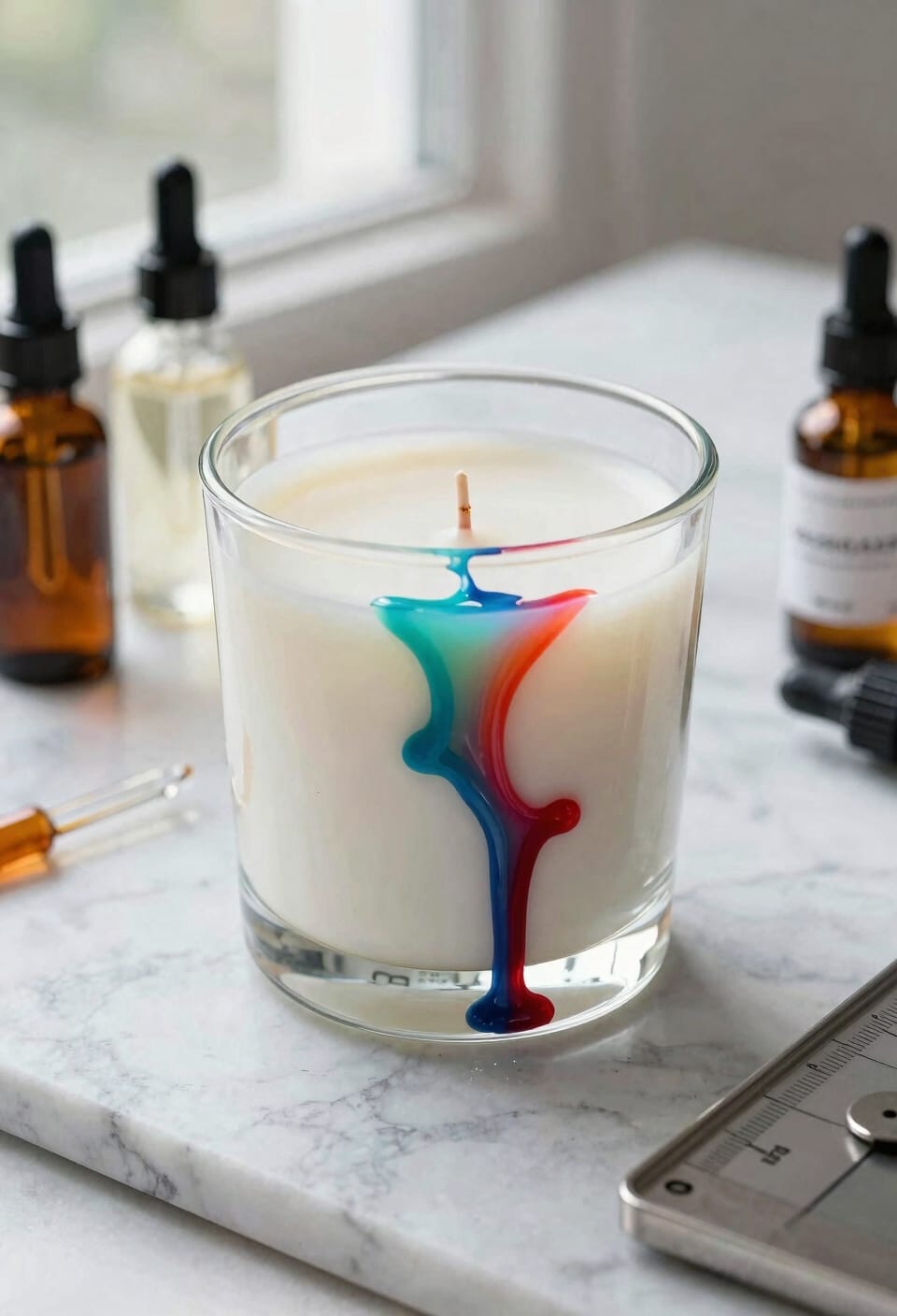
Since soy wax can only hold so much fragrance oil before it reaches maximum capacity—usually somewhere around 10 to 12 percent by weight, though it varies by wax brand—anything beyond that threshold has nowhere to go but up. That excess fragrance becomes what I call fragrance saturation: your wax simply can’t absorb it all. The oil pools and migrates upward through the wax matrix, dragging your dye molecules along for the ride. This wick migration of color to the surface creates that crusty, bleeding appearance you’re trying to avoid. I’ve watched beautiful deep blues turn pale and patchy because I got overzealous with scent load. The fix? Respect the wax’s limits. Stay within that 10-12 percent range, and you’ll keep your colors locked in place where they belong.
How Does Pouring Temperature Affect Dye Stability?
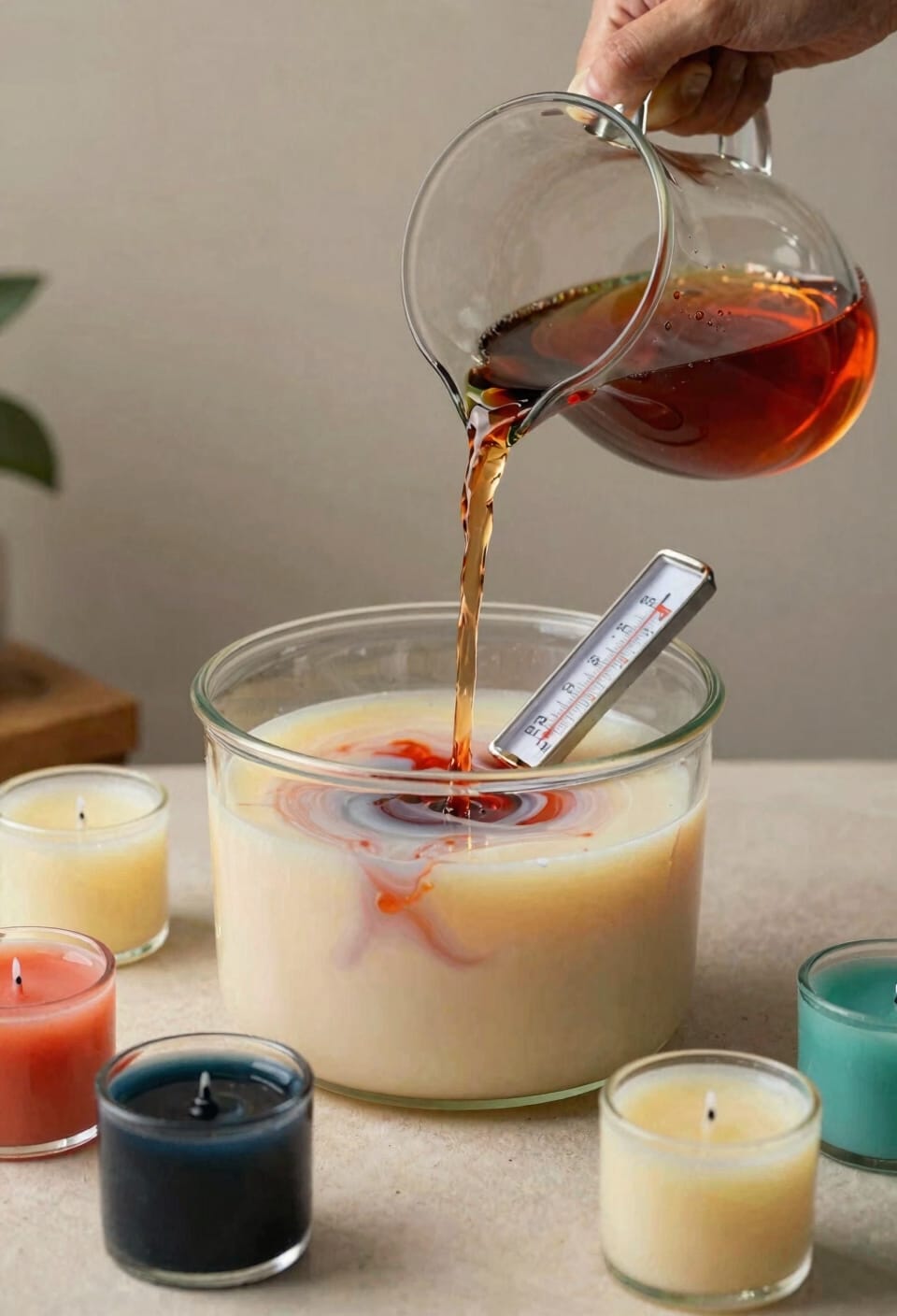
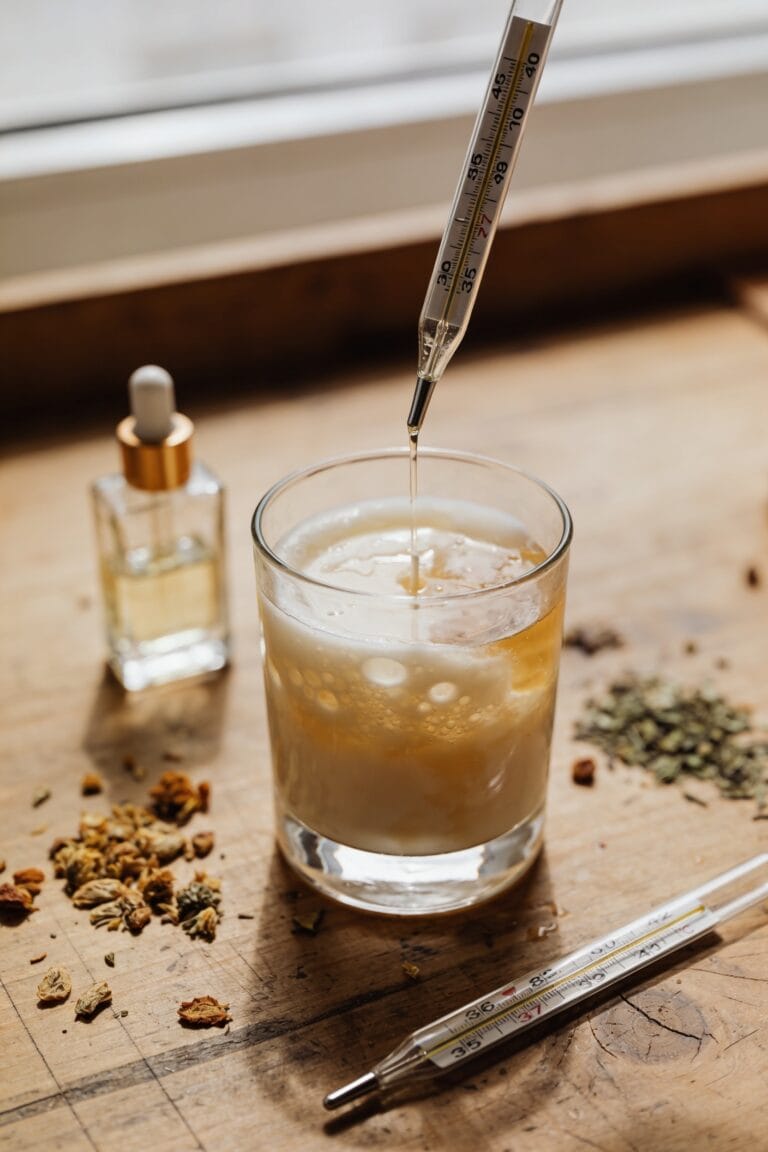
All right, so you’ve nailed your fragrance load and stayed within that 10-12 percent sweet spot—but if you pour your wax at the wrong temperature, you’ve basically sabotaged yourself before the candle even sets. When you pour too cool, the fragrance never fully bonds with the wax, and it seeps right through, dragging your dyes along for the ride. Your dyes need heat to properly integrate during wax crystallization—that’s when the wax molecules organize into their final structure. Pour at the right temperature, and ideal cooling happens gradually, locking everything in place. I’ve poured at 165°F before and watched color bleed within hours. Now I nail that 170-180°F range for soy, and the difference is night and day.
Why Vanilla and Citrus Fragrances Cause Yellowing?
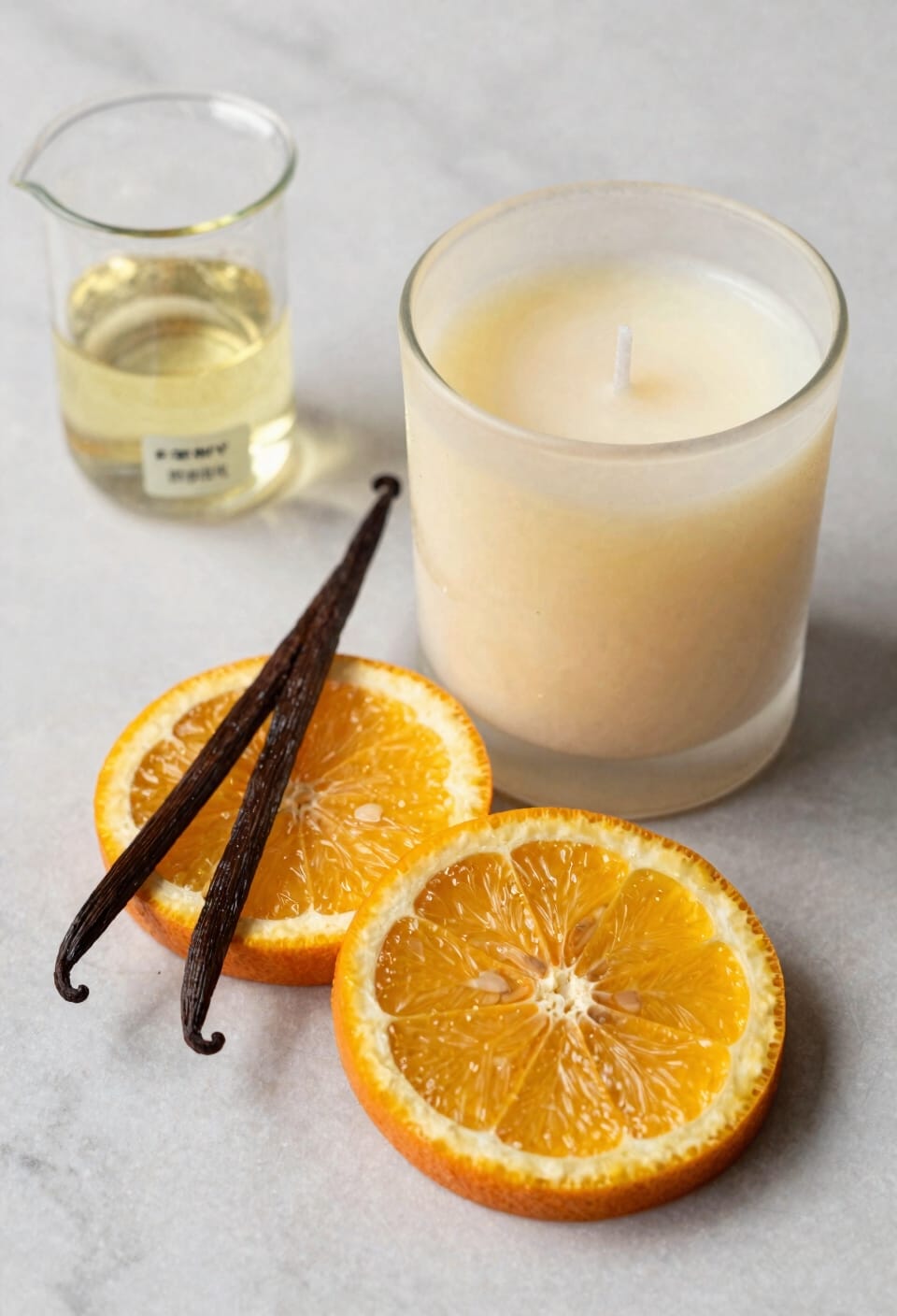
If you’ve ever noticed a candle that looked perfect when you poured it turn this sickly yellow within days, vanilla and citrus fragrances are probably the culprits. Here’s what’s happening: vanillin chemistry—that compound that makes vanilla smell like vanilla—reacts with your dyes and oxidizes over time, creating yellow discoloration. Citrus oils work similarly through citrus photochemistry, where light exposure triggers chemical reactions that shift colors dramatically. These fragrances aren’t inherently bad; they’re just chemically aggressive. I’ve watched vibrant purples flatten to pale yellow almost overnight with high-vanillin oils. The yellowing can happen within 24 hours or gradually, depending on your fragrance load (how much oil you’ve added to your wax). The fix? Use stabilized fragrances or add cream dye to counteract the yellow tint before it happens.
How Sunlight and Heat Speed Up Color Fading?
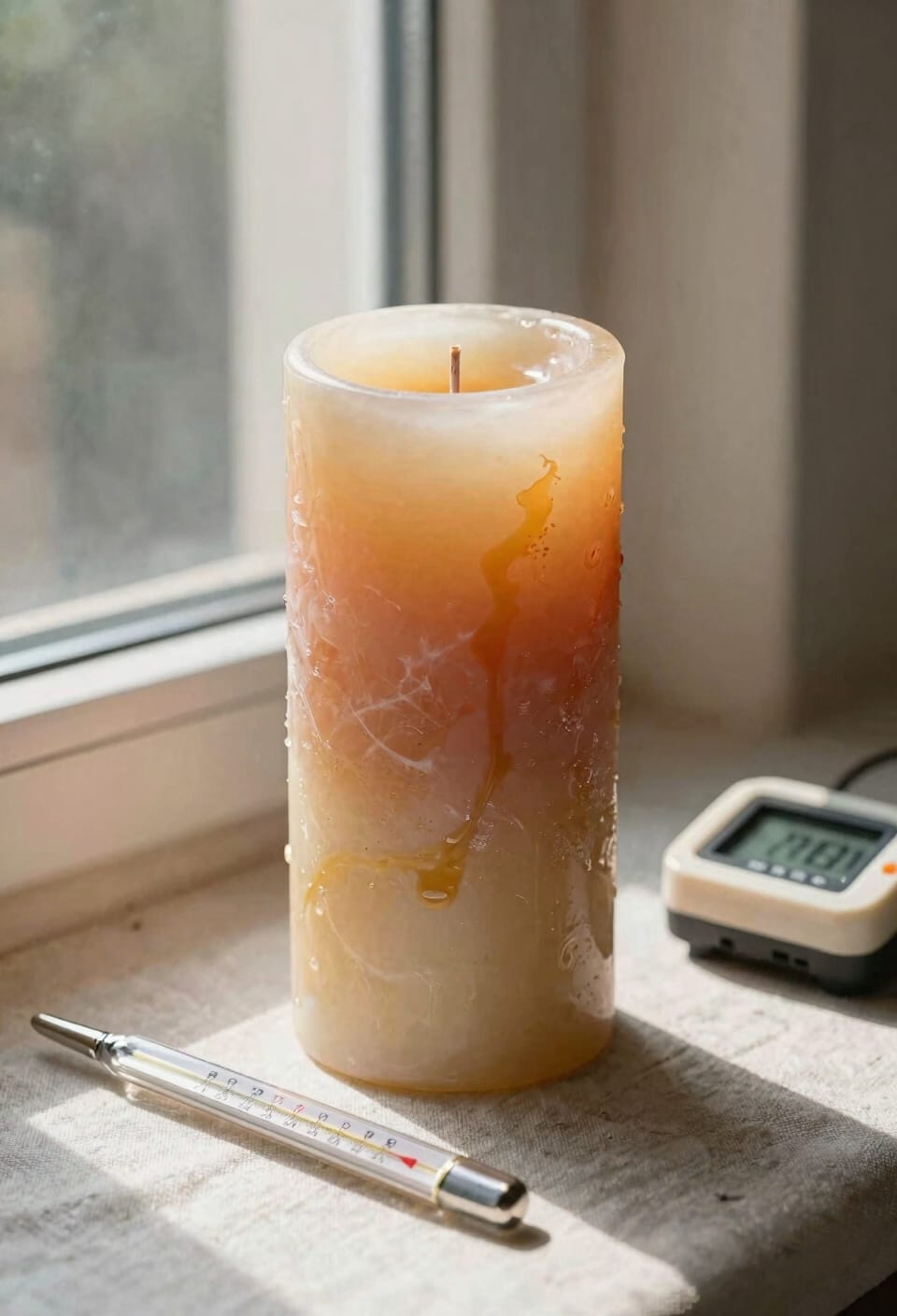
While you’re worrying about fragrance oils and dye ratios, there’s an invisible threat already at work on your finished candles—light and heat. UV degradation breaks down dyes in days to weeks, especially with direct sunlight or strong artificial light exposure. Here’s the thing: heat cycling—those temperature fluctuations between day and night—makes wax loaded with dyes and fragrances unstable. Your vibrant colors fade, yellow, or mottle unevenly. Store candles away from windows and heat sources. Use UV inhibitors to block light-induced fading. Even your best pour can’t survive poor storage conditions. I’ve learned this the hard way, watching perfect candles deteriorate on sunny shelves. Protect your work after it leaves your studio.
Lower Your Pouring Temperature to Lock in Color
One of the easiest wins I’ve discovered for locking color into your candles is nailing your pouring temperature—and I mean keeping it lower than you probably think you should. When you pour cooler wax, fragrance bonds more completely before the slow cooling process begins, which means less oil separates and bleeds color to the surface. I typically aim for around 170–180°F for soy, but honestly, experiment within your range. Lower temps also pair beautifully with proper wick selection—a wick sized right for your container prevents excessive heat that accelerates fading. You’ll notice less yellowing, cleaner color, and that satisfying moment when you crack open a candle weeks later and find the hue still vibrant. It’s genuinely one of the first adjustments I’d make.
Recommended Products

TWENTY POUNDS of PREMIUM FLORIDA SPRING BLOSSOM BEESWAX: 100% Natural, clean burning, sweet floral, with the honey-like fragrance typically associated with beeswax, cosmetic ready and suitable for food contact. Our pure beeswax bars are perfect for a wide variety of applications. Packaged in a one-pound bars (5″ x 3.5" x 1.75").

【Natural Soy Wax Flakes】Our soy wax flakes comes from organic farms, enriched with natural soy, without additives, harmless and pure, it is your ideal soy wax for candle making.

【EVERYTHING INCLUDED - START TODAY!】Get the FULL candle making experience in one kit! Your kit arrives with 4lb Soy Wax, 6 strong Fragrants, 30pcs Candle Wicks, 7 units candle containers, Wax Melter Pot, & Thermometer. No hidden costs.
Add Palm Stearic to Stop Color Bleeding in Soy Wax
Lower pouring temperature gets you most of the way there, but here’s the thing—if you’re still watching color bleed to the surface or noticing that yellowish pooling weeks later, you might need to beef up your wax’s actual holding capacity. That’s where palm stearic comes in. It’s a hardening agent that reinforces soy wax’s ability to grip both fragrance and dye molecules, preventing them from migrating. I’d start with application ratios around 10-20% by weight—add it directly to your soy wax before melting. The catch? You’ll need compatibility testing first. Pour a test batch, let it cure fully, and monitor it for color stability. Not every fragrance plays nicely with every ratio, so small experiments save you from larger batches gone wrong.
Recommended Products

Direct Candle Supply’s stearic acid is a cosmetic grade palm based, triple pressed stearic acid.


Choose Fragrance Oils Resistant to Oxidation and Yellowing
Because you’ve already nailed the pouring temperature and locked in your fragrance with palm stearic, the next move is actually picking fragrance oils that won’t betray you in the first place—ones that resist oxidation (that electron-loss process that turns your beautiful candle into a dingy yellowish-gray mess) and don’t go rogue with yellowing over time. Look, not all fragrance oils are created equal. Vanilla and citrus oils are notorious troublemakers; they’ll yellow your wax within days or weeks. I’ve learned this the hard way. Instead, prioritize fragrance stability through oxidation testing before committing to bulk orders. Champa oil from Candle Science is a solid choice—it holds its color beautifully. When selecting oils, ask suppliers directly about their stability ratings. Your future candles will thank you.
Recommended Products

🌿 Marjoram Essential Oil 100% Pure & Undiluted – Steam distilled Origanum majorana with no fillers. Warm, herbaceous aromatherapy oil for diffuser blends and relaxation routines

USES - Our Premium Grade Fragrance Oils are formulated to be suitable for creating your own candles, soaps, air freshener spray, skin and hair care formulations, cleaning products, for use in home aroma diffusers, scented dryer sheets, freshen a drawer, potpourri, freshen carpets, massage/body oil, sugar scrubs, and many more. Personalize any of your unscented products. Use your imagination to create a scent that is simply yours.
![Aromatics International Organically Crafted Beeswax Pellets 16oz – Natural Beeswax for DIY Skincare, Lip Balms, Candles, Salves, and Body Care Products [Size-swapped — Verify]](https://m.media-amazon.com/images/I/31IoRmhPYNL._SL500_.jpg)
PURE, NATURAL BEESWAX PELLETS – Our beeswax pellets are the perfect size for quick melting, releasing a sweet, honey-scented aroma as they melt. These pure beeswax pellets create a warm, inviting atmosphere with a subtle honey fragrance that fills the room.
Store Your Candles Away From Light and Heat
After you’ve poured that perfect candle and it’s cooled into something you’re genuinely proud of, here’s where a lot of makers drop the ball—they store their finished candles in the same spot they’d leave a houseplant, which is to say, anywhere with decent light and whatever temperature happens to be convenient. UV light breaks down dyes within days or weeks, turning vibrant colors pale or yellowing them entirely. Temperature zones matter too. Fluctuations make wax with heavy dye and fragrance loads unstable, accelerating color shifts. I’ve learned this the hard way. Your storage tips should include a cool, dark closet or cabinet—ideally between 60-75°F. Keep candles away from windows, lamps, and heat sources. Your finished inventory will thank you for the boring, boring storage conditions.
Recommended Products

【Sturdy Construction】: Designed with a reinforced plate for added stability, our meditation altar table can hold heavy decorative items without wobbling, ensuring long-lasting durability.Our Personal Shrine Altar Table showcases a stunning retro Chinese design that beautifully complements any decor. Buddhist altar cabinet serves as both a traditional worship platform and modern storage solution with elegant brown finish.

【Altar Table for Spiritual Practice】: This altar table is thoughtfully designed for spiritual meditation, prayer, and daily rituals. It serves as a beautiful pooja cabinet, Buddhist altar, or shrine altar, helping create a peaceful and harmonious atmosphere in your home.

【Meditation & Ritual】: Elegant vintage Chinese styling creates a focused meditation table and offering altar. Beautiful carvings elevate any room—use as an altar table, altar cabinet, or temple for home to honor traditions and support daily practice in a pooja mandir.
Apply Cream Dyes to Fix Vanillin Yellowing
Now, here’s where storage alone won’t save you if you’ve already got yellowing happening—and if you’ve used vanilla or citrus fragrances, you probably do. Cream dyes work as cream compensators, counteracting that stubborn vanillin-induced yellow tint that creeps in within hours or gradually over time. I’ve found that tint layering—adding cream or ivory dye in strategic increments—lets you dial in the exact shade you’re after without overshooting. Start with a small amount. Mix thoroughly into your melted wax before pouring. You’re fundamentally neutralizing the yellow undertones rather than fighting them. It’s not glamorous, but it works. The cream absorbs that warm cast, bringing your color back closer to what you originally envisioned. Problem solved, batch salvaged.
Recommended Products

Wax Dye For Candles: Our candle-making kit contains 26 bags with 0.27 oz of dye each.

HIGHLY CONCENTRATED: Brand new formula with highly concentrated colors for your creativity. A little goes a long way. Each bottle contains 10 ml /0.35 oz of liquid wax dye, enough for 2.2 lbs of wax. Our natural candle dye has a better dyeing effect than normal liquid candle dye. FYI you can check our video followed by main pictures

Wax dye set for candle making, colored dyes - Enhance your candle creations with our premium wax dye set. With 16 vibrant, individually colored dyes, it's perfect for any wax type and ensures stunning results every time.
Frequently Asked Questions
Can I Use a Paraffin and Soy Wax Blend to Prevent Color Bleeding Issues?
Yes, I’d recommend using a paraffin and soy blend—around 51% soy and 49% paraffin—to improve fragrance compatibility and stabilize your melt pool, which helps prevent color bleeding issues.
How Do Temperature Fluctuations Affect Candle Color Stability After Pouring?
Like a pendulum swinging between extremes, temperature fluctuations destabilize your candle’s color. I’ve found that inconsistent ambient temperature and cooling rate make wax with high dye loads particularly vulnerable to fading and uneven mottling.
What Signs Indicate My Candle Wax Has Become Thermally Unstable?
You’ll notice frosting patterns and a mottled surface appearing on your candle. I’d also watch for brittleness, strong fragrance pooling on top, and uneven color fading—they’re telltale signs your wax’s thermal stability’s compromised.
Does Natural Wax Tint in Soy or Beeswax Permanently Alter Dyed Colors?
Studies show 60% of candle makers experience color shifts within two weeks. Yes, natural tinting causes a permanent shift in dyed colors. I’ve found soy’s inherent wax tint deepens your dyes over time, creating lasting color alterations.
How Long Does UV Light Typically Take to Fade Candle Colors?
UV fading typically occurs within days to weeks, depending on light intensity. I’d recommend using UV inhibitors and storing your candles away from direct sunlight for ideal color restoration and longevity.
Conclusion
Now that you’ve mastered color bleeding—those frustrating moments when your candle looks like it was poured in a telegraph office instead of a modern studio—you’re ready to create candles that actually stay beautiful. You’ll nail it by managing fragrance load, respecting pouring temperatures, and storing smart. I’ve ruined plenty; you don’t have to. Your next batch will be flawless.