As an Amazon Associate, we earn from qualifying purchases. Some links on this site are affiliate links at no extra cost to you. Our recommendations are based on thorough research and editorial judgment.
Candle Making Regulations for Selling: Labeling, Safety & Legal Requirements

selling candles means following Federal Trade Commission labeling rules, which require your product identity, manufacturer address, and net quantity on the principal display panel. You’ll need ASTM safety warnings with that bold “WARNING” label, burn instructions, and a triangle pictogram. If you’re using certain fragrance oils, get third-party chemical testing and a General Certificate of Conformity. Metal-core wicks demand bulk packaging labeled for lead compliance. Don’t skip California Prop 65 warnings if applicable. E-commerce platforms like Amazon want all this documentation uploaded before you list anything. Most sellers trip up by missing warnings, illegible fonts, or skipping manufacturer details—mistakes that trigger fines and recalls fast. Getting these requirements locked down from the start saves you headaches, inventory holds, and legal trouble down the road.
Key Takeaways
- Federal labeling requires product identity, manufacturer name/address, and net quantity on the principal display panel.
- Safety warnings must include “WARNING,” “Burn within sight,” and “Keep away from things that catch fire” statements.
- General Certificate of Conformity documents product compliance, test results, and protects against recalls or sales bans.
- Metal-core wicks in bulk shipments require “Conforms to 16 CFR 1500.17(a)(13)” labeling on outer packaging only.
- California Proposition 65 warnings apply if chemicals exceed exposure thresholds; e-commerce platforms require safety documentation uploads.
Federal Labeling Requirements: What FPLA Mandates for Candles
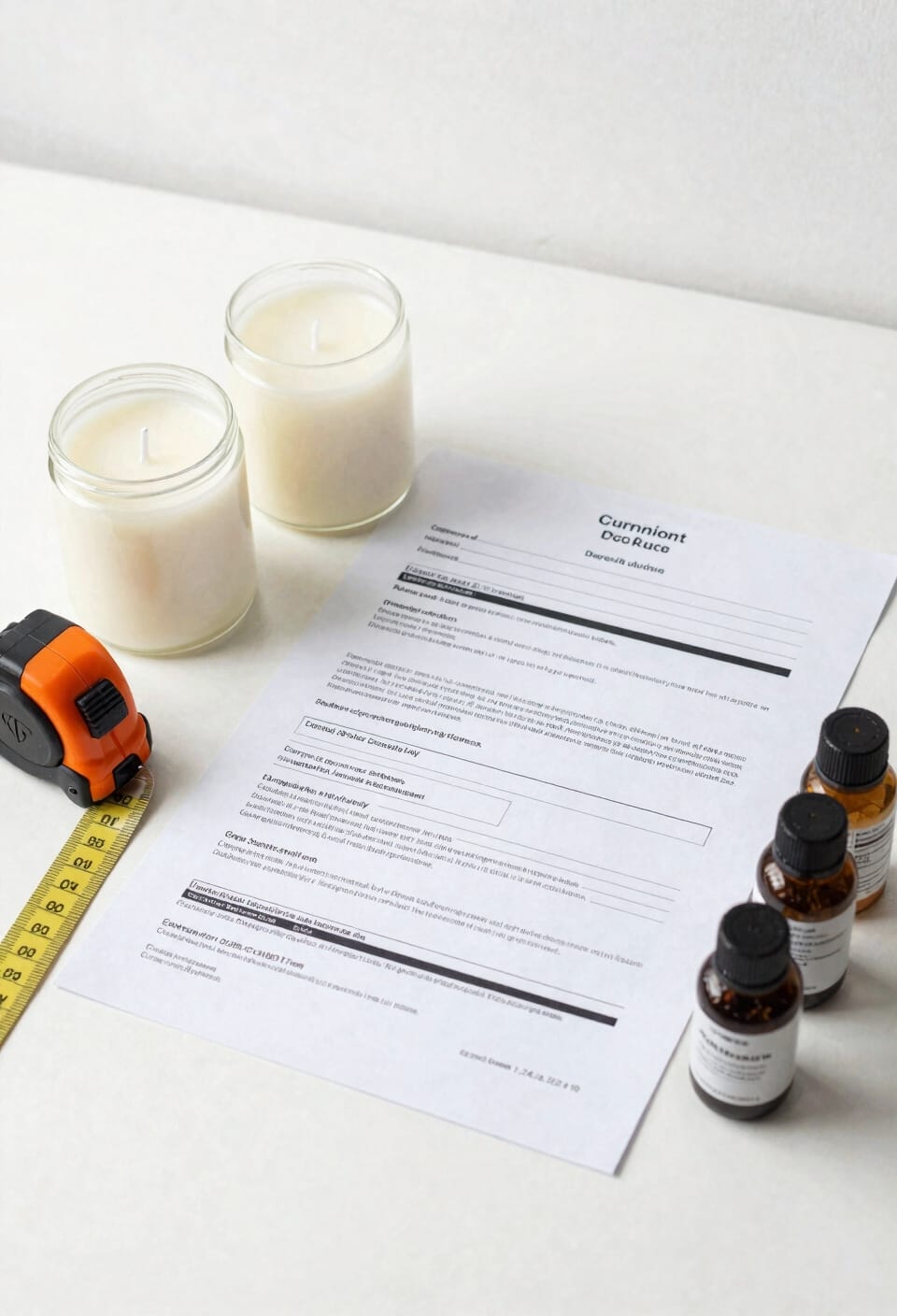
Now here’s the thing: before you even think about selling a single candle, you need to understand what the Federal Trade Commission requires you to put on that container, because they’re serious about this stuff and honestly, getting it wrong is an easy way to tank your business before it starts. The FPLA mandates that your label includes your product identity—that’s literally just “scented candle” or whatever you’re calling it—plus your manufacturer’s name and address. You’ve also got to state the net quantity in ounces or grams, placed directly on the container. For rectangular containers, this covers one side; for round ones, you’re looking at 40% of the surface. Tied labels work if they meet minimum size requirements. Get these basics right, and you’re already ahead of most new makers.
Recommended Products

【Package Contains】42 aluminum tin cans with screw lids,4 pieces of white markers,48 pieces of black labels

【Package Contains】102 aluminum tin cans with screw lids,4 pieces of white markers,105 pieces of black labels
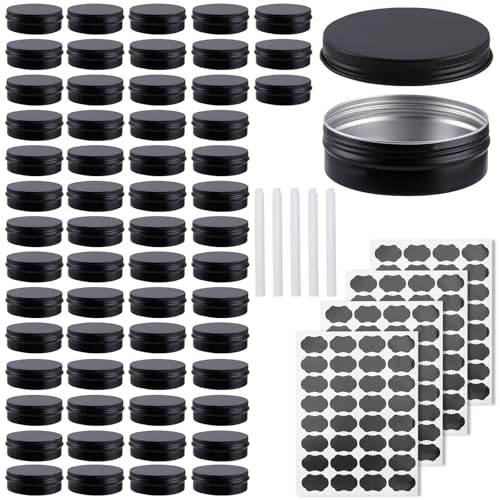
【Package Contains】60 aluminum tin cans with screw lids,4 pieces of white markers,72 pieces of black labels
ASTM Safety Warning Labels: Required Text, Symbols, and Placement
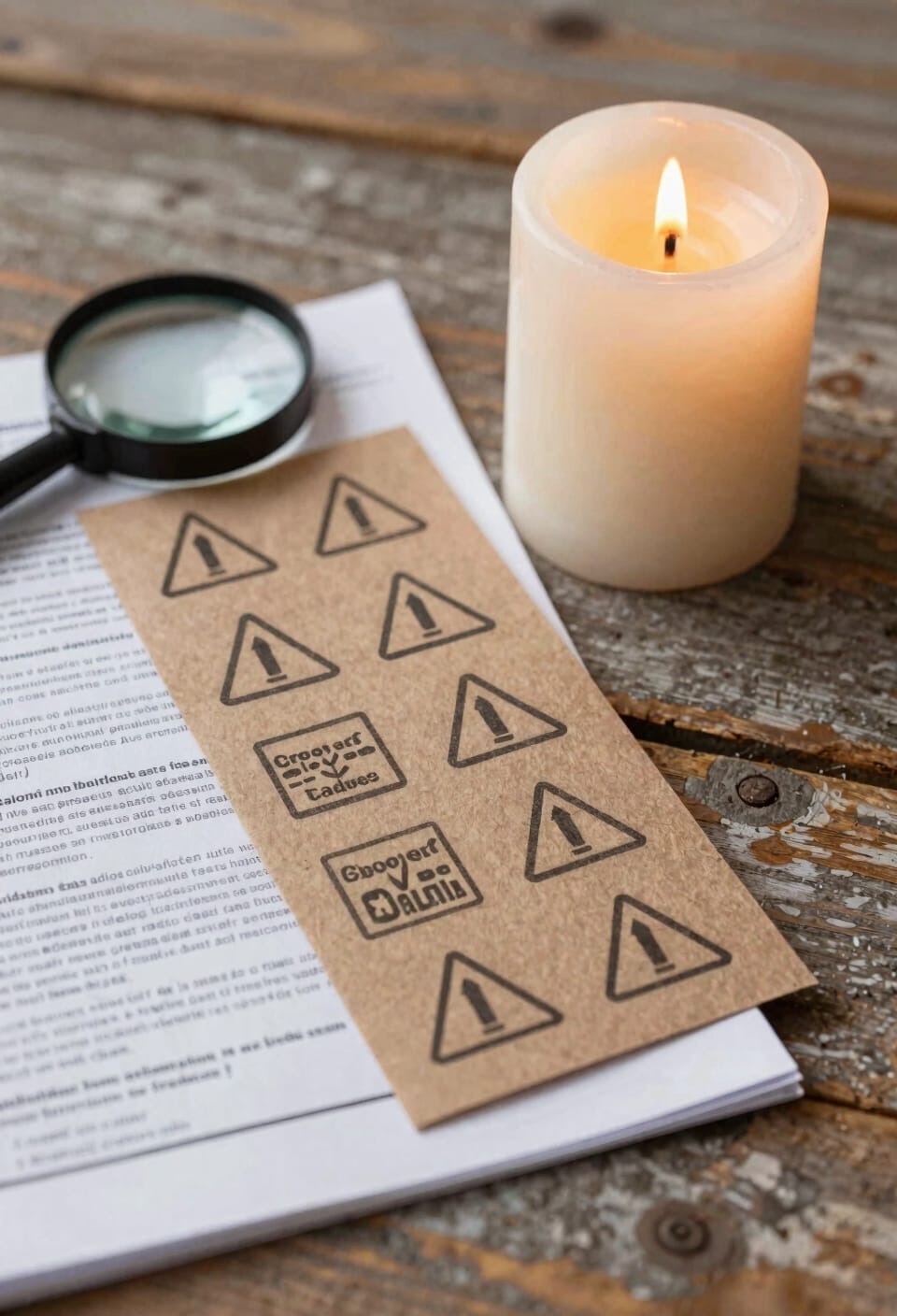
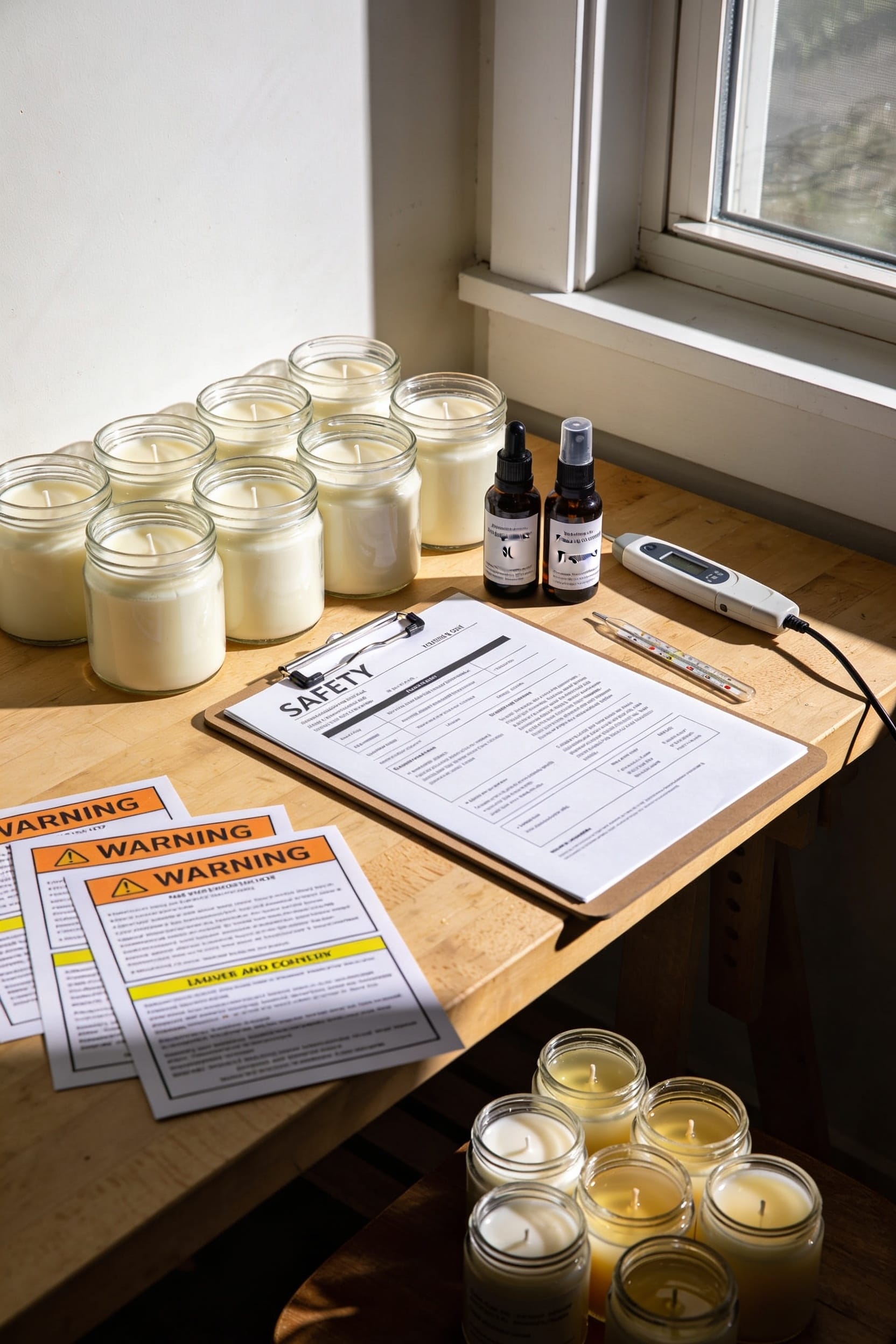
All right, so you’ve got your FPLA labels sorted—manufacturer info, net weight, the whole thing—but that’s only half the battle. You’ll also need ASTM safety warning labels, which follow a specific warning format that the industry adopted back in 2007. These labels require the signal word “WARNING” in bold at the top, followed by critical statements like “Burn within sight” and “Keep away from things that catch fire.” Pictogram placement matters here—that triangle symbol needs to be clearly visible, ideally in the upper corner. The “Keep away from children” statement works as text or pictogram too. Most manufacturers include these warnings because they protect you legally and actually keep your customers safe. Don’t skip this step thinking your candles are different.
Recommended Products

【Compliant With ASTM】Unlike many other candle warning stickers, our sticker language and symbols follow the ASTM standard specification for candle fire safety labeling requirements. While other sticker makers only print the NCA safety alert symbols in black color, our sticker is the only one on the market that prints the circle and the diagonal line correctly in red color. That is how a prohibition sign should look like. This helps people immediately noticing the meaning of “No” on the symbols.

Stickers are 1 x 2 Inch Rectangles; They Have a Cold Temperature Adhesive

🎀 LEVEL UP THE BRANDING OF YOUR CANDLE BUSINESS. Candle warning labels indicate essential safety information for consumers, and adding our cautionary candle stickers on every container of your product lines will enhance its safety features. Providing the customers a cautionary measure from fire or burn improves your branding and will help in promoting your candle business. The design of these warning labels for soy candles will also add a professional look and style to grab buyers’ attention.
Hazardous Substances and General Certificates of Conformity
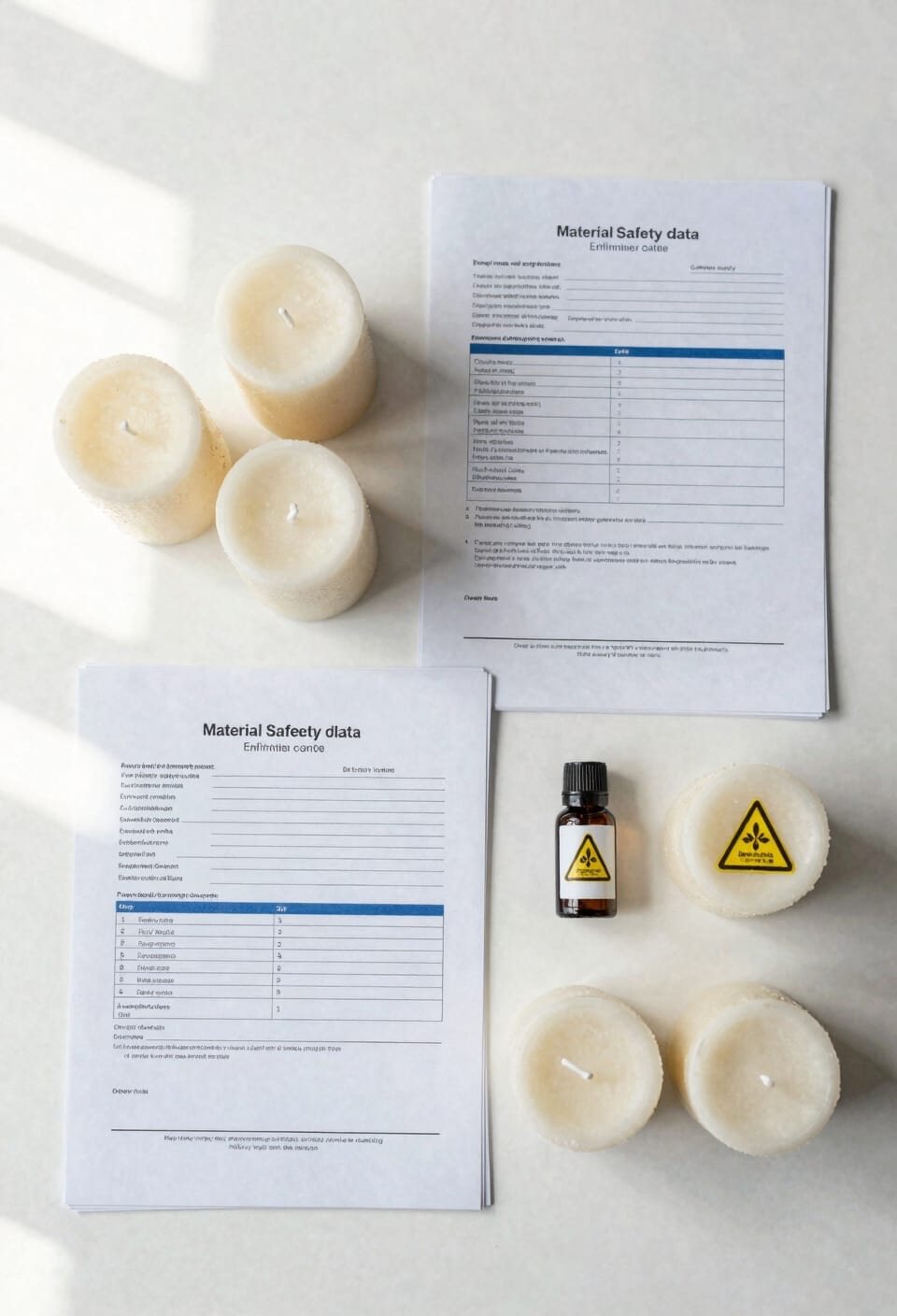
Once you’ve nailed your safety labels, there’s another layer of compliance you can’t ignore: hazardous substances. If your candles contain materials requiring toxic testing—certain fragrance oils or additives—you’ll need documentation proving they’re safe. That’s where a General Certificate of Conformity comes in. It’s effectively your proof of compliance, tracking everything from ingredients through your supply chain to final production.
You’ll maintain certificate tracking throughout your operation, which sounds tedious but protects you during regulatory audits. The GCC includes product details, test reports, and company information. Think of it as your safety net. Without it, you’re vulnerable to recalls or sales bans. Even small-batch makers need this paperwork. I know it feels bureaucratic, but it’s genuinely how you stay legit and keep customers safe.
Metal-Core Wicks: Compliance Rules for Bulk Shipments
If you’re buying wicks in bulk—whether you’re sourcing metal-core wicks for your own production or reselling them to other candlemakers— there’s a specific compliance rule you’ve got to follow. When you ship those wicks in bulk containers, you must label the outer packaging with “Conforms to 16 CFR 1500.17(a)(13).” This regulation guarantees the wick meets federal safety standards for lead content and combustibility.
Now, here’s where it gets practical: you don’t need labels on individual retail packaging. That’s a relief if you’re reselling to small makers. But for international shipping, double-check destination countries’ wick regulations—they’re stricter in some places. And when you’re done with packaging materials or waste disposal from bulk orders, handle them responsibly. Stay compliant, and you’ll avoid headaches.
California Proposition 65: When and How to Add Warnings
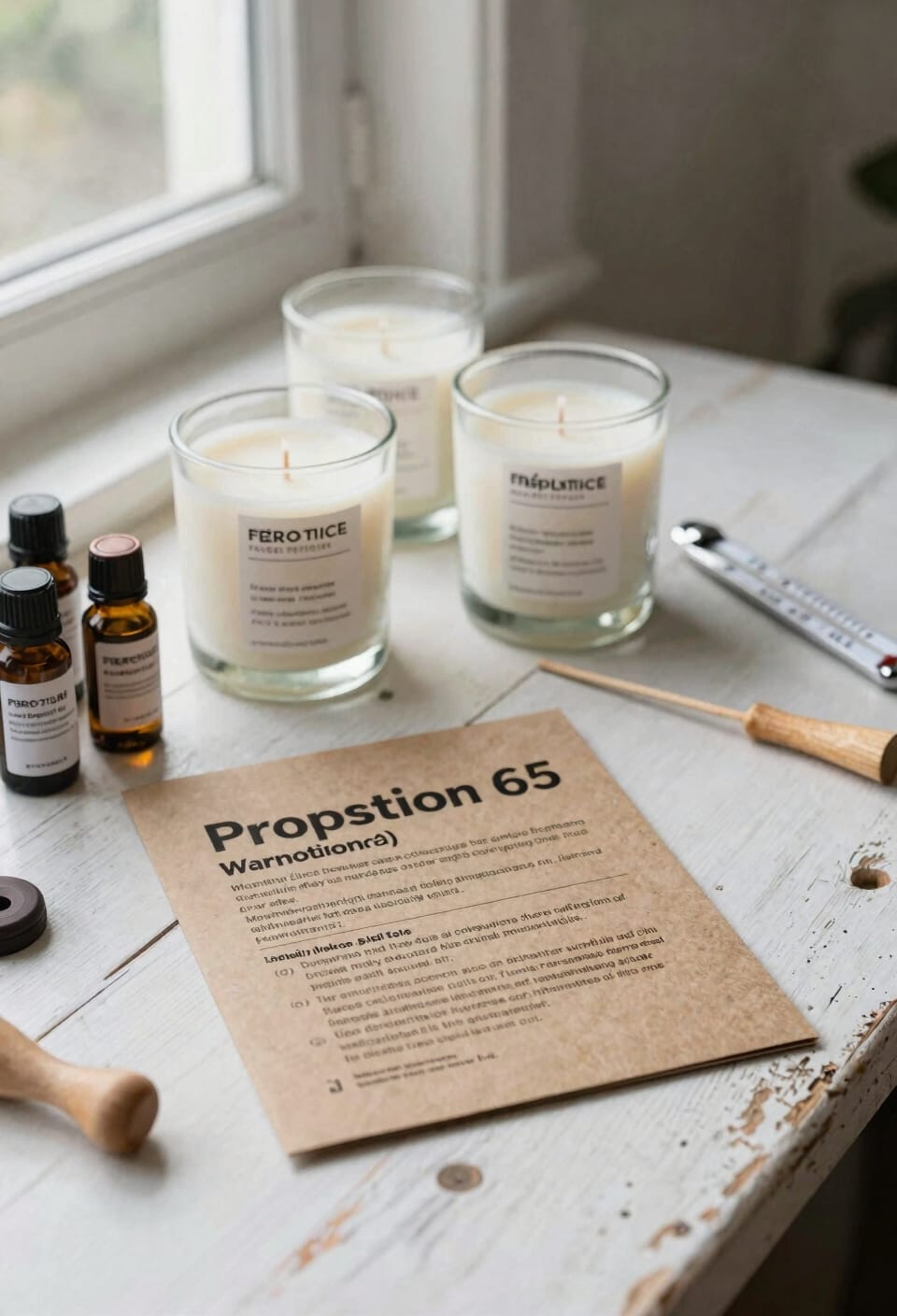
When you’re selling candles in California—or shipping them there from anywhere else—you’ve entered territory where additional warning labels might be required, and honestly, it’s worth understanding before you get caught off guard. California Proposition 65 applies to about 12% of the US market, which means if you’re selling nationally, you’re likely affected. The rule’s straightforward: if your candle contains chemicals above specific exposure thresholds without proven safe harbor documentation, you need California warnings on your label. Third-party chemical testing isn’t always mandatory, but it protects you. Test your fragrance oils and wax additives. Document everything. If you can’t prove compliance, add the warning label. It’s cheaper than a recall, and your customers deserve transparency anyway.
Where to Place Labels on Candles, Containers, and Packaging
All right, now that you’ve got your California warnings sorted—or decided you don’t need them—the next thing that’ll trip you up is figuring out exactly where all these labels actually go.
The FPLA requires your principal display panel to cover one full side of rectangular containers or 40% of round ones. That’s where your product name and net quantity live. Size placement matters here—too small and regulators won’t count it.
Your safety warning label? Stick it directly on the candle, container, or packaging itself. Tied labels work if they meet minimum dimensions. Keep decorative labels separate from mandatory ones; don’t let pretty packaging obscure required information. Your manufacturer address, wick type disclosures, and safety statements all need visible real estate.
Recommended Products

Blank 1.5 inch Round Labels - printable medium white circle labels, 30 labels per sheet, 150,000 blank labels total - compatible with inkjet and laser printers

BLANK 8" x 3-1/2" RECTANGLE LABELS - printable wrap-around labels - 3 labels per sheet - customizable - for inkjet & laser printers

【A Complete Candle Making Kit】LED display wax melting pot 500 ml x 1(Wax Heater Color Random),1.5 Pounds Soy Wax x 2 ,Candle Tin x 16, Candle essential scents x 8 , Wax Dyes x 12 , Gift boxes x 16, Ribbons x 20 , Wooden holder x 20, Wick x 20,Stickers x 20,Warning Stickers x 20, Anti-scald Gloves x 2,Stirring Spoon x 1, Silicone Anti Scalding Mat x 1 and more.Contains marker pen and writable label paper, you can make your own unique label, and each candle can is equipped with a very beautiful gi
Selling Online: Amazon, Etsy, and E-Commerce Documentation Standards
Selling online introduces a whole new layer of documentation requirements that goes beyond slapping labels on your jars—platforms like Amazon and Etsy have their own gatekeeping standards, and they’re stricter than you’d expect. You’ll need upfront documentation before your listings go live. Platform requirements demand you upload safety warnings, burning instructions, and ingredient lists directly into product pages. Listing optimization means front-loading compliance details so your candles don’t get flagged or delisted mid-sale. Amazon particularly wants General Certificates of Conformity for applicable products. Etsy’s less rigid but still requires accurate safety information. Don’t wing this part. One incomplete submission kills your entire launch. Have everything prepped before you hit publish.
Recommended Products

CHILDPROOF JAR WITH PUSH-DOWN-AND-TURN LID: These clear 3oz glass jars with lids measure W: 2.24” x H: 2.64” and feature a flush child-resistant cap that requires a simultaneous push-down-and-turn motion to open. The lids meet state compliance for all CPSC and ASTM child safety requirements. Ideal as child proof jars for storing vitamins, supplements, gummies, and medications at home or for retail sale, giving you and your customers reliable peace of mind.

Wide-Mouth Design - The wide-mouth design allows easy filling and controlled dispensing to wash labware and store solutions like acetone or deionized water

Create your own custom designs with Avery label template Presta 94501
Six Common Labeling Mistakes That Trigger Fines and Recalls
Because you can pour a technically perfect candle with beautiful layering and a flawless wick, only to tank your entire business with a single labeling oversight, I want to walk you through the mistakes I’ve seen wreck small makers—and the ones that’ll wreck you too if you’re not careful.
Missing warnings? That’s fine—until CPSC comes knocking. Illegible fonts on your principal display panel shrink your liability, but regulators won’t accept “I thought it looked cool.” Forgetting your manufacturer address or net quantity in grams gets you fined faster than you can restock inventory. Skipping California Prop 65 labels when you ship there costs money. Omitting fragrance load percentages leaves you defenseless if someone claims allergic reactions. And not including burning instructions? That’s literally the one thing that prevents fires. Don’t be lazy here.
Recommended Products

GSSUSA Gift Gags Large: White paper bags made in USA with premium 110 GSM kraft paper. Craft bags with sturdy twisted handles support up to 13 pounds. Gift bags with handles feature reinforced box-shaped bottoms for durability. Thick paper gift bags have smooth surfaces with no stray glue residues

Unique design: Crafted with high-quality engineered boards, this rack is durable and sturdy enough to ensure a long time of use. This space saver cabinet is a simple styled choice to add to any area of your home in need of storage. The free-standing design allows for optimal use of vertical space, while the open shelf and cabinet provide a spacious place to hideaway necessities like towels or cleaning supplies

Premium Materials: Crafted from CARB P2-compliant MDF with a water-resistant finish, this narrow bathroom storage cabinet offers solid structure and refined workmanship. Sturdy metal knobs and fittings add extra durability, making it ideal for humid bathroom environments
Frequently Asked Questions
Do I Need Different Labels for Wholesale Versus Retail Candle Sales?
Yes, you’ll need different labels. Wholesale packaging requires bulk labeling stating conformity standards, while retail demands full FPLA compliance, safety warnings, and retailer expectations. Commercial standards apply to both channels differently.
What Happens if I Sell Candles Without Proper Labeling Compliance?
You’ll face serious consequences: I’m exposing you to legal liability, fines, and product recalls. You’re committing consumer deception, risking lawsuits and losing retail partnerships like Amazon. Compliance protects your business.
How Often Should I Update My General Certificate of Conformity?
You’ve got to update your GCC like a medieval scribe renewing parchment annually. I’d recommend annual renewal alongside document retention of all test reports and production dates to stay compliant.
Are There Specific Font Size Requirements for Warning Label Text?
I don’t find specific font size mandates in the standards I’ve reviewed. However, you’ll want to prioritize legibility standards and font hierarchy—making your “WARNING” signal word prominent so consumers can’t miss critical safety information.
Can I Use Digital Labels or QR Codes Instead of Physical Ones?
I can’t rely solely on digital tags or scannable inserts for mandatory warning labels. You’ll need physical labels directly on your candles or containers, though QR codes linking to detailed information can supplement—not replace—required safety warnings.
Conclusion
Look, I’ve learned this the hard way: regulations aren’t obstacles you navigate around—they’re guardrails protecting both you and your customers. Get your labels right, understand what you’re shipping, and you’ve built a foundation that won’t crumble under scrutiny. You’re not just making candles; you’re building a business that can actually breathe. That’s worth the effort.