As an Amazon Associate, we earn from qualifying purchases. Some links on this site are affiliate links at no extra cost to you. Our recommendations are based on thorough research and editorial judgment.

Candle Making Profit Margin: What You Can Realistically Earn

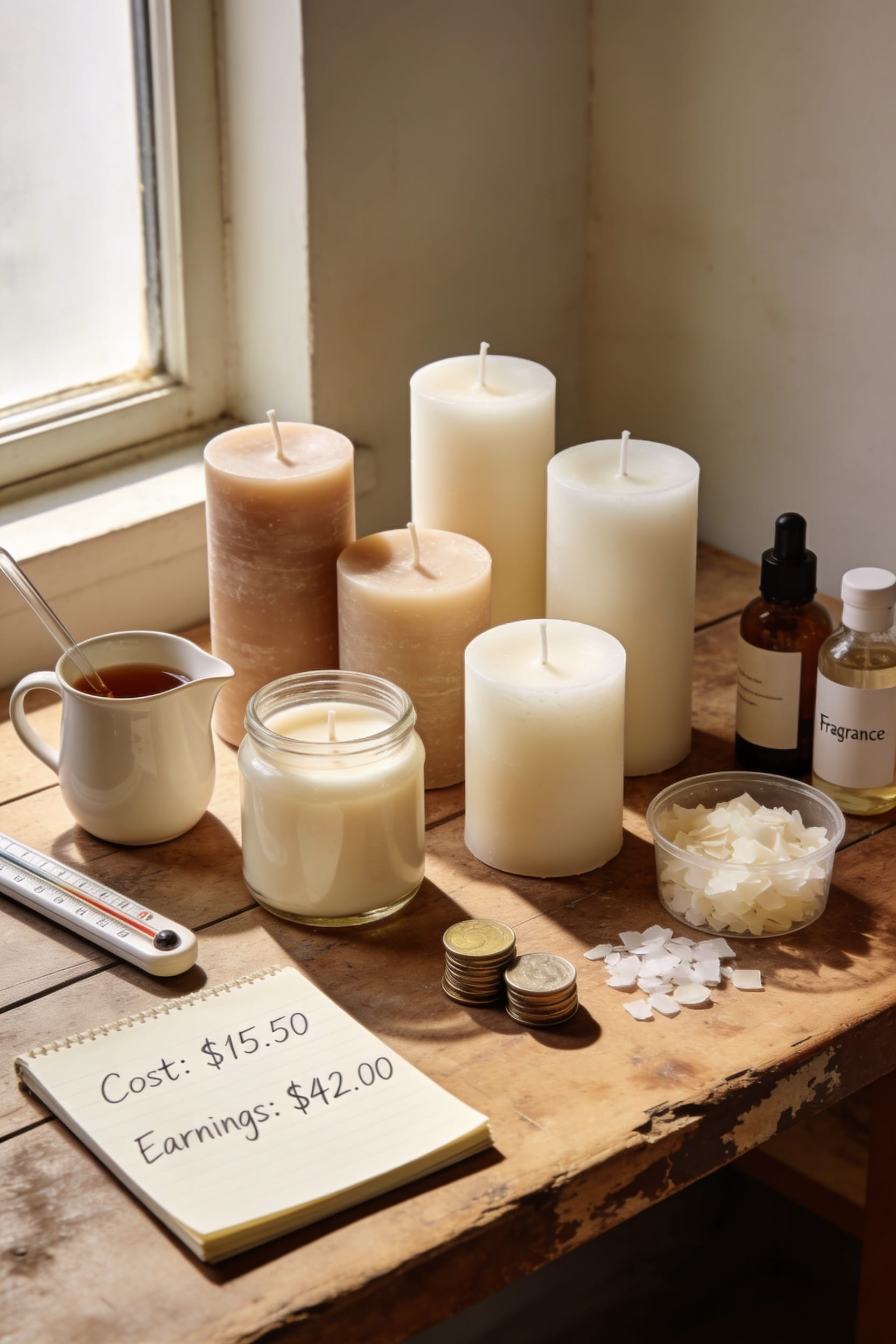
All right, here’s the thing: most candle makers think they’re hitting 70% margins until they actually track waste—spilled wax, cracked containers, fragrance miscalculations—and suddenly that number drops to 40–50%. You’re looking at $3–7 material cost per candle realistically, which means $10–14 profit per unit at retail pricing. That’s $5,000 monthly at 357 sales, but only if you’re not underestimating costs or ignoring your failed pours. Hybrid channels (Etsy plus wholesale) and bundling shift volume without crushing production, though the real money comes down to which pricing model actually fits your capacity.
Key Takeaways
- Direct-to-consumer retail yields 60–80% margins, while wholesale reduces margins to 30–50% but accelerates volume sales.
- Material costs typically range $3–7 per candle; accurate tracking of waste prevents underestimation and protects profitability.
- At $10 profit per candle, 500 monthly units generate $5,000; at $14 profit, only 357 units needed.
- Premium positioning ($40–70 retail) extracts $20–30 profit per candle, requiring fewer sales for six-figure revenue targets.
- Multi-channel strategies (Etsy, subscriptions, wholesale) maximize revenue from existing inventory while distributing overhead costs across channels.
Three Profit Models: Retail, Wholesale, and What Actually Works
When you’re trying to scale a candle business, the profit model you choose will make or break you—and I’ve watched plenty of makers pick the wrong one and wonder why they’re working sixty-hour weeks for peanuts. Retail Direct to Consumer lets you keep 60-80% margins, but you’re funding inventory and shipping. Wholesale cuts your margin to 30-50%, though you move volume faster. Here’s the thing: I’ve found the real money lives in hybrid models—mixing Direct to Consumer channels like Etsy with Subscription Boxes that create predictable recurring revenue. You’ll absorb less risk, smooth your cash flow, and actually sleep at night. Start where your audience already shops, then layer in other channels strategically.
Recommended Products
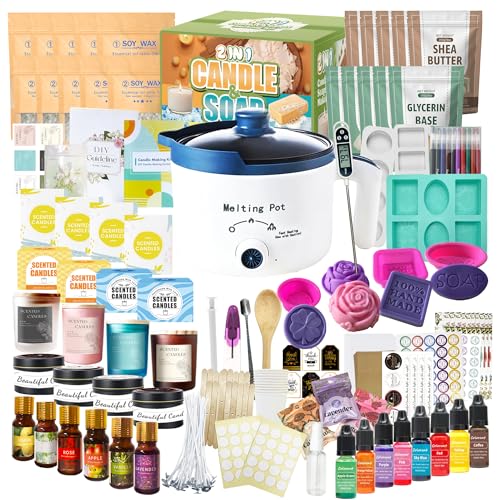
𝐓𝐎𝐏 𝐐𝐔𝐀𝐋𝐈𝐓𝐘 & 𝐐𝐔𝐀𝐍𝐓𝐈𝐓𝐘: Deluxe kit means top quality, quantity and valuable. Including all soap and candles making supplies in one kit, saving up to 40% compared to buying all accessories separately. 4 lbs soy wax and soap base, 8 dyes, 6 essential oils, 4 jars and glass cup, 7 soap molds, enough supplies for you to fully unleash your craftsmanship.

【EVERYTHING INCLUDED - START TODAY!】Get the FULL candle making experience in one kit! Your kit arrives with 4lb Soy Wax, 6 strong Fragrants, 30pcs Candle Wicks, 7 units candle containers, Wax Melter Pot, & Thermometer. No hidden costs.

SOY CANDLE MAKING KIT FOR ADULTS: Candle making supplies kit includes: natural soy wax for candle making, 2 lb (4 bags, 8 oz each), 1200 mL candle wax melting pot, 2 round and 2 square 8 oz candle tins with lids, thermometer, 4 cotton candle wicks, 4 wick stickers, 4 wooden wick holders, 4 wooden stirring sticks, 1 silicone finger protector, 1 silicone trivet, 4 warning labels, and 4 gift tags with 18” twine, and step-by-step instructions.
Why Your Materials Cost $3–7 Per Candle (And What Happens if You Get It Wrong)
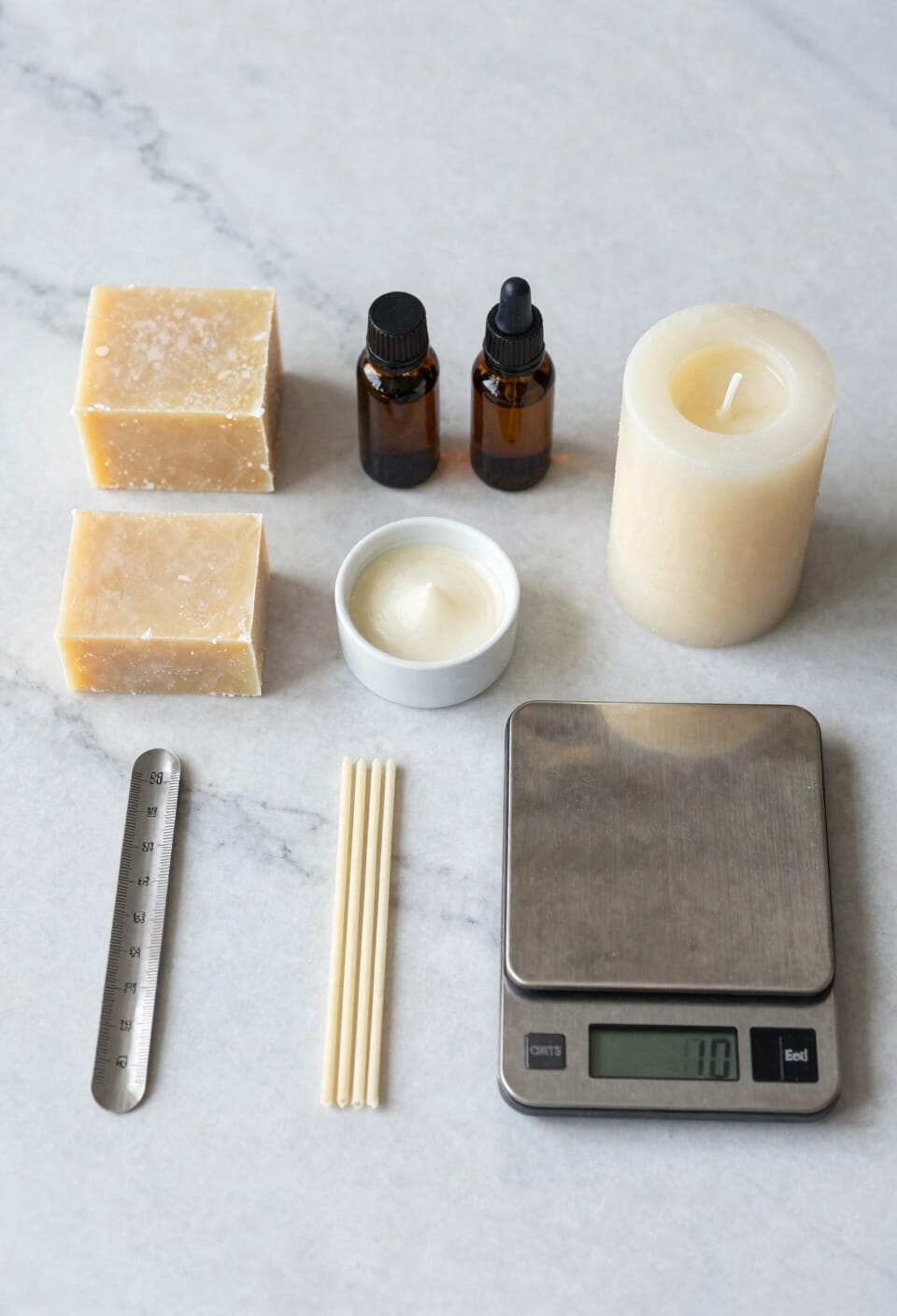
Now that you’ve picked your profit model, you’ve got to nail the actual cost of making each candle—because that $3–7 range isn’t magic, it’s math, and getting it wrong will evaporate your margins faster than you can say “failed batch.” I’ve seen makers underestimate their material costs by half and then wonder why they’re broke despite selling candles every week; they forgot to factor in the wax they wasted pouring at the wrong temperature, the fragrance oil that cost more than they expected, the wicks they had to buy in bulk to get a decent price, or the dyes and containers that seemed cheap until they actually sat down and calculated the per-candle number.
Supply variability hits different when you’re scaling. Bulk buying helps, but waste management—tracking every spill, every failed pour, every container that cracked—that’s where your actual cost per candle lives. Track it ruthlessly or your margins disappear.
Monthly Candle Profit Scenarios: From $1,000 to $5,000
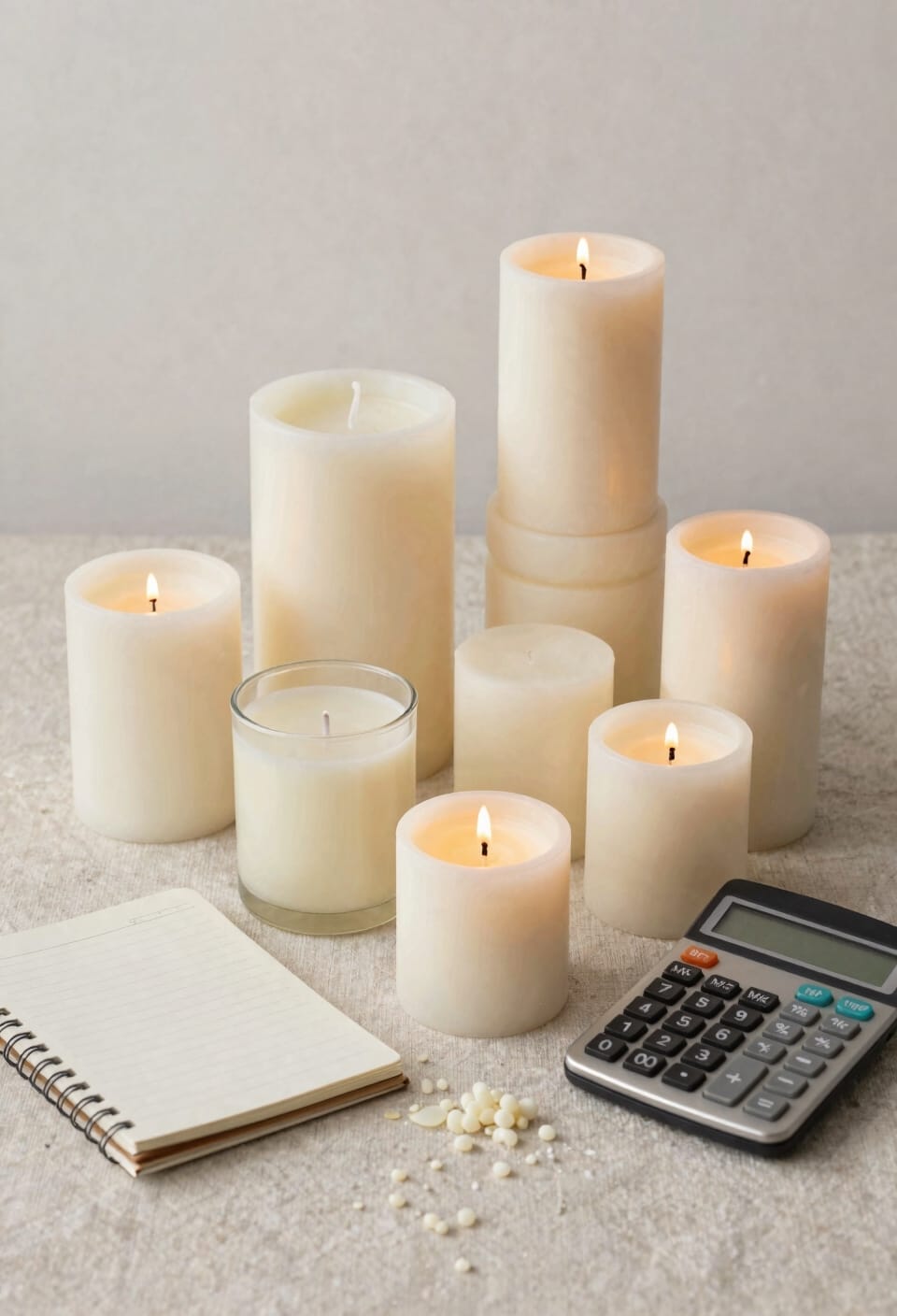
Once you’ve locked in your cost per candle and picked your price point, the real question isn’t whether you can make money—it’s how much you actually need to sell to hit the monthly profit targets that’ll keep you motivated (and keep the lights on).
Here’s the breakdown. At $10 profit per candle, you’re looking at 500 units monthly for $5,000. That’s doable if you’re consistent. Drop to $14 profit each? You’ll hit $5,000 with just 357 candles—way more realistic for most makers.
Now, seasonal promotions and subscription bundles change the math fast. Bundle three candles together and suddenly you’re moving volume without proportional cost increases. That’s where the real margins expand. Start tracking what mix actually works for your operation.
Recommended Products

Blank 2 inch Round Labels - printable medium white circle labels, 20 labels per sheet, 200 blank labels total - compatible with inkjet and laser printers

NATURAL SOY WAX BEADS - Best candle making supplies make the best soy candles! These safe, ethically produced, microwavable and paraffin-free soy wax beads are smooth and creamy in appearance, perfect for container candles, tealights and melts.

COMPLETE POTTERY + CANDLE MAKING SET: Includes all pottery sculpting & candle making supplies you need to easily craft a beautiful custom candle at home. The perfect beginner arts & crafts gift, hobby idea, and romantic date night surprise.
The Pricing Formula That Protects Your Margins
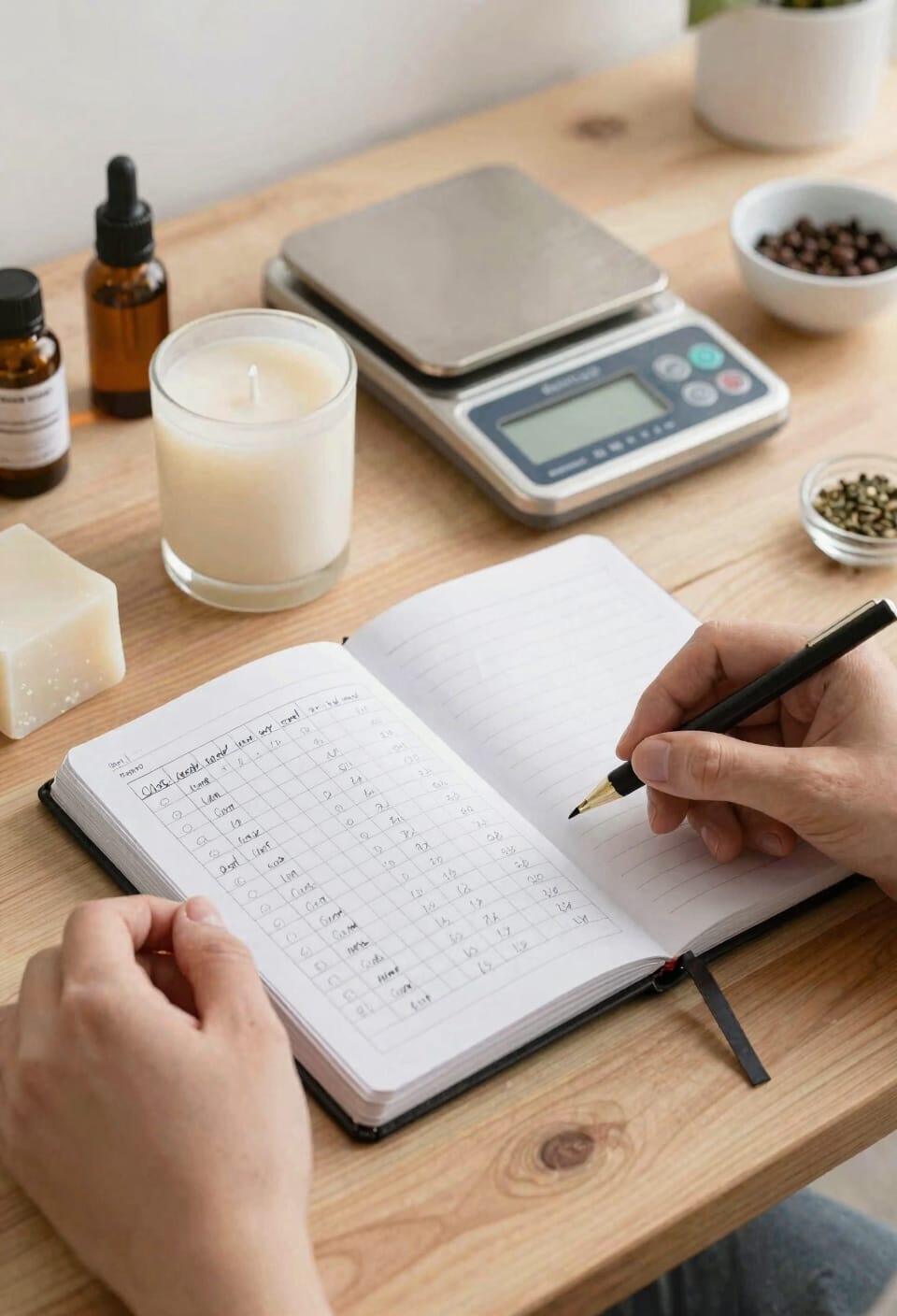
You’ve figured out your costs and you know what volume you need to move—now comes the part that actually protects those margins you’ve worked to calculate. All right, here’s the thing: your markup strategy determines whether you’re running a real business or just a hobby that drains your wallet. I use the simple formula—multiply your total cost of goods sold by three for wholesale, by two for retail. That math alone keeps me profitable. But tiered discounts matter too. When bulk buyers come calling, I drop my per-unit price slightly, which moves volume without destroying margins. You’re protecting profit, not maximizing every single sale. That’s how sustainable candle businesses actually work.
Recommended Products

CONSTRUCTION – These bags are made from recyclable 120 GSM brown kraft paper. Each bag measures 13" wide by 7" deep by 17" tall. Our jumbo-sized gift bags are made to be sturdy and durable, with equally sturdy patch reinforced paper twist handles and a squared bottom for easy loading and unloading. Each bag can comfortably hold a variety of items, making them perfect for shopping and takeout needs alike

Eco-friendly Gift Bags :These kraft paper bags are made of Recycled Paper. FSC compliant.This small paper bag is healthier and more upscale than plastic bags.Paper bag size: 10 inches long,5 inches wide, 13 inches high.
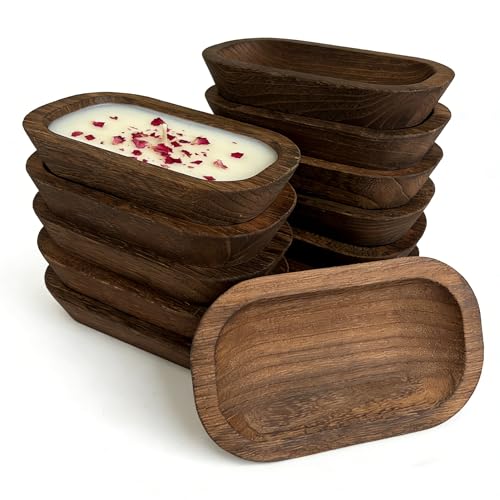
【Perfect for Wooden Dough Bowls for Candle Making】– Hand-carved from 100% natural wood, our 12-pack of 9.5-inch wooden bowls are the premium candle vessels every DIY artisan needs. Each bowl is meticulously inspected to be leak-proof and heat-resistant, providing a safe, rustic, and elegant base for your soy or beeswax candles
Break Even in Two Months: The Math and the Shortcuts
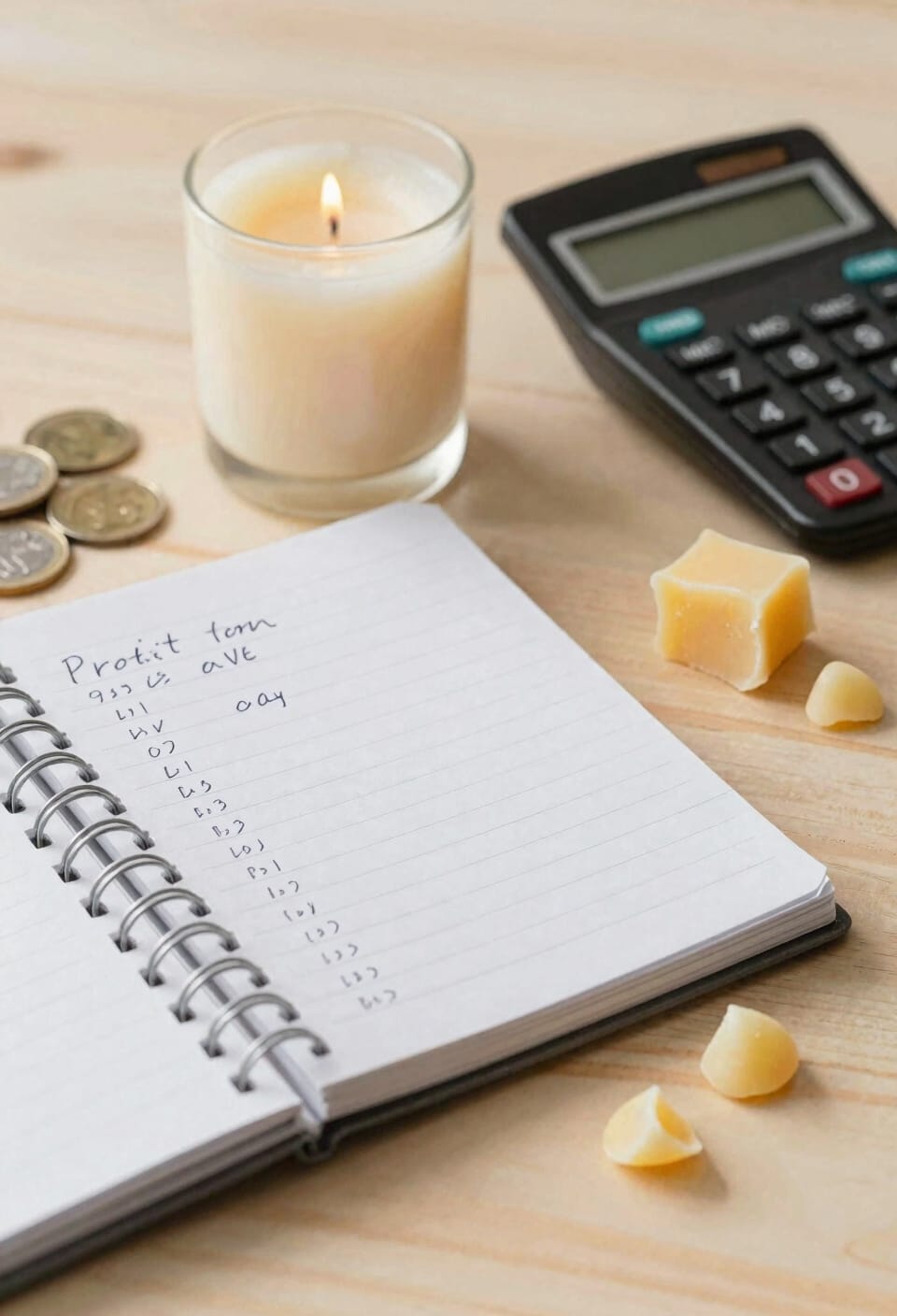
If you’re running the numbers on your candle business and wondering how long it’ll actually take to stop bleeding money, two months is the magic number—and I mean that literally, not as some motivational poster nonsense. Here’s the math: with 70% margins on soy candles, you’re looking at roughly $10-14 profit per unit. Hit 357 candles monthly, and you’ve cleared $5,000. That’s your startup timeline compressed. Now, rapid scaling happens when you nail your production cost—keep it under $5 per candle if you’re wholesale pricing at $10. Bulk your fragrance oils and wax orders. Automate your labeling. Every shortcut that doesn’t sacrifice quality feeds your break-even date. You’re not just making candles; you’re engineering predictability.
Recommended Products


Safer Ambience for Everyday Moments: Our sand wax candle design with self-extinguishing sand candle wicks minimizes fire risk if tipped and prevents hot wax spills; ideal for homes with pets or kids that won’t renounce stylish décor, offered in White, Red, Nude, and Black for cozy luxury

Professional Wax Melter for Candle Making or Soap Making, Melter 3 Gallon Stainless Tank, Extra Deep for Your Larger Batches Of Candles or Soap, This Has Been Designed From Customers Requests and is Unlike Other Competitors.
Volume vs. Premium Positioning: Which Path Leads to Six Figures
The split between chasing volume and positioning yourself as premium isn’t really a fork in the road—it’s more like two different mountains you can climb, and they’ve got wildly different views from the top. High volume means flooding the market with affordable candles—think $12-15 retail with low margin per unit. You’ll need serious production capacity and wholesale channels to make six figures this way. Premium positioning flips the script entirely. You’re selling artisanal candles at $40-70, extracting $20-30 profit per candle. Fewer sales needed. I’ve watched makers hit six figures faster through premium pricing than grinding out hundreds of low-margin units monthly. Your choice depends on whether you’d rather scale production or scale pricing strategy.
Recommended Products

HIGHEST QUALITY - Our candle fragrance MADE IN THE USA using pure, natural, and raw ingredients. All VINEVIDA products are vegan, free of phthalates, parabens, and other potentially dangerous chemicals.
![VINEVIDA [128oz] Honeysuckle Fragrance Oil for Candle Making and Soap Making - Premium Candle Scents for Soy Candles](https://m.media-amazon.com/images/I/311YCT70dfL._SL500_.jpg)
HIGHEST QUALITY - Our candle fragrance MADE IN THE USA using pure, natural, and raw ingredients. All VINEVIDA products are vegan, free of phthalates, parabens, and other potentially dangerous chemicals.

PREMIUM LAVENDER 40/42 STANDARDIZED BLEND – Our Lavender 40/42 is meticulously curated to provide a consistent, high-quality floral aroma every time. By maintaining a specific 40% Linalool and 42% Linalyl Acetate ratio, we ensure the classic, sweet lavender scent that professionals and hobbyists depend on for their signature products.
Double Your Profit Without Doubling Production (Multi-Channel Strategy)
Most candle makers leave money on the table by selling the exact same product in the exact same way, month after month—Etsy shop, maybe a craft fair, done.
Look, you’re already making those candles. Why not sell them three different ways simultaneously? Retail expansion through Shopify lets you capture customers beyond Etsy’s marketplace fees. Wholesale channels to boutiques and gift shops move volume at lower per-unit margins but higher absolute profit. Subscription bundles—rotating seasonal scents delivered monthly—create predictable recurring revenue that absorbs your overhead costs beautifully.
Now here’s what actually happens: that same $15 candle selling wholesale at $7.50 to retailers, retail at full price, and bundled quarterly reaches completely different customer segments. You’re not doubling production. You’re tripling revenue from existing inventory through strategic distribution.
Frequently Asked Questions
How Do Seasonal Demand Fluctuations Affect Candle Profit Margins Throughout the Year?
I’ve found seasonal demand fluctuations compress my profit margins during slow periods unless I use strategic seasonal promotions and inventory buffering. Higher sales volume during peak seasons lets me maintain healthier margins through economies of scale.
What’s the Optimal Inventory Level Before Cash Flow Becomes Problematic for Candle Makers?
I’d maintain safety stock covering thirty to forty-five days of sales while setting your reorder point before inventory drops below two weeks’ supply. This balance prevents cash flow strain from overstock without risking stockouts that kill revenue momentum.
How Should I Adjust Pricing When Competitors Undercut My Candle Retail Prices?
Picture competitors slashing prices while your margins evaporate. I’d avoid matching them directly—instead, I’ll differentiate through value bundling, positioning premium scents as gift sets, or strategically using loss leaders to attract customers who’ll purchase higher-margin items.
Which Packaging Materials Offer the Best Balance Between Cost, Quality, and Brand Perception?
I’d recommend recyclable boxes paired with premium labels—they’re cost-effective, environmentally conscious, and elevate your brand perception without straining margins. This combination signals quality while keeping packaging costs reasonable.
How Do I Calculate Accurate Labor Costs for Custom or Personalized Candle Orders?
I’ve watched custom orders drain profits because I wasn’t tracking hourly labor properly. I now log every minute—design consultation, pouring, personalizing—then divide total hours by units to get true per-candle labor costs, accounting for setup amortization across batches.
Conclusion
candle makers who use a multi-channel strategy—selling retail, wholesale, and direct-to-consumer simultaneously—report 40% higher profit margins than single-channel operators. You’ve got the knowledge now. Start small, track your numbers obsessively, and scale what works. Your first batch won’t be perfect. Mine weren’t either. But you’re already ahead of most people just by understanding the math.