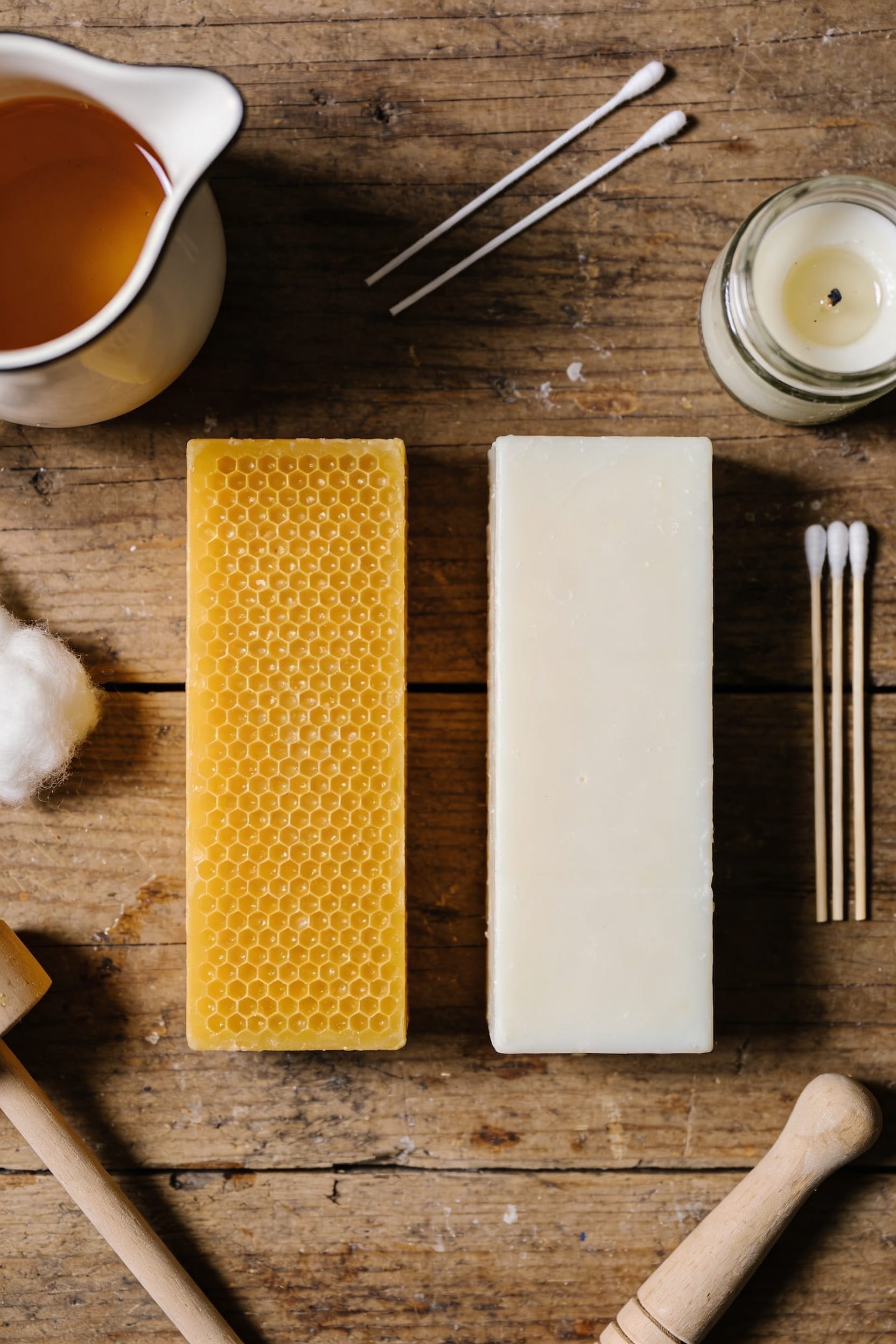

yellow beeswax leans into that natural honey character—it’s got pronounced fragrance from retained pollen and plant oils, making it perfect for artisanal, rustic candles where you want that warm glow and authentic vibe. White beeswax, though, gets bleached and filtered to near-neutrality, so your fragrance oils actually shine through without competition, and you’ll get more consistent batches batch after batch. Neither’s objectively “better”—it depends on whether you’re chasing character or control, and there’s a lot more nuance worth understanding.
Key Takeaways
- Yellow beeswax retains natural honey notes and rustic textures ideal for artisanal candles; white offers neutral blank canvas for custom fragrances.
- Both types melt around 62–65°C with minimal soot, but yellow shows more batch variability while white provides consistent, predictable performance.
- Yellow beeswax’s natural pollen oils can compete with added fragrance; white allows scent oils to perform without interference.
- Yellow develops warm glow prized for gift candles; white enables precise dye work and brand-consistent batch quality.
- Choose yellow for honey-forward artisanal appeal and preserved character; choose white for clean customization and professional fragrance control.
Why Bees Produce White Wax (And How It Turns Golden)
If you’ve ever held a piece of raw beeswax up to the light, you’d be surprised—it’s actually white, or close to it, which caught me off guard the first time I worked with it. Here’s the thing: bee physiology dictates that they secrete colorless wax from special glands. The golden hue develops afterward, driven entirely by what bees forage. Pollen, propolis, and plant oils stain the wax composition during seasonal variation and hive activity. Floral influence matters tremendously—bees working lavender fields produce different-colored wax than those near wildflower meadows. That honey-gold tone you associate with beeswax? It’s basically the bees’ foraging resume written in color. Understanding this distinction helps you choose the right wax for your candles and manage batch consistency expectations.
How Processing Creates Yellow vs. White Beeswax
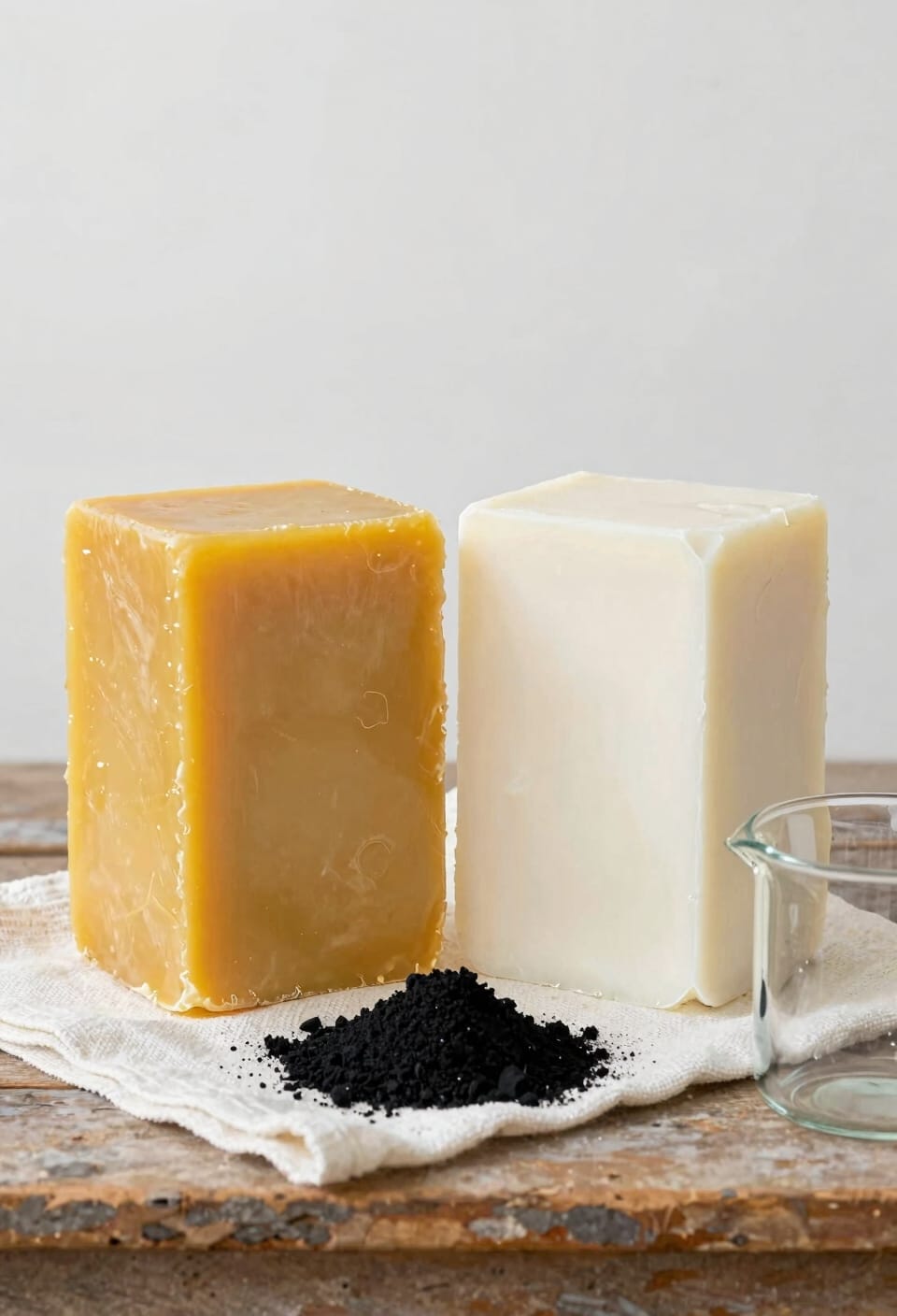
Now that you understand where beeswax gets its color in the hive, here’s the thing: what you do *after* you harvest it is what actually determines whether you end up with that golden stuff or something closer to ivory. Yellow beeswax gets minimal processing—just basic heat filtration that leaves those natural carotenoids and pollen oils intact. White beeswax, though? That’s where things get serious. It undergoes cold filtration followed by chemical bleaching to strip away impurities and neutralize color. Both start identical, but the processing path diverges completely. You’re fundamentally choosing between embracing beeswax’s natural personality or refining it into something pristine. For candles, this matters because processing affects not just appearance but scent strength and how predictably your batches turn out.
Recommended Products

Set of 150 tea light candles crafted from raw, natural beeswax for a pure and eco-friendly lighting solution.
COMES WITH EVERYTHING YOU NEED: This kit includes 3 lbs of Paraffin Wax, 72 inches of cotton wick, 3 candle rubber stoppers, pigment (red, yellow, blue, white), 3 candle molds with base, and a color mixing chart

PREMIUM 5 LB BEESWAX BLOCK: Ethical, 100% natural Texas Beeswax. Revered for its creamy texture, clean burning quality, enticing natural scents, and skin-soothing properties. Our pure, unadulterated beeswax block is perfect for a wide variety of household and cosmetic applications. Package includes a five-pound 9.5″ x 4.125″ x 3.5″ beeswax bar.
Scent: Yellow vs. White Beeswax Aroma
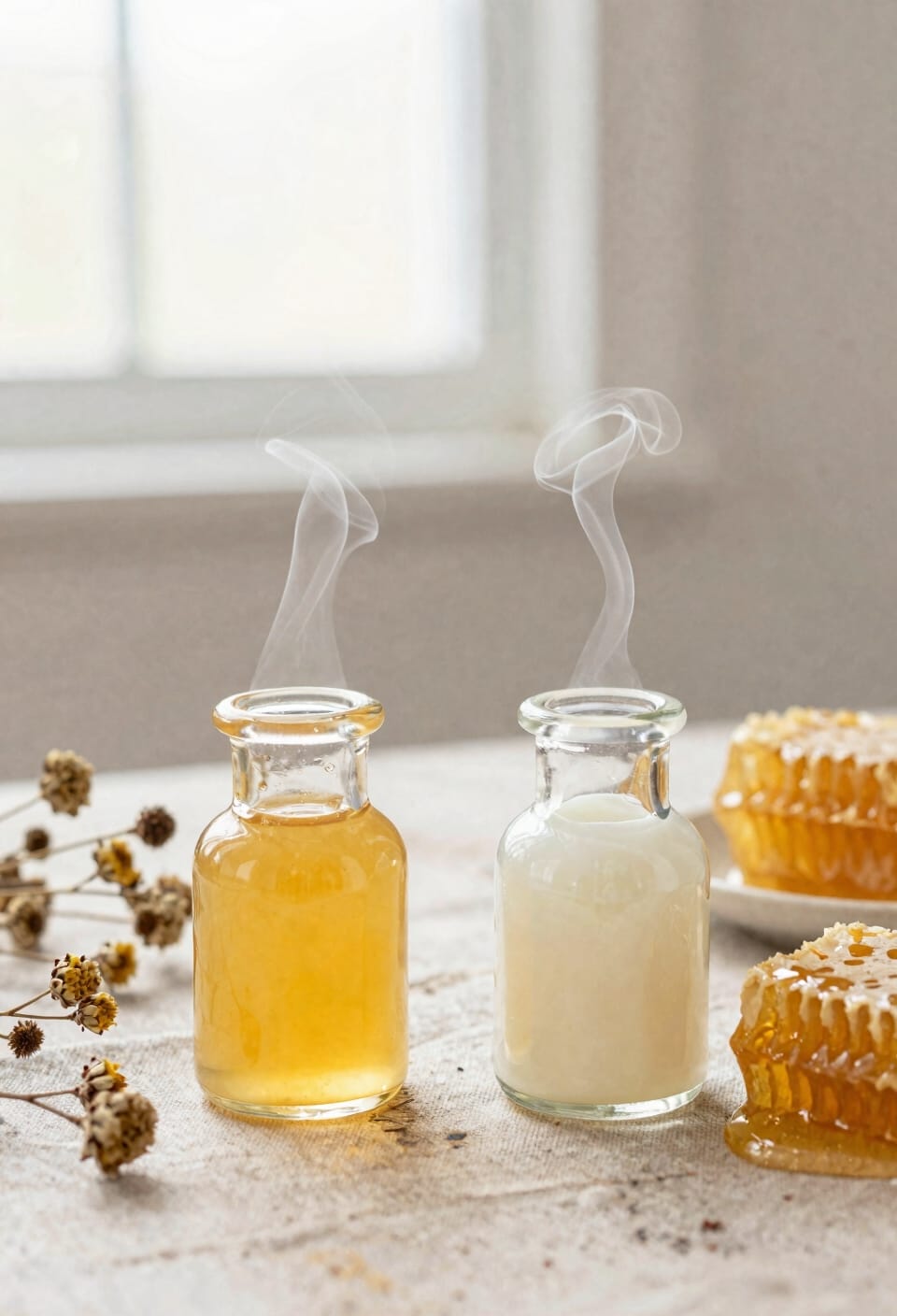
One of the biggest surprises I had when I first started making beeswax candles was discovering that scent isn’t just about what fragrance oil you pour in—it’s baked into the wax itself before you even crack open a bottle.
Yellow beeswax carries pronounced honey notes from retained pollen and plant materials, creating a naturally aromatic base. That’s wonderful if you want those warm, organic undertones in your finished candle. White beeswax, though? It’s been bleached and filtered to near-neutrality, giving you a blank canvas.
Here’s where fragrance compatibility matters. Yellow’s strong honey notes can compete with or muddy your added scents. White lets your fragrance oils shine without interference. Choose yellow for that artisanal honey character. Pick white when you want clean, predictable scent performance.
Melting Points: How Yellow and White Beeswax Compare
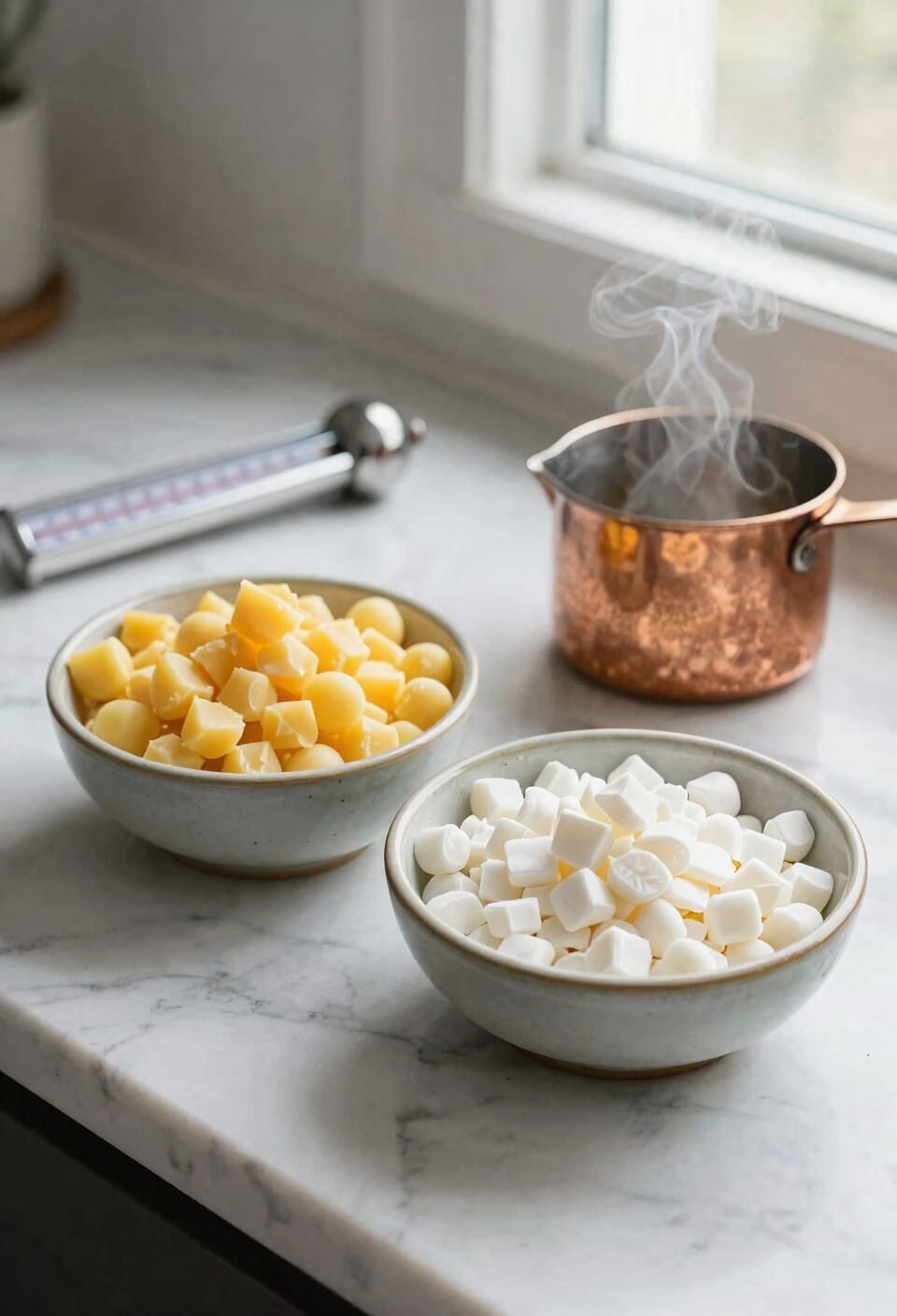
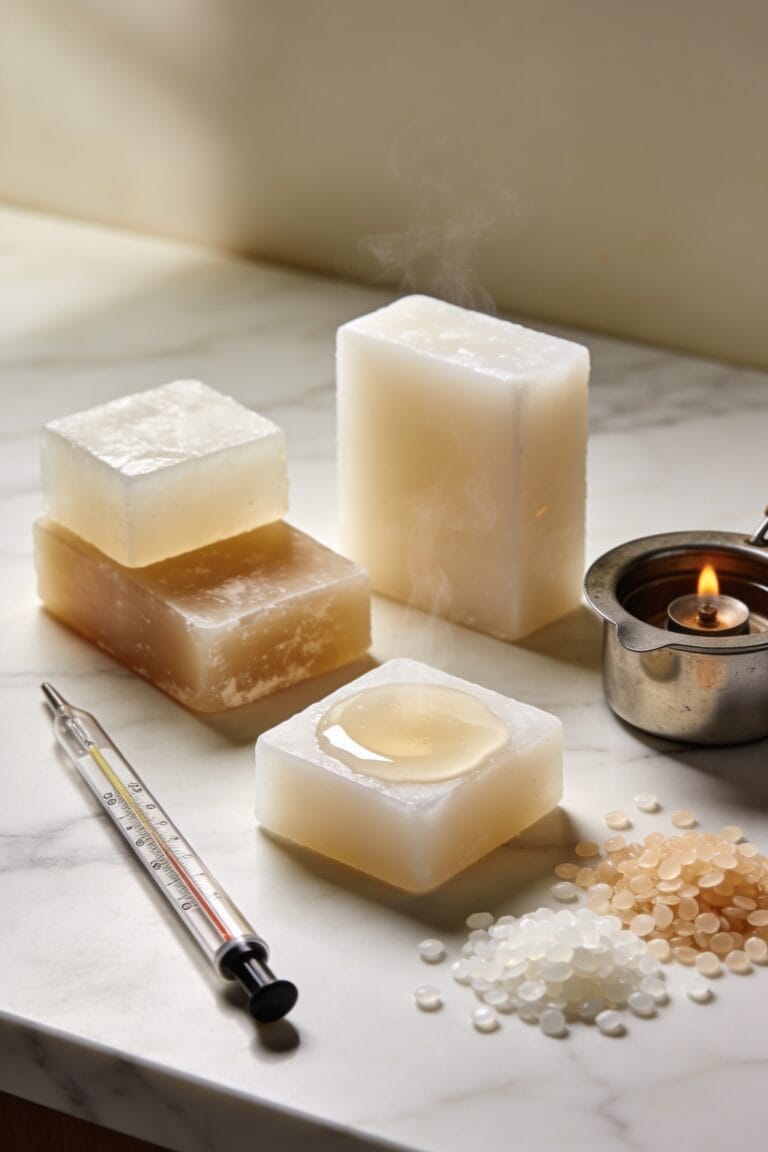
When you’re standing over a pot of melting wax, temperature control is everything—get it wrong and you’ll either scorch your fragrance oils or pour candles that crack and tunnel like Swiss cheese. Yellow and white beeswax are remarkably close here: yellow melts around 62-64°C (144-147°F), while white sits slightly higher at 62-65°C (144-149°F). That narrow band means you won’t need separate protocols. Yellow’s softer composition does show more melting variability between batches, which I’ve noticed affects thermal aging—how your finished candle handles temperature swings over time. White’s denser structure offers better heat resistance. Honestly, both work beautifully for candles. Pick based on your desired aesthetic and scent profile, not melting point anxiety.
Burn Quality and Durability in Real Candles
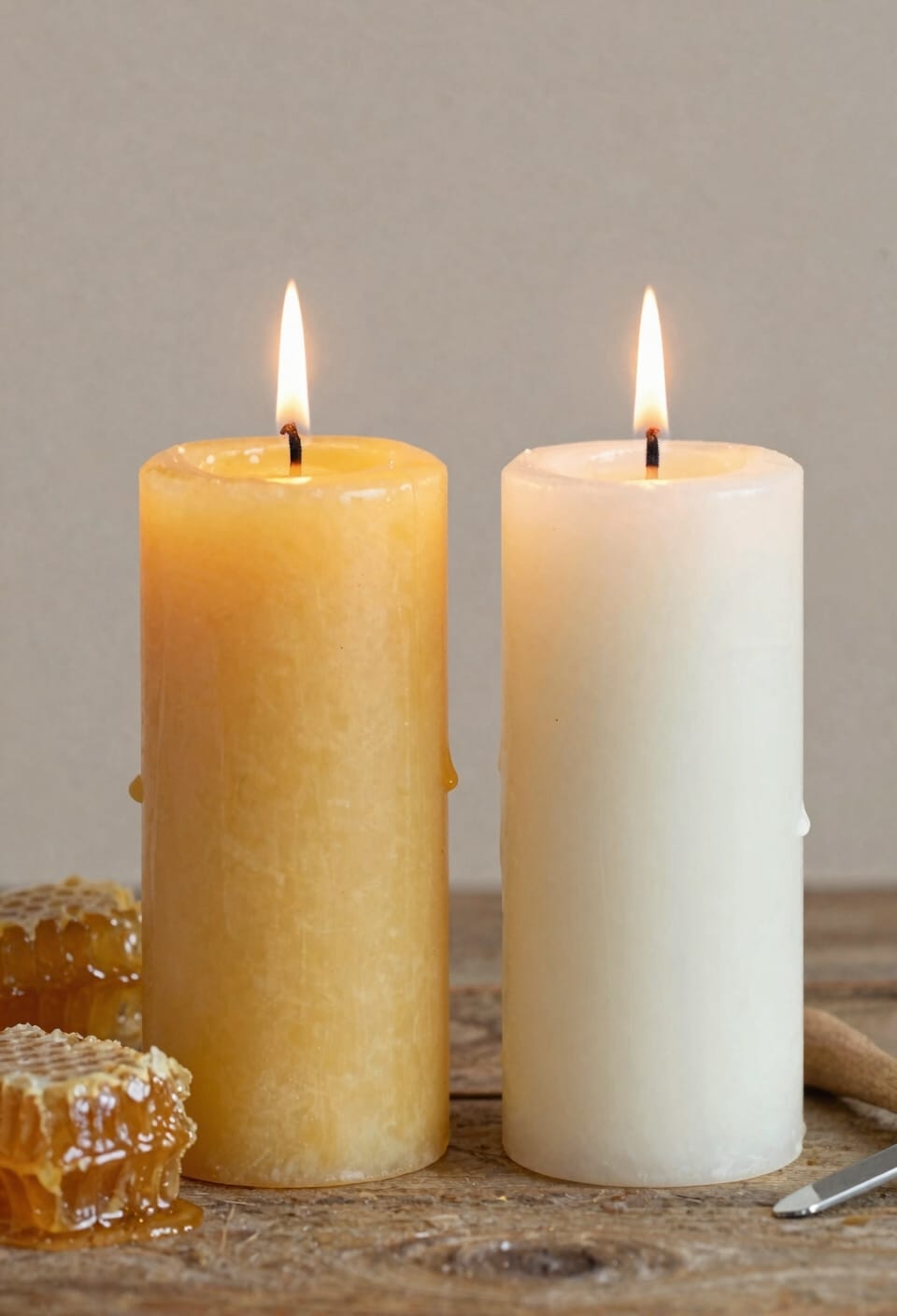
Because burn quality is where theory meets reality—where all your careful temperature control and wax selection either pays off or leaves you staring at a tunneling disaster—you’ll want to understand how yellow and white beeswax actually perform once that wick is lit.
Here’s the thing: both burn cleanly, but they’re not identical. Yellow beeswax produces minimal soot production and maintains excellent wick longevity thanks to its natural composition. White beeswax burns similarly well, though some crafters report it’s slightly more forgiving with wick selection. The real difference? Yellow develops a beautiful glow and holds fragrance throw better, while white stays neutral. Either way, you’re getting superior burn quality compared to paraffin. Your flame stays steady, your candle lasts longer, and cleanup’s easier.
Yellow Beeswax for Warm, Artisanal Candles
If you’re chasing that warm, honey-kissed aesthetic that makes people walk into a room and immediately think *artisanal candle shop*, yellow beeswax is honestly your best bet. I’ve poured hundreds of candles, and the rustic textures that naturally develop with yellow beeswax? They’re basically impossible to fake with white wax and dyes.
Hand poured yellow beeswax candles carry this inherent boutique appeal—that golden glow paired with the genuine honey scent creates something people actually want to gift. It’s not manufactured charm. The impurities in yellow beeswax, like propolis, genuinely enhance that natural feel you’re going for.
For artisan gifting, this matters. Your customers notice. They *feel* the difference between a mass-produced candle and one that looks like it came from someone’s small-batch kitchen.
White Beeswax for Clean, Customizable Designs
Now here’s where white beeswax shines if you’re after a completely different vibe—think clean, sophisticated, and endlessly customizable. The color neutrality is what I love here. You’re working with a blank canvas, basically. This means any dye you add actually shows up true to color, which matters when you’re crafting specific aesthetics. The scent masking property is equally valuable—the bleaching process strips away that honey aroma, so your fragrance oils become the star. You won’t get competing scents muddying your intentions. White beeswax works beautifully when you want brand consistency across batches. No floral variations throwing off your look. It’s refined without trying, perfect for gift-quality candles or when clients demand uniformity. That purity costs more, sure, but the design freedom pays dividends.
Recommended Products

🐝[Sustainable Alternative] Natural and sustainable alternative to traditional hunny bees wax melts. These melts offer a clean burn and a warm, inviting scent that's perfect for any home. 50 lbs white beeswax pellets available to fulfill all needs.


250 TEA LIGHTS, better in bulk and more economical
Frequently Asked Questions
Is Yellow Beeswax More Expensive Than White Beeswax, and Why?
I’d say yellow beeswax commands a premium price tag because it’s undergone less refinement. Higher production costs for white beeswax’s pressure filtration and bleaching actually lower its market pricing, making yellow the pricier choice.
Can I Mix Yellow and White Beeswax Together in Candle Making?
You can absolutely mix yellow and white beeswax together. I’d recommend experimenting with different ratios for color blending and scent compatibility. You’ll achieve custom hues while balancing the natural honey aroma with a milder profile.
Which Beeswax Type Lasts Longer When Burned in Candles?
I’d say both types have virtually identical burn times since they share similar melting points and burn efficiency. Your candle’s longevity depends more on wick size, container design, and wax quality than choosing yellow or white beeswax.
Are There Health or Safety Differences Between Yellow and White Beeswax?
I’ve found both types are FDA-approved and safe. Yellow beeswax retains more natural contaminants and propolis, raising minor allergen concerns for sensitive individuals, while white beeswax’s filtering reduces these risks markedly.
How Do I Know if My Beeswax Is Pure or Adulterated?
I’d recommend starting with visual inspection for consistency and color uniformity, then perform scent testing—pure beeswax has a distinctive honey aroma. You can also check melting point around 62-65°C.
Conclusion
Here’s the thing: choosing between yellow and white beeswax isn’t about picking a winner—it’s about matching wax to your vision. Yellow beeswax is like aging wine, rich with history and natural fragrance. White’s your blank canvas. I’ve poured both hundreds of times, and honestly? Your choice depends on whether you’re chasing warmth or clarity. Neither’ll steer you wrong.