As an Amazon Associate, we earn from qualifying purchases. Some links on this site are affiliate links at no extra cost to you. Our recommendations are based on thorough research and editorial judgment.

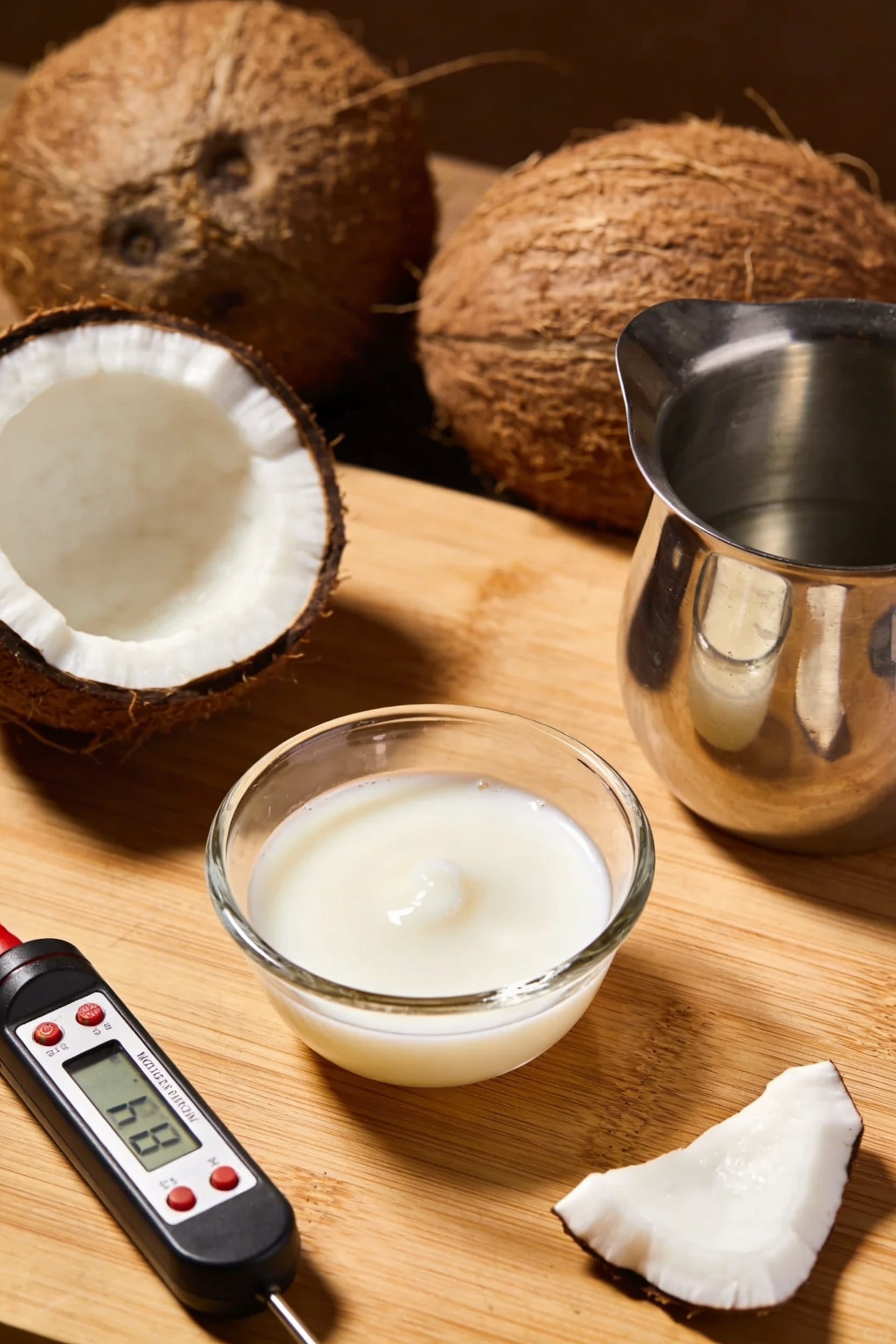
Coconut Wax Melting Point: What It Means for Your Candle Making

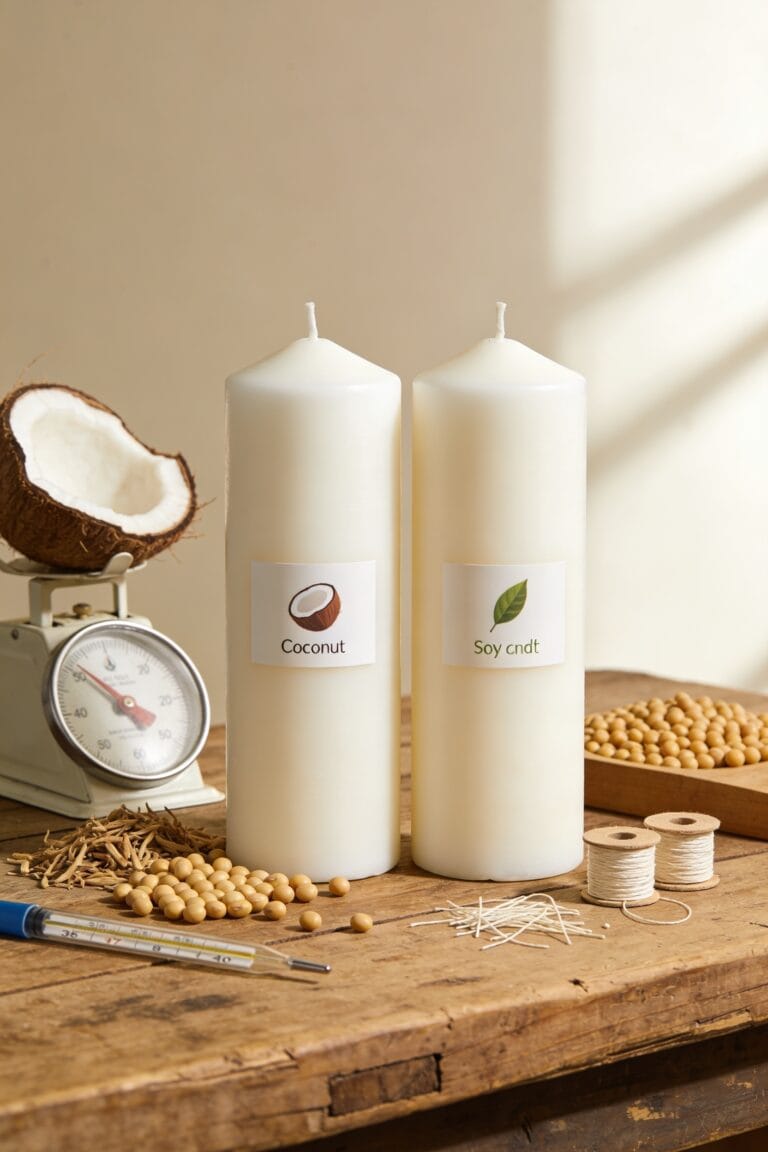
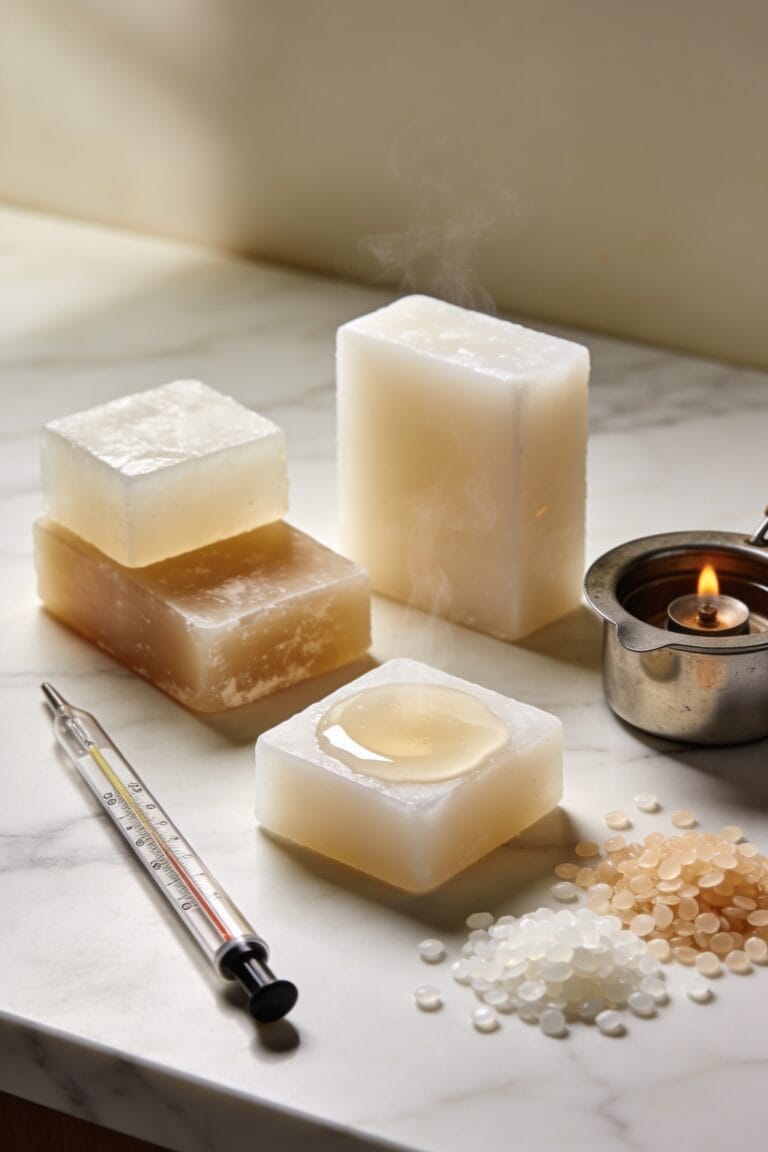
Coconut wax’s melting point—somewhere between 51–53°C depending on your blend—basically controls your entire candle’s personality. The lower the melting point, the slower and more evenly your wax burns, which means better scent throw (how strong your fragrance smells) and fewer sinkholes cratering your top. Pour temperature matters just as much: aim for 170–190°F, and you’ll get smooth finishes and consistent fragrance release. Get it wrong, and you’re looking at frosting, tunneling, and disappointed customers. The specifics change depending on your exact wax type and setup.
Key Takeaways
- Coconut wax melts at 51–53°C, enabling slower, more even heat distribution and preventing aggressive hot spots during burning.
- Lower melting point allows fuller fragrance dispersion and consistent scent throw throughout the candle’s lifespan with proper wick sizing.
- Pour between 170–190°F for optimal results; adjust by 5°F increments based on performance and ambient temperature conditions.
- Correct temperature control prevents surface defects like sinkholes, craters, and frosting caused by poor cooling or high pour temperatures.
- Coconut wax’s molecular structure holds 6–10% fragrance load effectively, producing longer-lasting candles with gradual, controlled fragrance release.
Understanding Coconut Wax Melting Points and Why They Matter
When you’re standing in front of your melting pot watching coconut wax transform from solid to liquid, you’re witnessing something that’ll either make or break your entire candle—and I learned that the hard way. Here’s the thing: understanding wax chemistry and thermal stability isn’t just nerdy precision. It’s the difference between a candle that smells incredible and one that smells like nothing.
Coconut wax typically melts between 51-53°C, which matters because that melting point directly controls how your fragrance oils release into the air. Lower melting points allow fuller fragrance dispersion. Golden Brands 454 sits at 45.6°C, creating ideal aromatic conditions. You need to respect these numbers. When you skip understanding them, your scent throw suffers, your burns uneven out, and suddenly you’re wondering why your candles underperform.
How Melting Point Affects Fragrance and Scent Throw
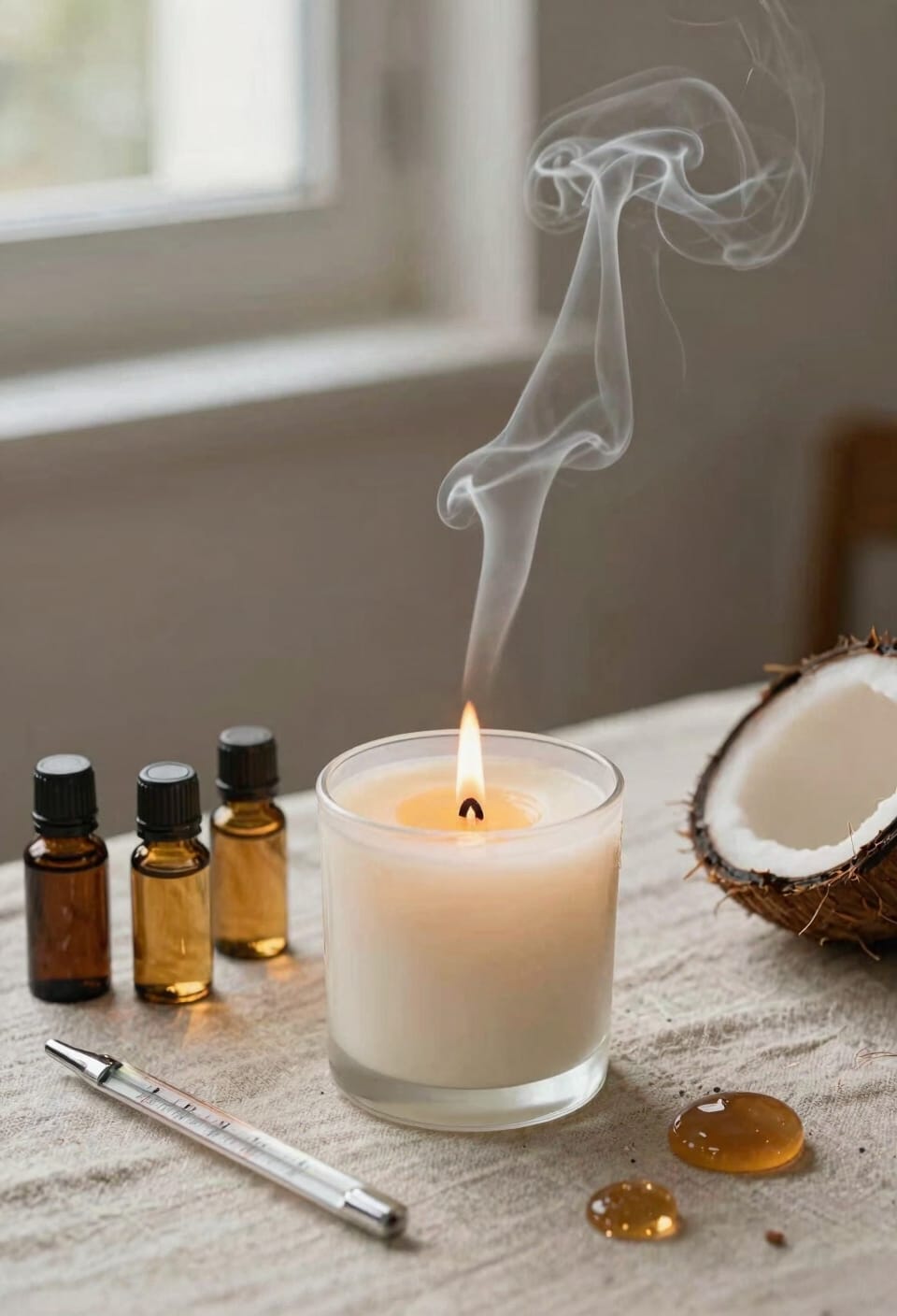
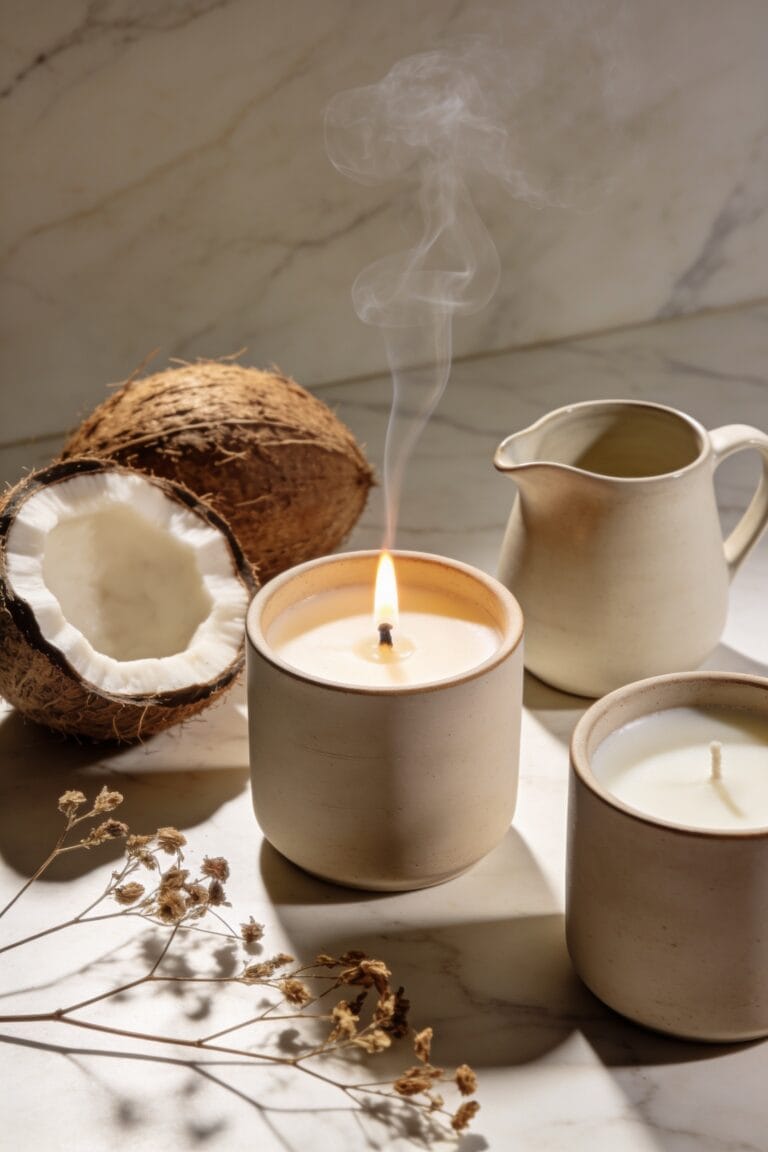
Because coconut wax melts at such a low temperature, it’s doing something really specific to your fragrance oils—and I’ve found that most candle makers don’t think about this part nearly enough. That cooler melt point enables cold diffusion, meaning your scent releases more effectively without getting trapped by excessive heat. It’s about oil compatibility too. Coconut wax’s molecular structure holds fragrance exceptionally well, which sounds great until you realize poor pour temperatures can actually work against you. I’ve learned that nailing your fragrance load—the percentage of scent oil you add—between 6-10% makes all the difference. Lower melting points mean slower, more controlled burn rates, giving your scent throw consistent performance. You’re effectively creating ideal conditions for aromatic release throughout the candle’s life.
Recommended Products

BLACK BUTTER BODY OIL: Our body oil offers the quality of all scented and perfume oils. This oil is quality and is uncut which will last all day long. And we offer a distinctively clean line of products that are made with vegetable glycerin. This perfume black butter scented body oil envelops you in an alluring fragrance that lasts all day.

MASSIVE 8" × 14" LUXURY CANDLE – 300 OZ OF NATURAL COCONUT SOY WAX Make a statement with this Classic Big Ass Candle—our largest candle. This luxury candle delivers bold presence, elegant style, and room-filling fragrance. Perfect as a centerpiece for living rooms, great rooms, and upscale spaces.
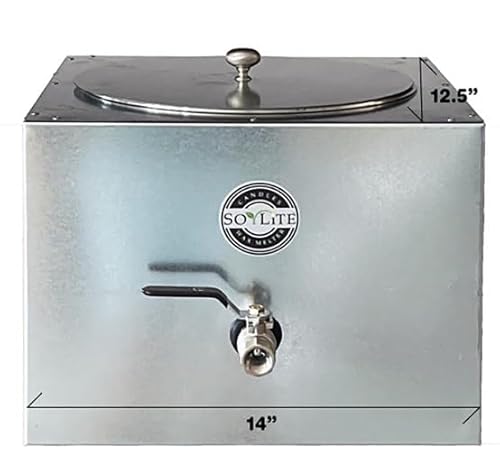
Profeshional wax melter for candle making, Effortlessly make large batches candles . No more messing with temperature control. This new wax melter automatically keeps wax around 180 to 190 degrees. Just simply add wax and turn on. If you are running a small business or handling a big custom order? SoyLite will help save you time.
Choosing the Right Pour Temperature for Your Wax Type
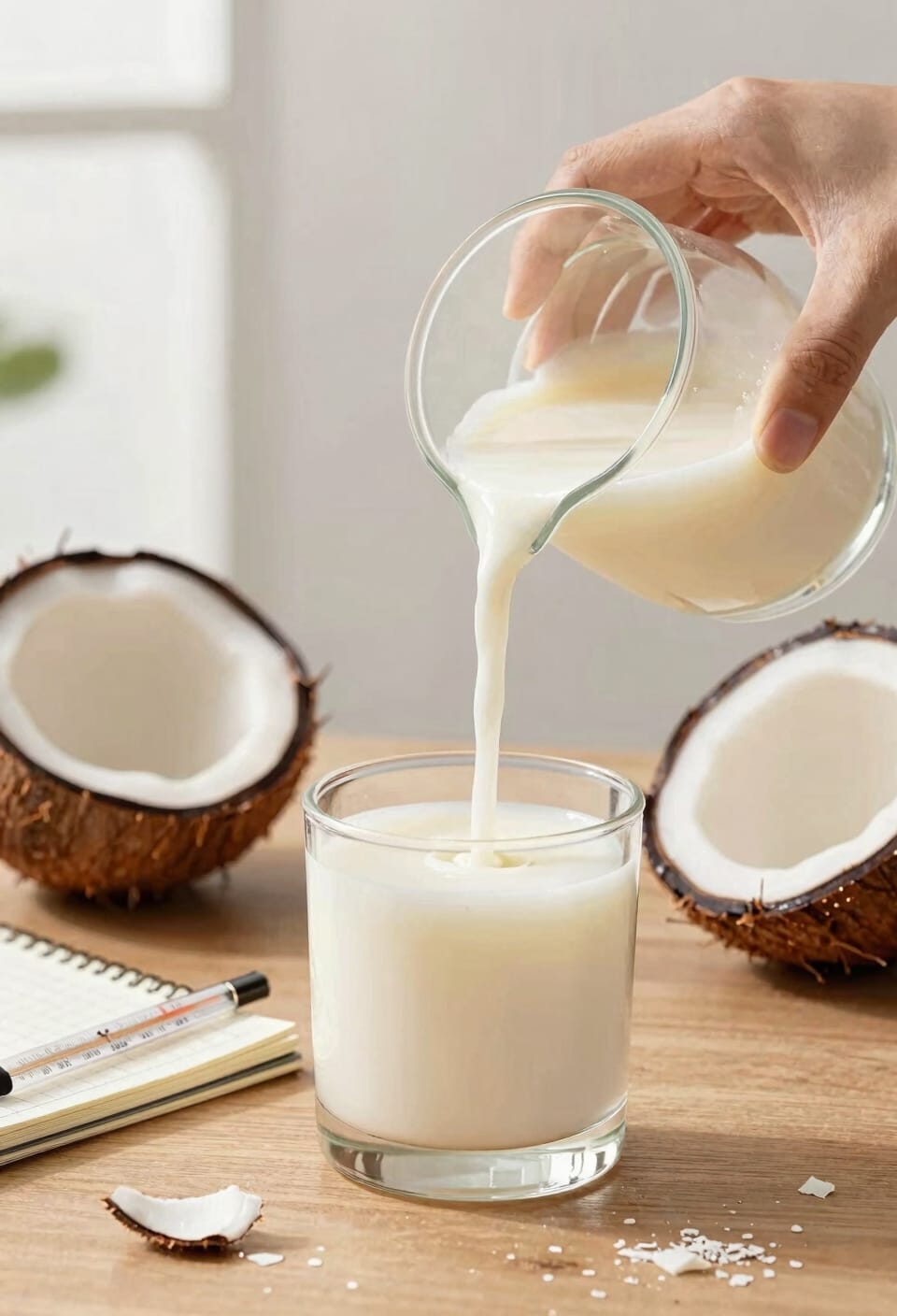
Now here’s where a lot of candle makers trip themselves up: you’ve nailed your fragrance load and you understand why coconut wax’s low melt point creates that beautiful scent release, but then you pour your wax at the wrong temperature and undo all that work. I’ve been there—too hot, and you’ll get sinkholes; too cool, and your wax won’t bond properly to the glass.
For coconut-soy blends, aim for 165°F to 190°F depending on your specific product and ambient temps in your workspace. Golden Brands 454 suggests starting at 170°F, then adjusting up or down by five degrees based on how your pours look. Your containers should be room temperature or slightly warmer. Getting this right, alongside proper wick sizing, guarantees clean finishes and consistent burns every batch.
Temperature and Burn Quality: What You Actually Get
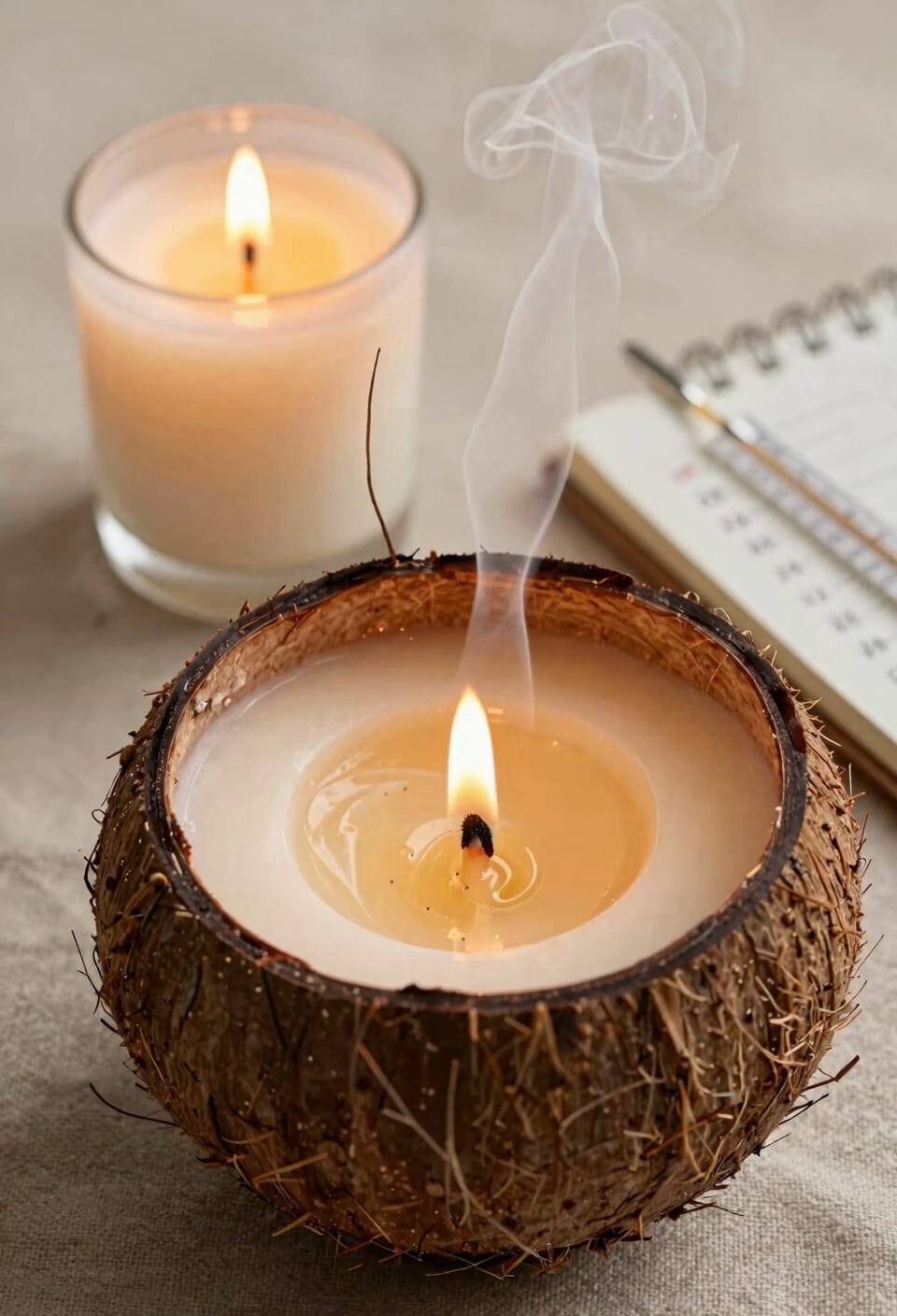
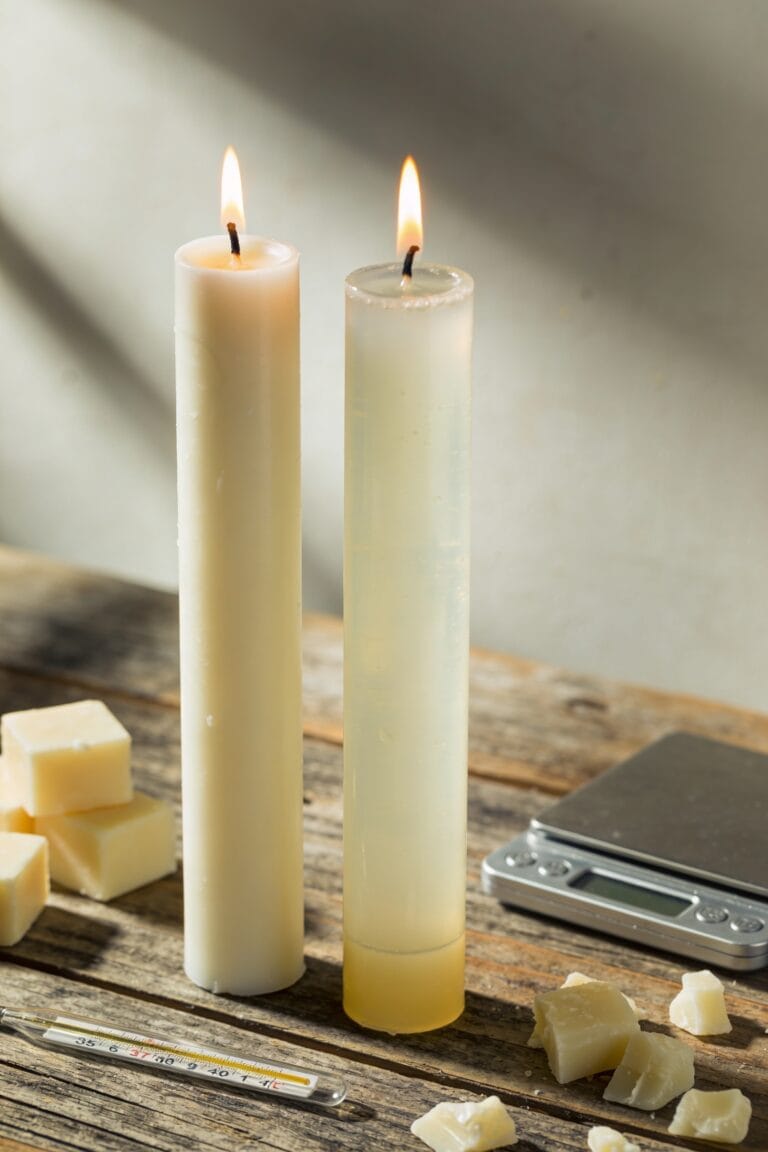
All that precision you’ve put into your pour temperature—the careful 170°F starting point, the adjustments for your specific workspace, the patience waiting for containers to reach the right warmth—it all pays off in one place: how your candle actually burns. Here’s the thing: coconut wax‘s lower melting point means slower, more even heat distribution throughout the burn. You’re not getting those aggressive hot spots that devour wax unevenly. Instead, you get wax longevity—candles that actually last as long as they should. The cooler burn profile prevents excessive heat concentration, which means your fragrance releases gradually and your wick doesn’t tunnel. That’s not just technical performance. That’s the difference between a candle people actually want to burn and one they abandon halfway through.
Melting Point’s Role in Smooth Finishes
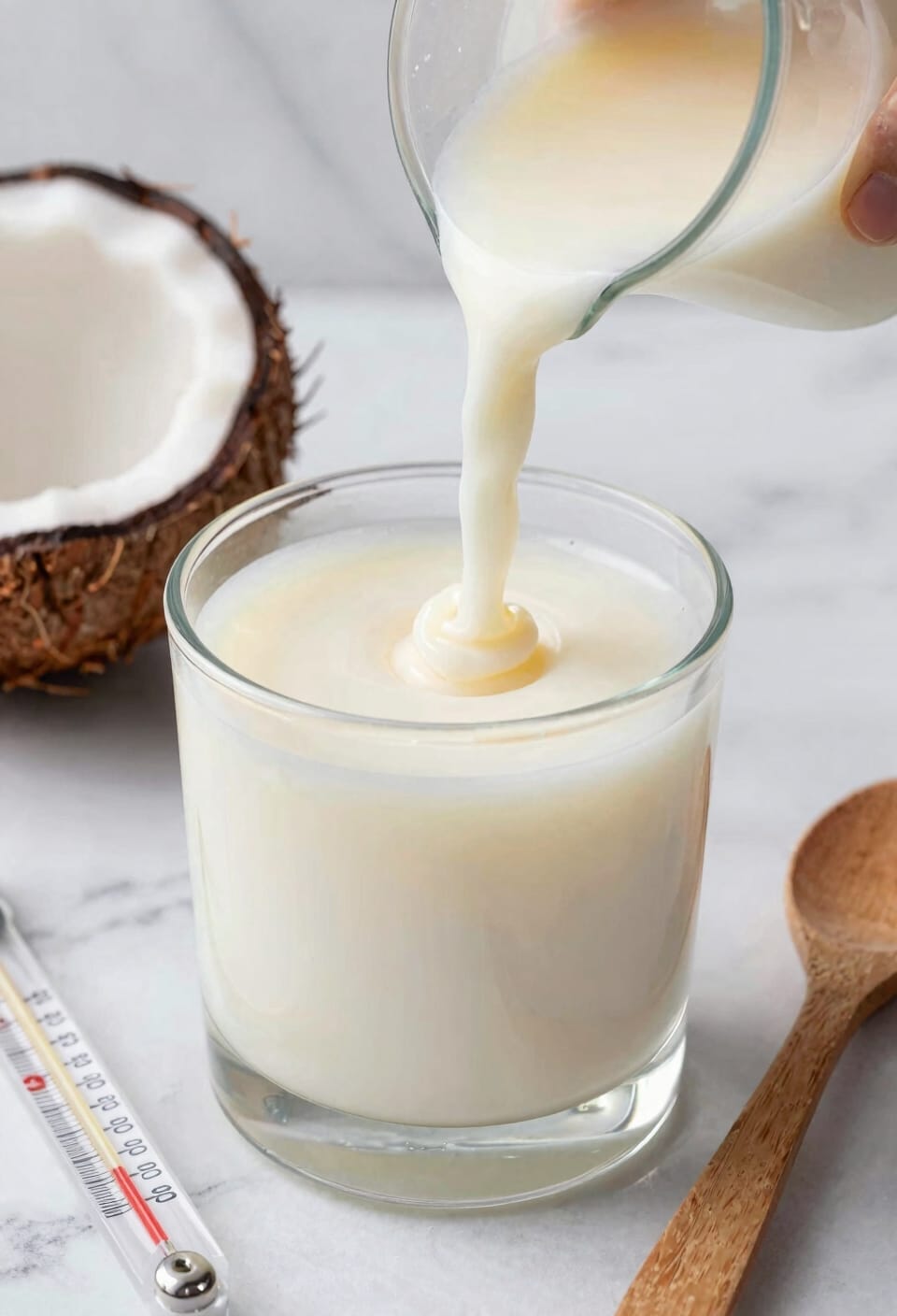
Precision in temperature control doesn’t just affect how your candle burns—it fundamentally shapes what people see when they first look at it. Here’s the thing: when you pour coconut wax at the right temperature, you’re basically programming that smooth, creamy finish you want. Get it right, and you’ll see beautiful edge adhesion—meaning the wax bonds perfectly to your glass container without shrinking or pulling away. The surface texture stays uniform and clean, no frosting or weird dimpling. I’ve poured too cold and watched my candles crater like the moon. Too hot? Sinkholes everywhere. Coconut wax’s natural resistance to frosting helps, but respecting that melt point gives you the consistency that keeps customers happy and coming back.
Diagnosing and Fixing Sinkholes, Frosting, and Craters
When those surface defects show up in your finished candles, they’re basically your wax telling you something went wrong during the pour—and honestly, learning to read that language is half the battle. Sinkholes and craters usually mean your pour temperature was too high or your cooling happened too fast. Frosting, that grainy look you’ll see on coconut wax surfaces, typically signals temperature fluctuations during setup.
Here’s what I’d adjust: lower your pour temperature by 5-10°F and make certain minimal pour agitation once you’ve poured. Check your wick positioning too—it affects how heat distributes across the surface. Let candles cool slowly at room temperature rather than rushing them into cold spaces. You’ve got this.
Temperature Setup: Melting Through Cooling
Now that you’ve got a handle on spotting those surface defects, it’s time to understand the temperature management that either creates them or prevents them altogether. I’m talking about the entire journey from melting through cooling—because one misstep anywhere in this process ripples into problems.
Start by heating your coconut wax to around 185°F using a double boiler. Preheat jars to room temperature or slightly warmer; this helps adhesion big-time. Pour at 170-190°F depending on your specific wax blend, then let ambient cooling do its thing naturally—don’t rush it into a freezer. Slow cooling maximizes jar adhesion and creates that silky-smooth surface you’re after. Temperature consistency across these stages prevents sinkholes and frosting, giving you batches you’ll actually be proud of.
Frequently Asked Questions
What Is the Ideal Fragrance Load Percentage for Coconut Wax Candles?
I’d recommend you use 6-10% fragrance load for your coconut wax candles. This range prevents fragrance saturation while optimizing scent diffusion, ensuring you’ll achieve that perfect aromatic throw without overwhelming your candle’s performance.
How Does Coconut Wax Compare to Other Wax Types in Burn Performance?
I’ve found coconut wax outperforms other types through superior scent throw and controlled melt pool creation. Its lower melting point enables slower, more even burns while maintaining exceptional fragrance release throughout your candle’s lifespan.
Why Does Coconut Wax Resist Frosting Better Than Alternative Wax Options?
I’ve found that coconut wax resists frosting better because it’s got lower microcrystalline content and a more uniform crystal structure than alternatives, which prevents those unwanted surface imperfections you’d see with other waxes.
Can I Reuse or Recycle Leftover Coconut Wax From Failed Batches?
I’d say you’re barking up the right tree—absolutely reuse leftover coconut wax. I’d recommend cleaning containers thoroughly, then remelt your wax using proper heating methods for container reuse.
How Long Do Coconut Wax Candles Typically Burn Compared to Paraffin Candles?
I’ve found that coconut wax candles burn markedly longer than paraffin varieties because they create an even melt, maintain a cleaner flame, and resist slower tunneling, giving you extended burn time and better overall performance.
Conclusion
Look, here’s the thing: nailing your coconut wax’s melting point isn’t complicated, but it’s absolutely non-negotiable. I’ve let temperature slip before—sinkholes happened, frosting blessed my candles, and I learned the hard way. You won’t make that particular journey if you respect the numbers, pour intentionally, and give your candles their cure time. Master this one variable, and everything else falls into place. You’ve got this.