As an Amazon Associate, we earn from qualifying purchases. Some links on this site are affiliate links at no extra cost to you. Our recommendations are based on thorough research and editorial judgment.

How Much Essential Oil to Use in Candles (Safe Amounts by Wax Type)

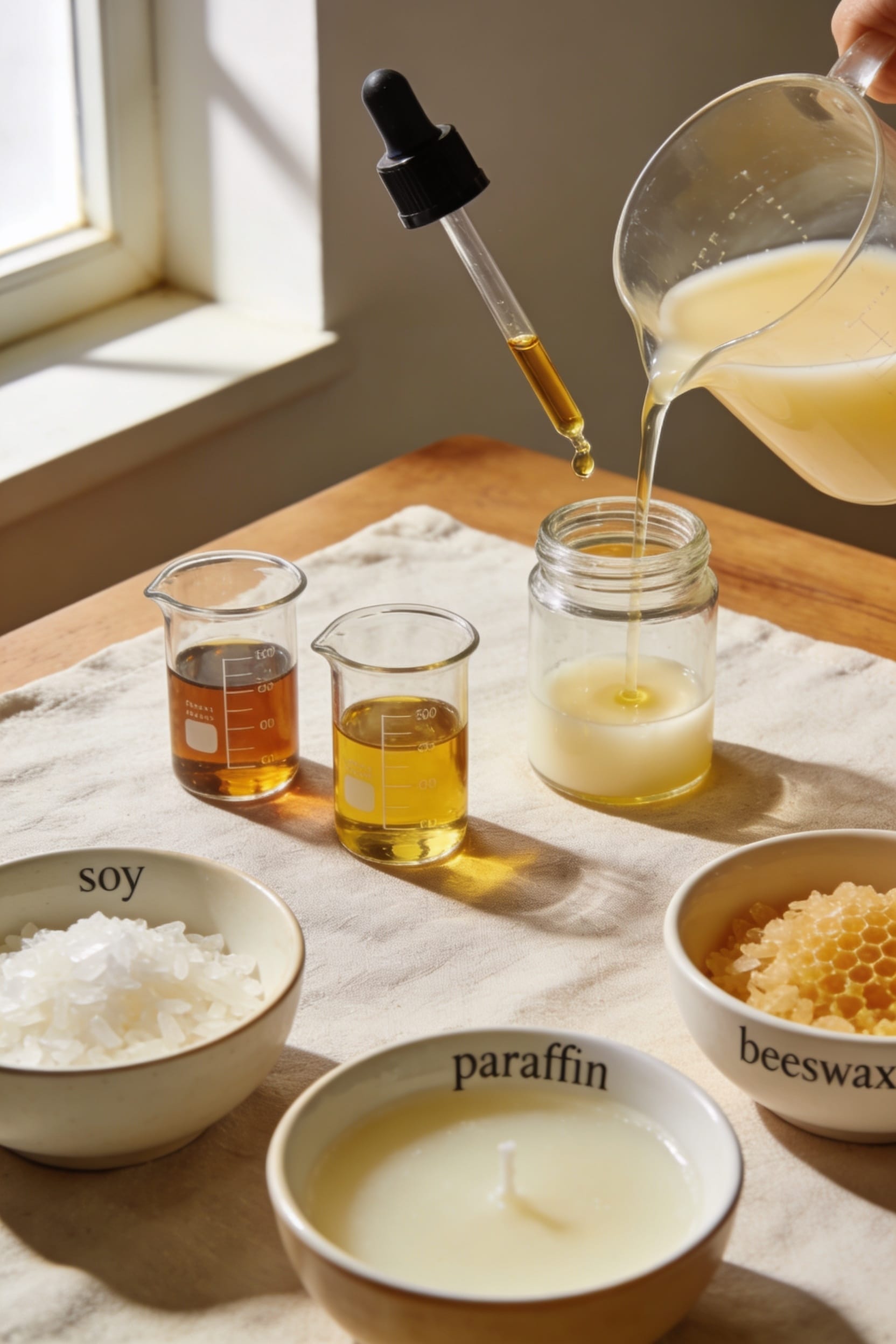
Look, fragrance load—that’s the percentage of fragrance oil you mix into melted wax—makes or breaks your candle. Soy handles 6–10%, paraffin 8–12%, and beeswax just 4–6% by weight. I’d start conservative, around 1 ounce per pound, then test-burn before scaling up. Too much fragrance tanks your burn quality with tunneling and smoking; too little leaves the room smelling like nothing happened. Your wax supplier’s guidelines matter most, so verify theirs first and document everything you test.
Key Takeaways
- Soy wax: use 6–10% fragrance by weight (1–1.6 oz per pound) for optimal scent and burn quality.
- Paraffin wax: load 8–12% fragrance by weight for quick diffusion with minimal curing time required.
- Beeswax: limit fragrance to 4–6% by weight due to lower capacity while protecting burn performance.
- Always verify your specific wax supplier’s maximum fragrance recommendations before exceeding industry standard ranges.
- Test burn each wax-fragrance-wick combination for at least three hours to assess throw and safety.
Industry Standard Fragrance Load Ranges Explained
All right, here’s the thing: most candle makers start by throwing way too much fragrance oil into their wax, convinced that more scent equals better candles—and I’d know, because I definitely did that. The industry standard fragrance load (that’s the percentage of fragrance oil mixed into your melted wax) ranges from 1% to 3%, though many of us work closer to 5% to 8% as a baseline. That translates to roughly 5 to 15 milliliters per pound of wax. Why the restraint? Scent legislation exists for safety reasons, and consumer expectations matter too—people want candles that smell good, not overwhelming. Plus, too much fragrance actually wrecks your burn performance. Start conservative, test everything, then adjust upward if you need to.
How Fragrance Load Affects Scent Throw, Burn Quality, and Safety
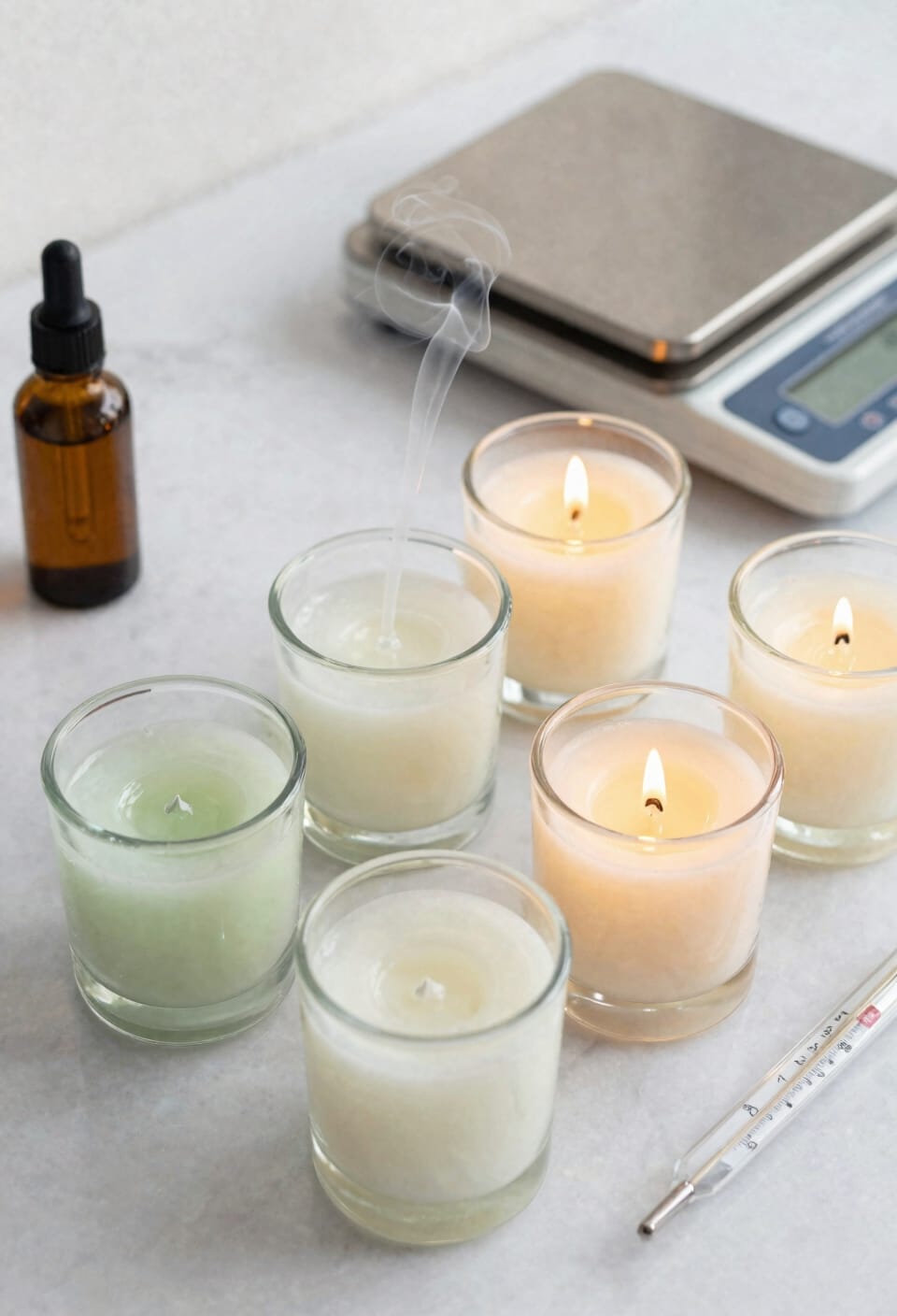
Because fragrance load is basically the throttle on your entire candle experience, getting it right matters way more than it might seem at first. Too much fragrance oil and you’ll get poor burn quality—tunneling, excessive smoking, wick sizing problems that make the flame dance erratically. Too little and your candle barely scents a room, which defeats the purpose entirely. Here’s the thing: proper fragrance load directly impacts hot throw (how much scent releases while burning) and cold throw (scent when unlit). Exceed manufacturer limits and you risk safety issues. Get it dialed in correctly, and room ventilation actually helps distribute scent evenly. Test burns reveal exactly how your specific wax, wick, and fragrance combination performs before you scale up production.
Recommended Products

SCENT - Chamomile Lavender features lavender with warm & enveloping bergamot. Calming chamomile melts into a heart of eucalyptus to create a feeling of well-being. Smoky patchouli is enhanced by hints of sage & rosemary for a quiet, relaxing finish.
100% NATURAL SOY WAX : Hand-poured in small batches with natural soy wax and premium fragrance oils for a clean and long-lasting burn

🕯️🧼 RICH FLORAL SCENT FOR CANDLES & SOAPS – Sweet, exotic Ylang Ylang aroma ideal for premium candles, soaps, wax melts, and handcrafted body product lines.
Calculate Exact Fragrance Oil Amounts
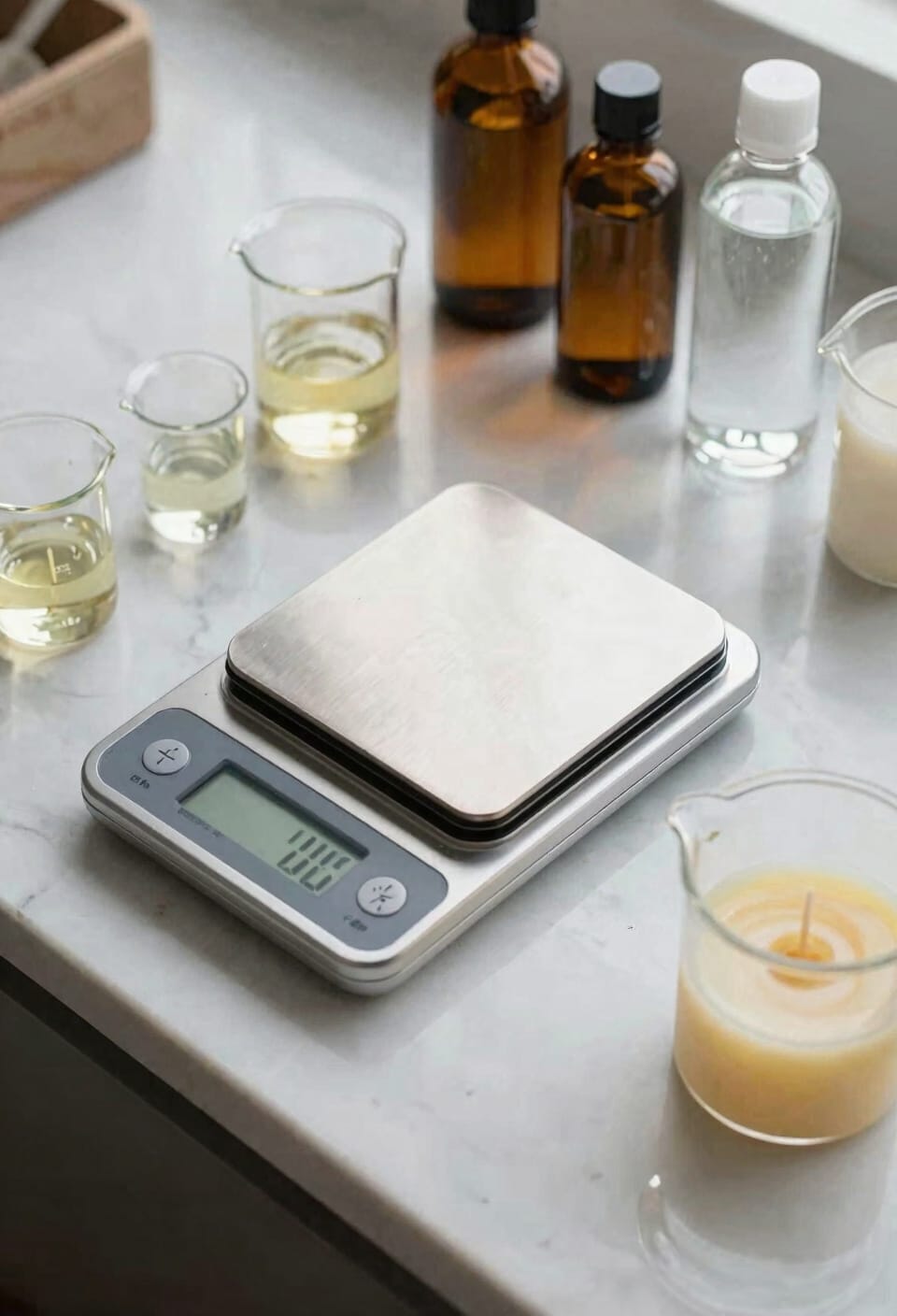
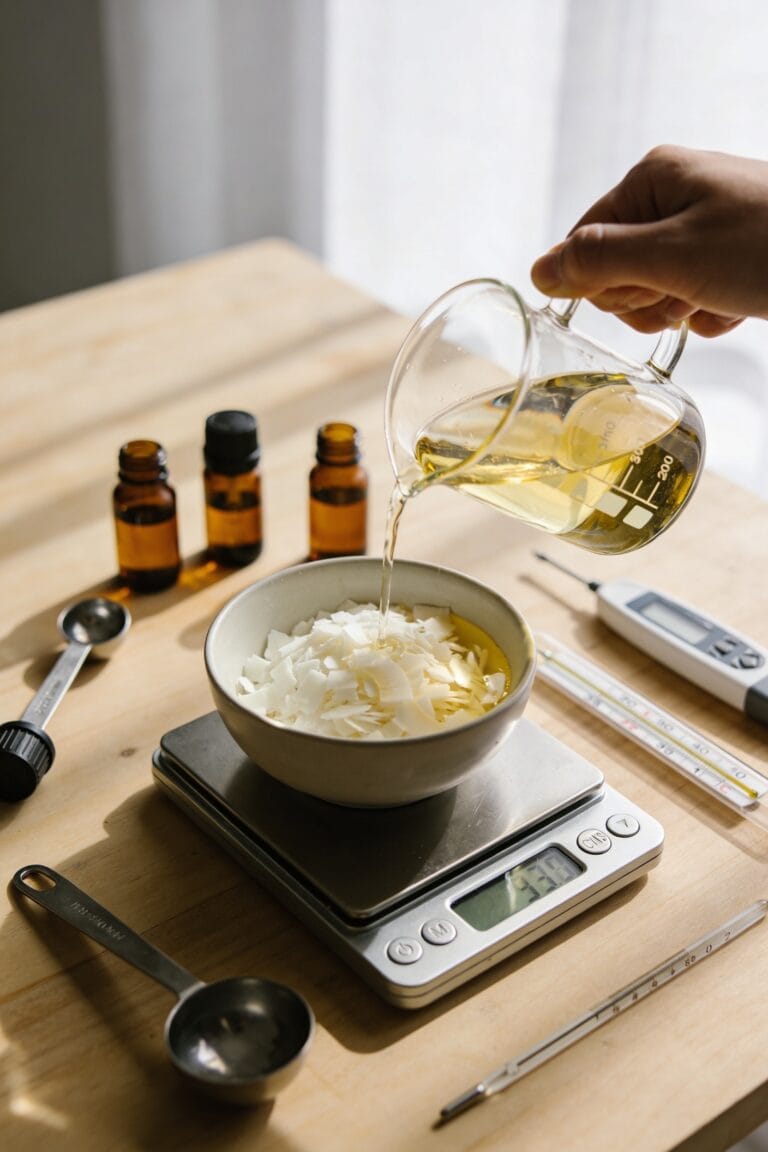
The math is straightforward: multiply your wax weight by your fragrance load percentage. For a pound of soy wax at 8%, that’s 16 ounces times 0.08, giving you 1.28 ounces of fragrance oil. Use a digital scale that measures in the same units as your wax.
Scent calibration happens through testing small batches before batch scaling up production. Weigh everything precisely. Even tiny variations compound across multiple candles, and I’ve learned that lesson the hard way—poor measurements wreck consistency fast.
Recommended Products

✔UPGRADE CADNLE CRAFT, BOLDER CREATIONS: With Leerie D6 digital wax melter, you're not just upgrading your equipment—you're upgrading your entire crafting experience. With the 12 lbs capacity to melt up to 48 4oz candles at a glance, without the constant need for refills or multiple melting sessions. D6 Wax Melter is your craft room's new best friend, whether you're a DIY enthusiast looking to make candles for gifts or a small-batch producer aiming to grow your business.

CANDLE MAKING SUPPLY KIT: 30lbs soy wax, 300 cotton wicks, 300 glue stickers, 6 metal wick holders. Includes Everything you need to make your own candles.

Wax melter for candle making , Large pot holds approximately 7 Qts or 14 Lbs of Melted Wax! Super- Fast Wax Melter can melt Soy Wax, Paraffin, Coconut, Beeswax. Easy to use temperature setting to adjust your tempature as needed.
Soy Wax: Optimal Fragrance Load and Curing Guidelines
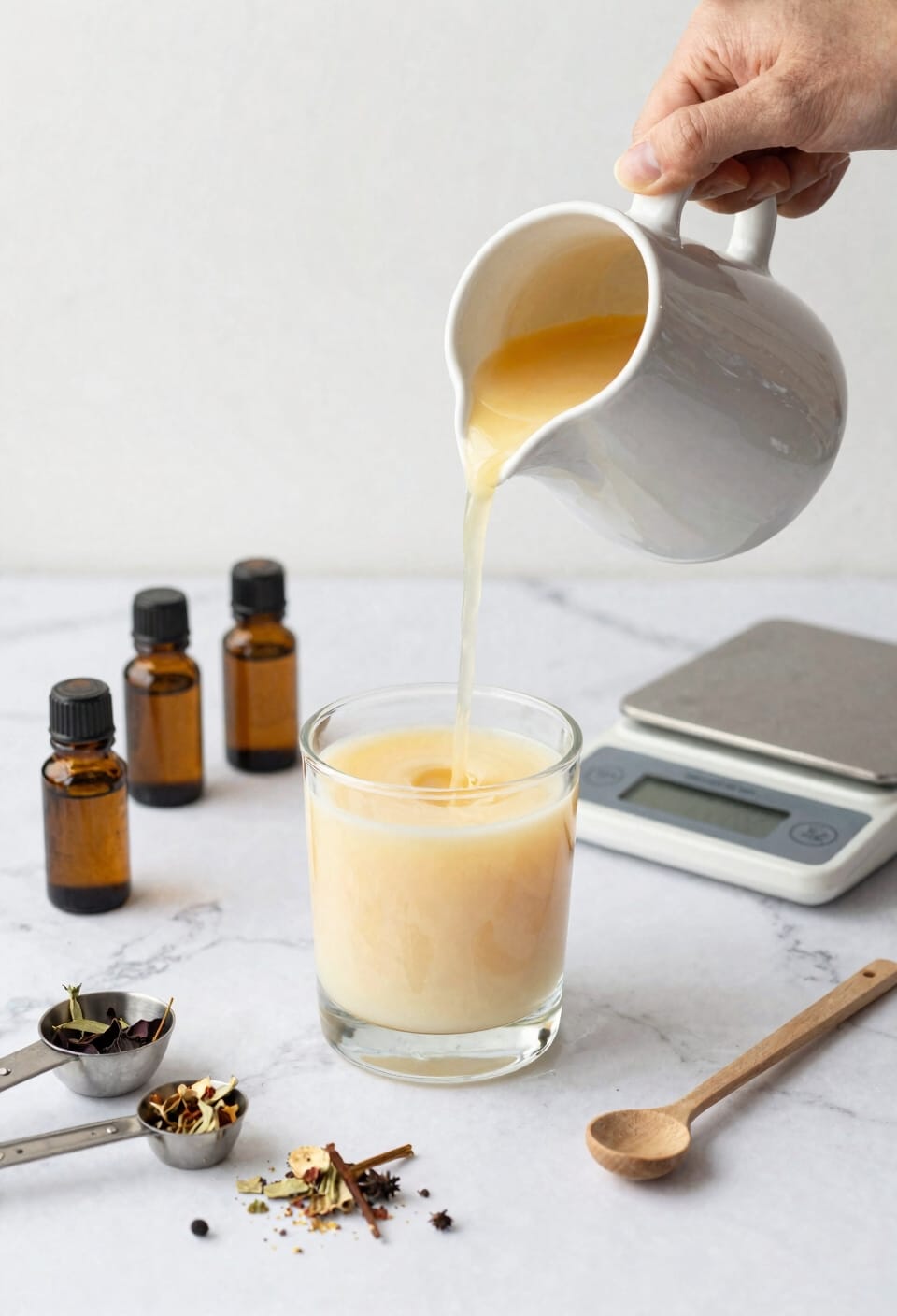
Once you’ve nailed your fragrance calculations, soy wax demands a slightly different approach than paraffin—and I can’t stress this enough because it’s where I’ve seen the most disappointing candles fail. I load soy at 6% to 10% fragrance by weight, which translates to roughly 1 to 1.6 ounces per pound. Soy holds scent remarkably well, but here’s where patience matters: cure monitoring is non-negotiable. I always wait 1 to 2 weeks before testing because the fragrance needs time to fully bind with the wax. Ambient humidity effects play a role too—damp conditions can actually extend your cure window. The payoff? Superior scent retention compared to paraffin, though the throw develops slower. Trust the wait.
Paraffin Wax: Optimal Fragrance Load for Maximum Scent
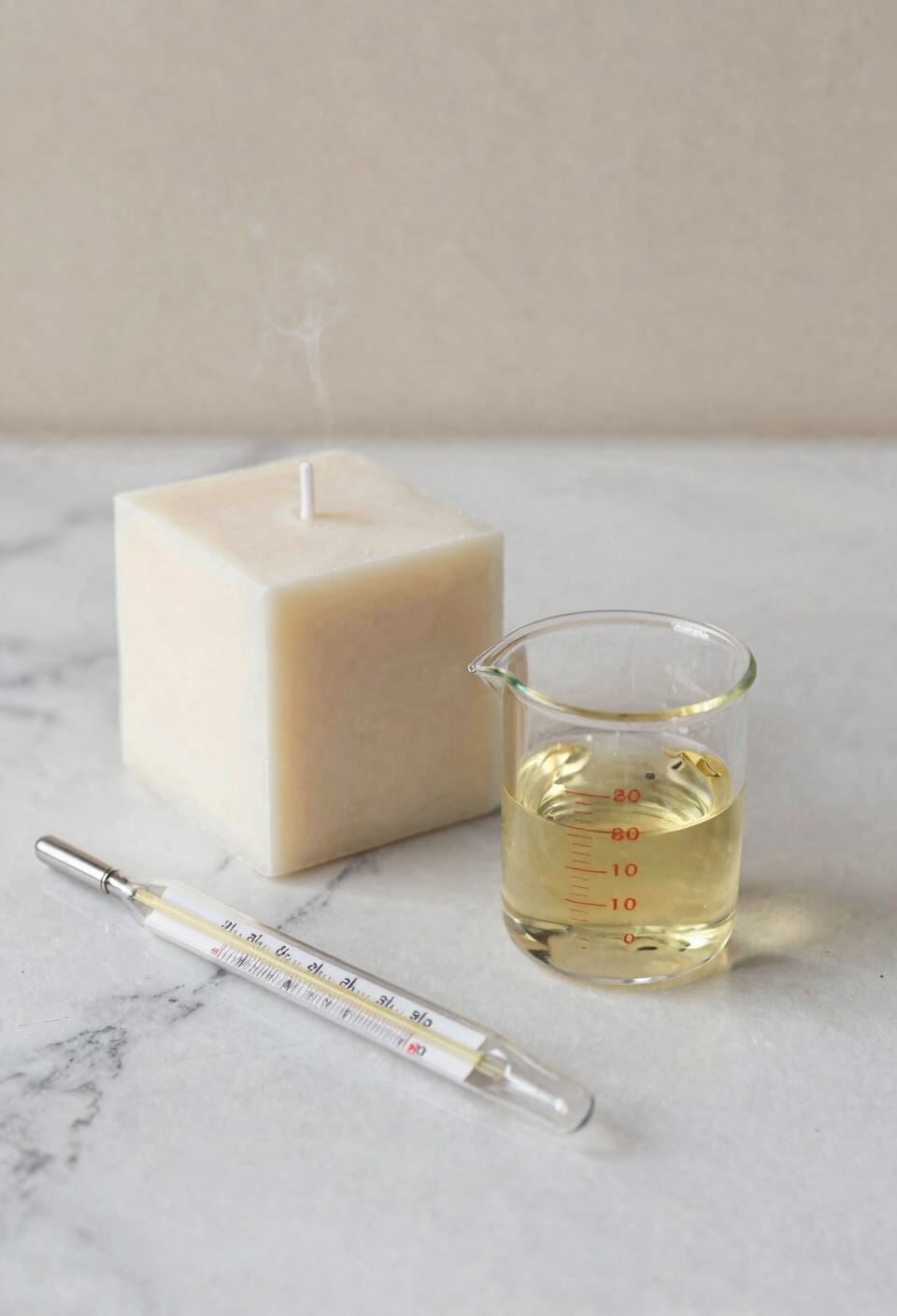
Now here’s where things get fun—paraffin wax is the opposite of soy’s patience game. I’ve found that paraffin typically performs best at an 8% to 12% fragrance load, meaning you’re adding roughly 1 to 1.6 ounces per pound of wax. That’s noticeably higher than soy, and honestly, paraffin rewards the extra fragrance.
What I love about paraffin is its efficiency. It diffuses fragrance—how quickly and thoroughly your candle releases scent—far more effectively than soy does. You’ll see results faster, with minimal curing time needed. Just watch your wick selection carefully; too much fragrance can destabilize burn performance, and additive interaction with dyes or other compounds sometimes complicates things. Test burns are your friend here.
Recommended Products
![VINEVIDA [128 Oz] Scent No.3715; Fragrance Oil for Candle Making and Soap Making - Premium Candle Scents for Soy Candles](https://m.media-amazon.com/images/I/31L5k3TD43L._SL500_.jpg)
Versatile Uses: Perfect fragrance oil for candle making; ideal for soy wax, soap making, perfume making, body butter, car freshies; create professional quality scented products with these concentrated essential oil alternatives

A CLEAN BURN: Our tiki torch fuel is processed and refined to create a powerful light source that is smoke and odor free and without harmful soot or other pollutants often found in kerosene.

The information below is per-pack only
Beeswax: Why Lower Fragrance Loads Matter
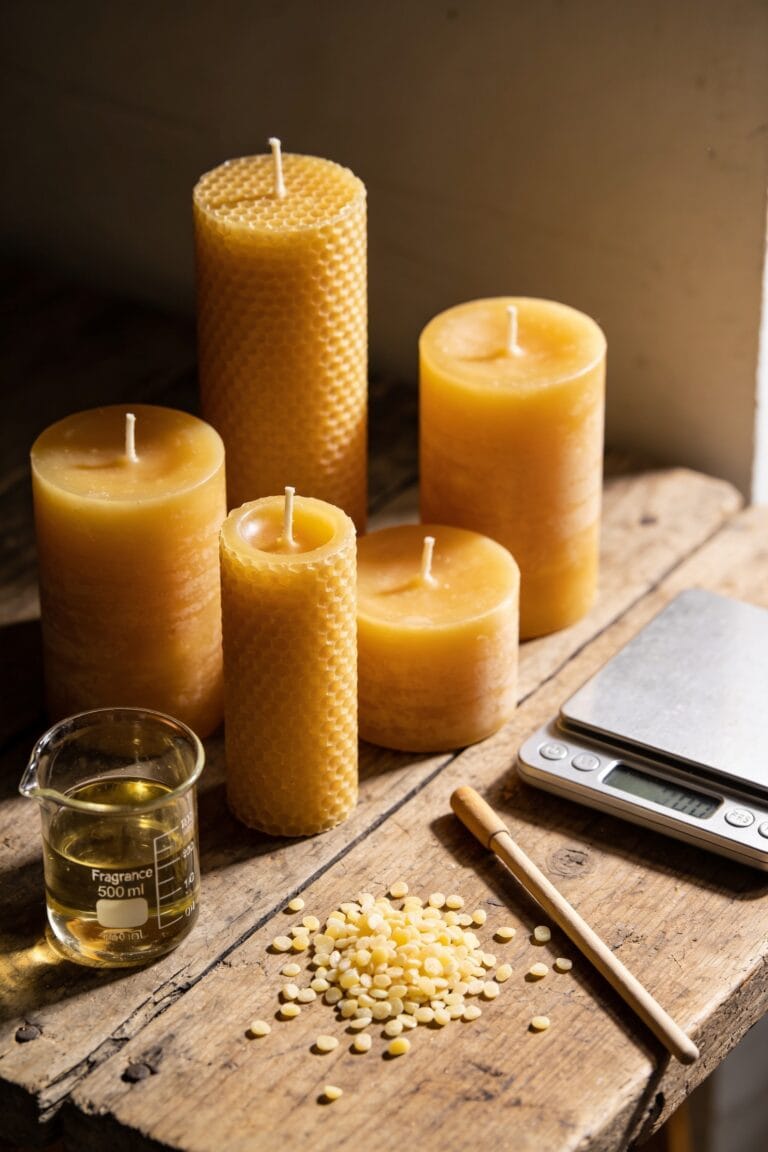
If you’ve worked with soy and paraffin, beeswax’ll throw you a curveball—it’s pickier about fragrance, and that’s actually a feature, not a bug. I learned this the hard way after over-loading a batch like I would with paraffin. Beeswax has lower fragrance capacity, typically 4% to 6% of total wax weight, or roughly 0.48 to 0.96 ounces per pound. The beeswax compatibility with fragrance oils differs fundamentally from petroleum-based waxes, demanding restraint. Here’s the thing: this limitation actually protects your aroma retention. Overloading beeswax compromises burn quality and muddies scent throw. Respect the 4% to 6% range, consult manufacturer specs for your specific product, and test before committing to larger batches. Trust the constraints.
Test Before Scaling: A Simple Burn-Test Protocol
Before you pour fifty pounds of wax into molds and hope for the best, you’ve got to burn-test your formula at a small scale—and I mean actually burn it, not just sniff the melted wax and call it good. Make a single test candle using your exact fragrance load percentage, wick size, and wax type. Let it cure for the recommended time—that’s the period when the fragrance fully integrates into the wax. Then burn it for at least three hours and assess both cold throw (how it smells when unlit) and hot throw (scent while burning). Test timing matters because you’ll catch problems before committing serious materials and labor. One failed test candle beats fifty failed pounds every single time.
Five Fragrance Load Mistakes That Weaken Scent or Ruin Burns
Even though you’ve nailed your fragrance load percentage on paper, I’ve watched plenty of candle makers sabotage their own work by not actually *using* that number consistently—or worse, by misunderstanding what it means in the first place. Here’s the thing: uneven fragrancing happens when you’re stirring too fast or adding oil at the wrong temperature, leaving some wax pockets barely scented while others are oversaturated. Overloaded wicks—wicks that are too thick for your fragrance load—will tunnel and smoke instead of delivering that beautiful scent throw you’re after. You’ll also wreck burns by mixing fragrance percentages randomly between batches, or by pouring before your wax has cooled to the manufacturer’s recommended temperature. Test each change separately. Consistency wins.
Troubleshooting Weak Scent Throw and Poor Performance
After you’ve dialed in your fragrance load percentage and poured what should be a killer candle, weak scent throw—that’s the distance and intensity at which your candle’s aroma actually travels through a room—can feel like a personal betrayal. Here’s the thing: scent layering, or blending complementary fragrances together, sometimes masks performance issues rather than fixing them. Before you blame the wax, check your wick selection first. A wick that’s too thin won’t create a hot enough melt pool, meaning fragrance never fully releases. Go up a size and retest. If that doesn’t help, your cure time might be incomplete—soy especially needs those full two weeks. One more thing: quality matters. Cheap fragrance oils simply won’t throw as far, regardless of percentage.
Premium Fragrance Loads: When and How to Exceed Standards
Now, here’s where things get interesting: once you’ve nailed the fundamentals—solid wick choice, proper cure time, quality fragrance oil—you might find yourself wondering if the industry standard fragrance load percentages are actually ceilings or just starting points. Premium brands like Thompson Ferrier push fragrance loads to 16% to 18%, proving that exceeding standards is possible. The catch? You’ll need superior fragrance oils, meticulous batch stability testing, and regulatory compliance documentation. I’ve watched candles with excessive fragrance loads tunnel and smoke—it’s not pretty. If you’re considering premium loads, start by testing small batches, document everything, verify your wax supplier’s maximum recommendations, and understand that higher fragrance demands exceptional technique. Sometimes more isn’t better; it’s just different.
Frequently Asked Questions
Can I Mix Different Fragrance Oils in a Single Candle, and Does This Affect Fragrance Load Calculations?
I can mix different fragrance oils in a single candle, and I’ll calculate the total fragrance load percentage using the combined amount. I recommend compatibility testing and scent harmonization to guarantee they blend well without affecting performance.
What’s the Difference Between Fragrance Oil and Essential Oil for Candle Making Purposes?
I’ll illuminate the key distinction: fragrance oils are synthetic blends offering superior olfactory longevity and consistency, while essential oils are natural extracts that fade faster. Fragrance oils perform better in candles.
How Do I Adjust Fragrance Load for Candles Made With Wax Blends or Specialty Wax Formulations?
I’d recommend starting with the lower fragrance load percentage for your specific wax blend, then conduct testing batches with varied amounts. Adjust wick sizing accordingly, and gradually increase fragrance load until you achieve peak scent throw and burn performance.
Does Fragrance Load Percentage Change Based on Candle Color or Added Dyes and Additives?
No, fragrance load’s your constant north star—color and dyes don’t shift it. I’ve found dye binding doesn’t affect fragrance percentages; you’ll maintain your standard load regardless of color interaction with wax.
What Safety Certifications or Standards Govern Maximum Fragrance Loads in Commercial Candle Production?
I’d recommend checking IFRA Guidelines and ASTM Standards, which govern maximum fragrance loads in commercial production. These guarantee you’re meeting safety requirements while maintaining candle performance and consumer protection standards effectively.
Conclusion
Your fragrance load is the compass guiding your candles home. Get it right, and you’ve built something that burns clean, smells like heaven, and won’t betray you mid-burn. You’ve learned the maps—soy’s ceiling, paraffin’s sweet spot, the tests that matter. Now go pour with confidence. I’ve fumbled enough for both of us. You won’t.