As an Amazon Associate, we earn from qualifying purchases. Some links on this site are affiliate links at no extra cost to you. Our recommendations are based on thorough research and editorial judgment.

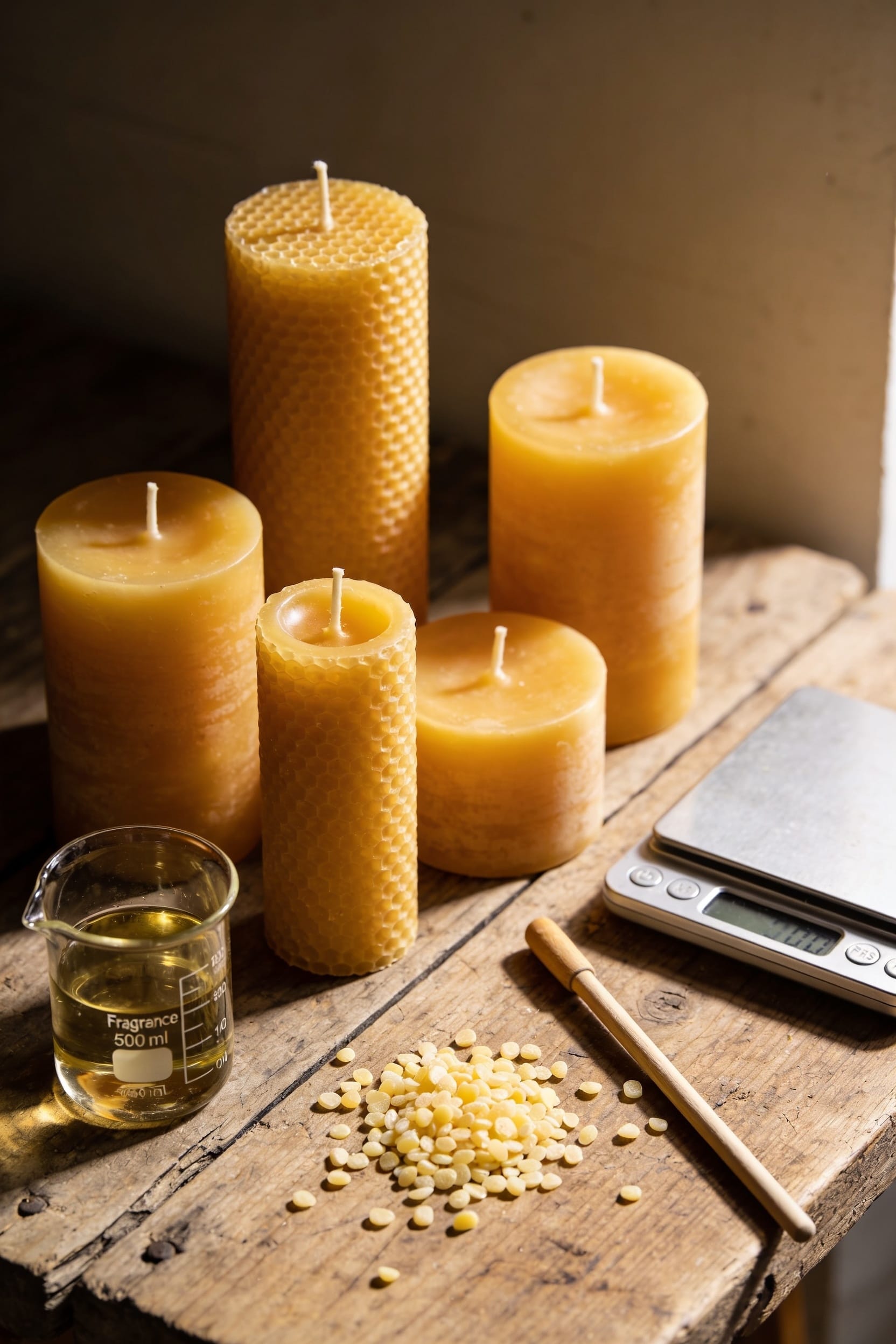
Beeswax Candle Fragrance Load: How Much Scent Can Beeswax Hold?

Beeswax holds roughly 5–6% fragrance oil by weight—significantly less than soy or paraffin can manage. That’s because beeswax‘s dense crystalline structure doesn’t let fragrance molecules integrate past that ceiling, so you’ll hit sweating, weak throw, and unsafe burns if you push it. I’d stick with 5% for safety or go to 6% if you’ve tested your specific oils first. Go beyond that and you’re basically pouring money onto your candle’s surface instead of into the room.
Key Takeaways
- Beeswax typically holds 5–6% fragrance load maximum due to its dense crystalline structure and weak molecular affinity with fragrance oils.
- Exceeding the 5–6% limit causes fragrance oil to separate and pool on the surface, resulting in visible sweating and weak scent throw.
- Fragrance oils outperform essential oils at equal percentages; essential oils fade faster and behave unpredictably in beeswax despite using the same load calculation.
- Calculate fragrance load by multiplying total wax weight by target percentage (example: 32 oz wax × 6% = 1.92 oz fragrance oil).
- Always test small batches first at your intended fragrance load before scaling production to identify sweating, wick needs, and scent longevity issues.
What Is Fragrance Load and Why It Matters for Beeswax?
How much fragrance oil should you actually pour into your beeswax candles? Fragrance load—the percentage of fragrance oil relative to your total wax weight—directly determines scent diffusion and burn chemistry. I’ve learned this the hard way. Add too much oil, and you’ll get sweating, weak throw, and unsafe burning. Beeswax’s lower capacity than soy, paraffin, or coconut means you’re working within tighter limits. Here’s the thing: beeswax typically holds only 5-6% fragrance load, which influences how scent travels through air quality and room space. Understanding this matters because it prevents wax impurities from separating and guarantees your candles actually perform. You’ll want to respect these boundaries from the start.
Why Beeswax Holds Less Fragrance Than Other Waxes
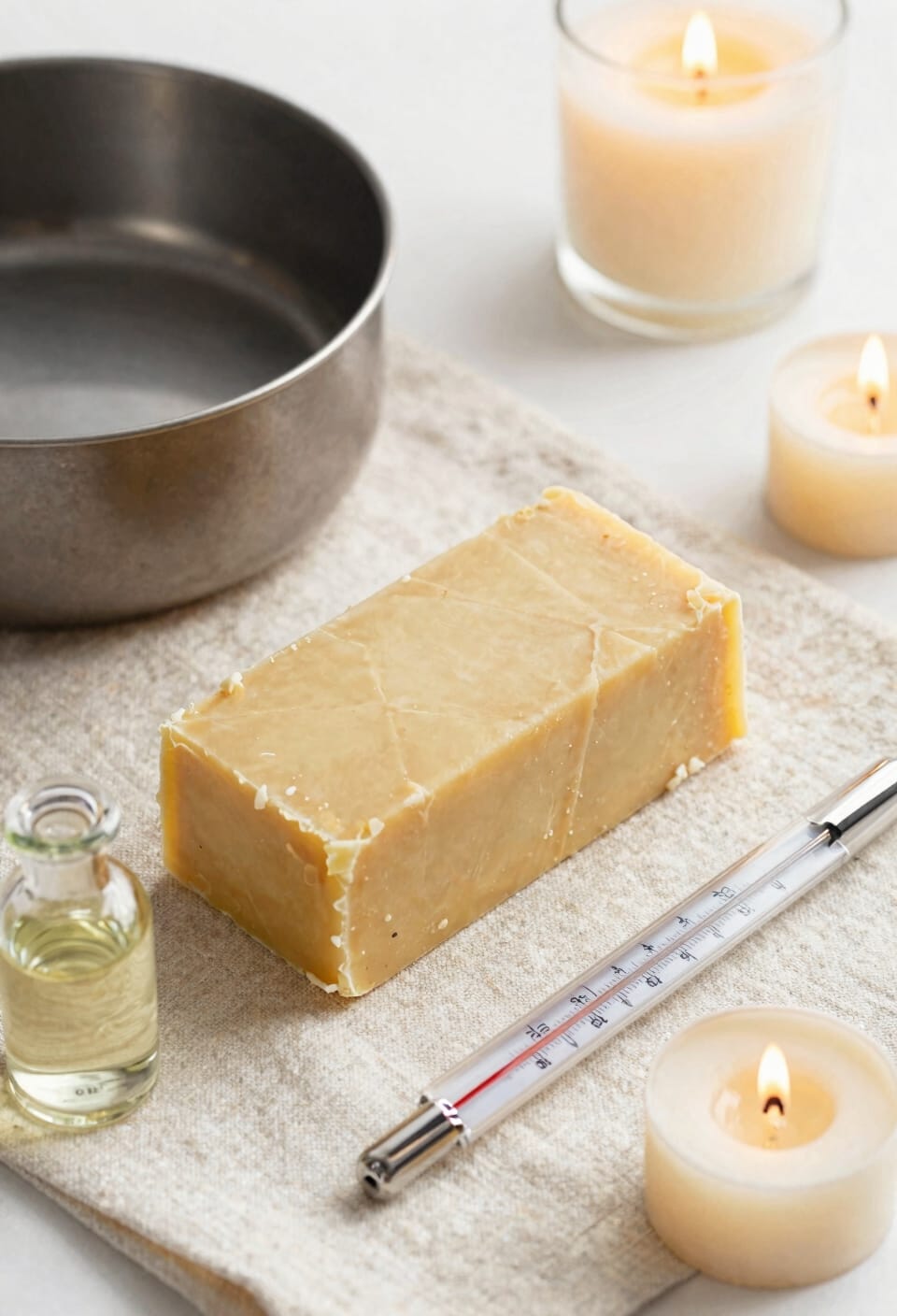
Because beeswax has a fundamentally different molecular structure than soy, paraffin, or coconut wax, it simply can’t absorb and hold as much fragrance oil without causing problems. Here’s the thing: beeswax’s scent absorption capacity maxes out around 5-6%, while paraffin handles up to 12% and soy manages 6-10%. The molecular affinity—how well fragrance molecules bond with wax molecules—is just weaker with beeswax. You’ll notice this when you compare candles side by side. Push beeswax past its limits and you’ll get sweating, poor scent throw, and burning issues. That’s not a bug you can work around; it’s the wax telling you something. I’ve learned this the hard way. Respecting beeswax’s natural ceiling keeps your candles performing beautifully.
Why Beeswax Maxes Out at 5-6% Load
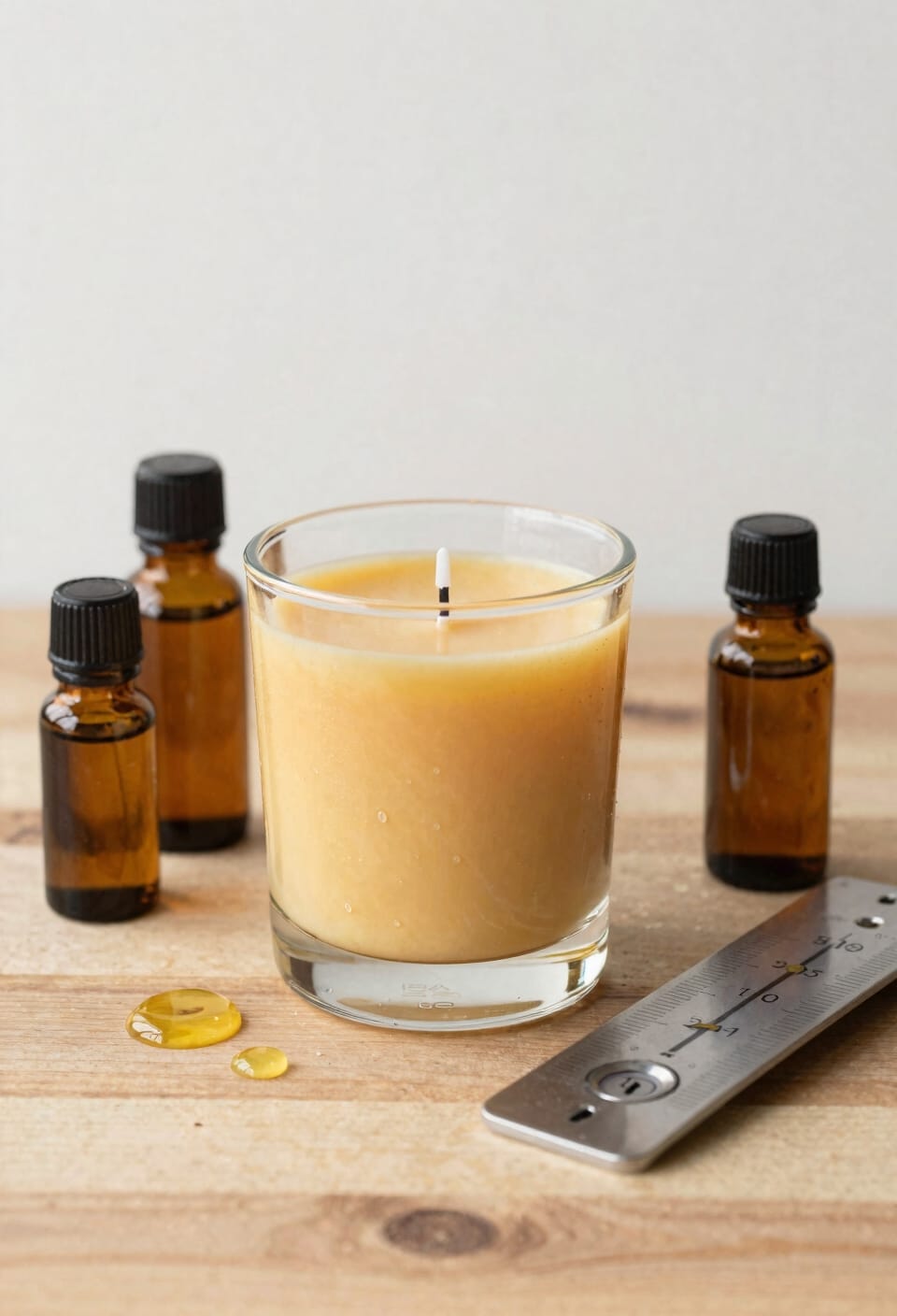
All right, here’s what’s actually happening when you try to push beeswax past that 5-6% fragrance load threshold—and trust me, I’ve tried. Beeswax has a crystalline structure that’s fundamentally different from soy or paraffin. That bee biology matters here: the wax they produce is dense and tightly bonded. When you exceed 6%, fragrance oil molecules can’t integrate properly into that structure. Scent chemistry tells us the excess oil separates, pooling on the surface instead of bonding with the wax itself. You’ll see sweating—visible oily beads forming on your candle. The throw suffers paradoxically; more oil doesn’t mean better scent, it means worse performance and potential safety issues during burning. Respecting that 5-6% ceiling keeps your candles stable and your burns clean.
Recommended Products

All-In-One Starter Kit – Everything you need to dive into candle making! Our Etienne Alair soy candle wax for candle making includes 50 lbs of smooth soy wax flakes, 100 cotton wicks, 100 adhesive stickers, and 2 centering tools. Perfect for beginners or seasoned DIYers.

45 Pound Case A luxurious, creamy coconut apricot candle wax blend for luxury candle making. This candle wax also has a very small amount of refined food grade paraffin wax to help with wax performance. We have found that this small addition of paraffin wax enhances its burn characteristics that candle makers love.

Hemp Coconut Soy Wax Hemp Coconut Soy wax is a container wax that is a blend of natural hemp, soy, coconut and food-grade paraffin wax. This is an easy to use, single pour wax with great cold & hot throw. This wax also has great glass adhesion with an even slow burn.
Calculate Fragrance Oil for Your Beeswax Candles
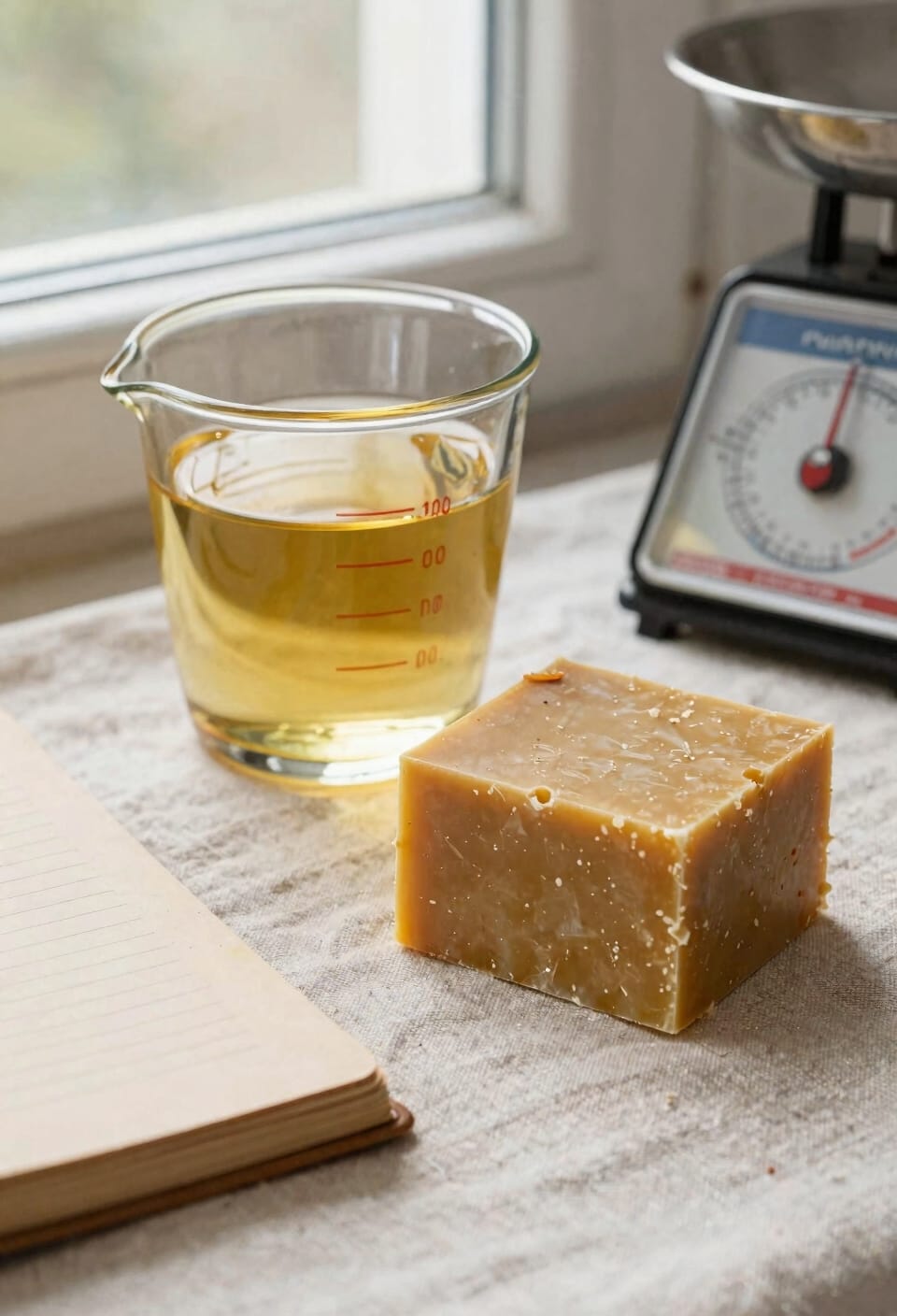
Now that you understand why beeswax caps out at 5-6%, the real question is how to actually figure out how much fragrance oil you need for your specific candle—and I promise it’s simpler than the chemistry behind it.
The math is straightforward: multiply your total wax weight by your target fragrance load percentage. Say you’re working with 32 ounces of beeswax at 6%. You’d need 1.92 ounces of fragrance oil. Round up to 2 ounces for practical measuring.
Here’s what matters: weighing beats guessing every time. Oil dilution happens when you overload, tanking your scent retention and potentially ruining the pour. Staying within that 5-6% window keeps your fragrance integrated properly, your wick performing, and your candle burning safely.
Recommended Products

RICH & SWEET- Vanilla- Oleoresin essential oil, meticulously extracted from the aromatic beans of the Vanilla planifolia plant. This luxurious oil is a must-have for your aromatherapy and perfumery collection, renowned for its potential to offer relaxation, evoke feelings of comfort, and add a touch of gourmet indulgence to your space, making it ideal for diffusing during cozy moments or incorporating into your relied on fragrance creations, bringing the essence of pure vanilla to your daily life.

Virginia Candle Supply is the top candle wax supplier in the USA Our candle gel is High Density, It is a premixed gel that is easy to use. Simply heat, add Candle Color dye and our Fragrance Oil and pour! Gel doesn't shrink so there is no need to re-pour! Gel burns twice as long as other waxes and can accommodate suspended decorative objects, wax chunks, etc.

【Natural Soy Wax】 Our soy wax are primarily used for candle making. They have a subtle, natural fragrance that is gentle during the crafting process and won’t interfere with added fragrance oils, ensuring an enhanced scent throw in your finished candles.
Measure Fragrance Oil: A Step-by-Step Process
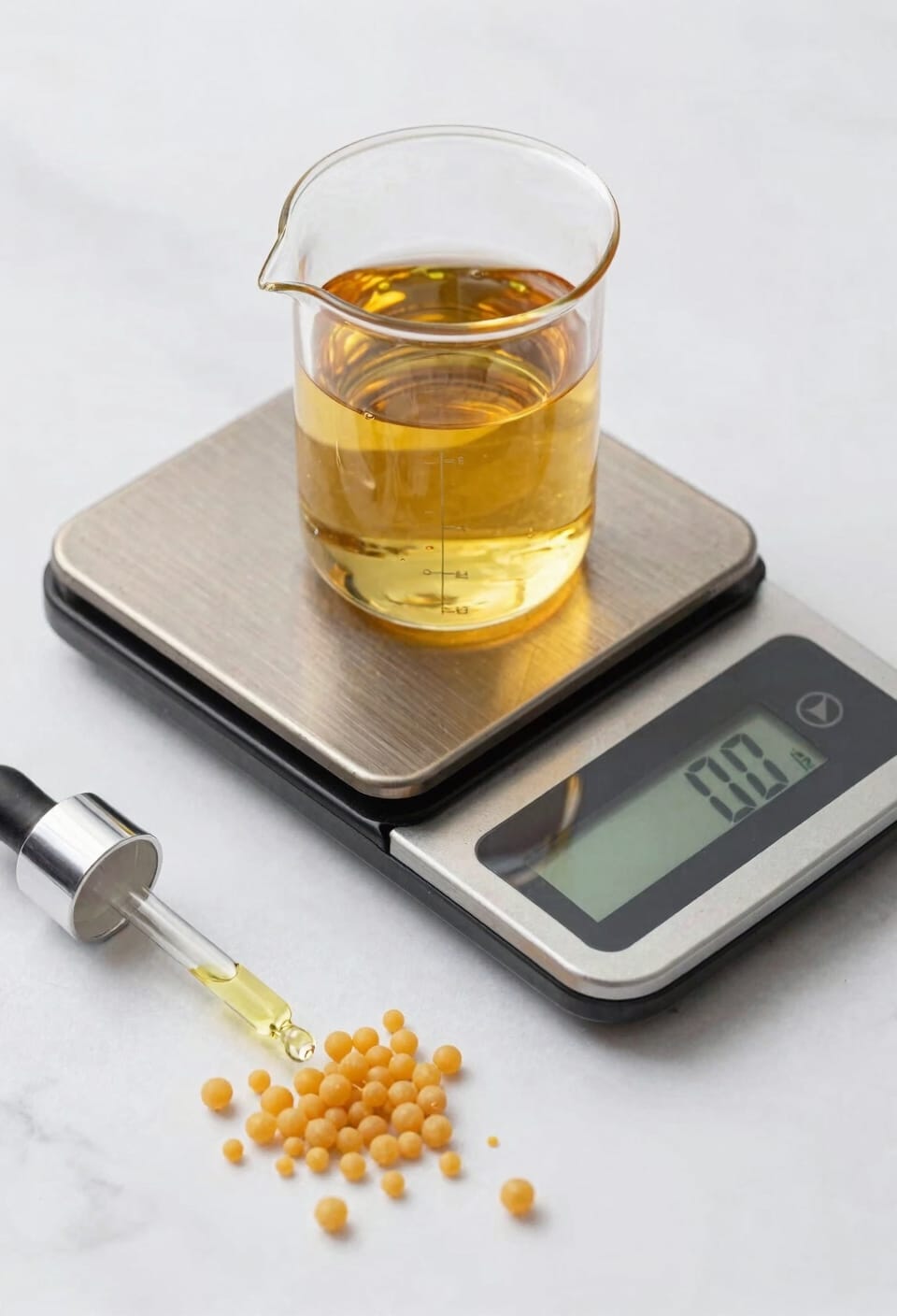
You’ve got your fragrance load percentage locked in, you’ve done the math, and you know exactly how many ounces of oil you need—so now comes the part where precision actually matters, because eyeballing it here is where candles go sideways fast.
First, establish your weighing protocol: use a digital scale accurate to at least 0.1 ounces, and always zero it out between measurements. Weigh your fragrance oil directly into a small container rather than pouring by feel. Container calibration matters too—make sure your vessel won’t interfere with the scale’s reading.
Record everything. Write down your oil weight before adding it to wax. This step takes thirty seconds and saves you from guessing later whether you nailed the load or undershotit.
Recommended Products

Ultra-Precise Infant Weighing: Designed for newborn and infant monitoring, this scale provides 0.1oz/2g accuracy up to 12 lbs and 0.2oz/4g up to 33 lbs – ideal for tracking small weight changes.


【Pass Inspection or Certification】Featuring 3-sided glass draftshield, compact design electromagnetic load-cell and stable base, this 0.1mg analytical scale can eliminate the effect from air flow, tiny shake and temperature shifts, and thus comes out readings with very high repetibility, helping you pass the strict qualification process. English Manual, 24hrs response and with 1 year free guarantee.
Fragrance Load Comparison: 5% vs. 6% vs. Higher
The difference between 5% and 6% fragrance load in beeswax might sound trivial until you light both candles in the same room and realize one fills the space while the other barely whispers. That extra percentage point shifts your scent perception dramatically. At 5%, you’re playing it safe—minimal sweating, reliable wick sizing, and a gentle ambient presence. Jump to 6%, and you’ve hit beeswax’s sweet spot where throw strengthens without compromising burn quality. Container color matters here too; darker vessels can mask subtle scents. Going higher than 6% risks oil separation and poor performance. I’ve learned through trial that matching fragrance load to your space’s size and ventilation beats chasing maximum scent every time.
Recommended Products

45 LB Case All-natural container blend that is predominately coconut and fortified with vegetable waxes. The wax adheres with a smooth finish and receives color well. Coconut 83 has an excellent fragrance release (cold and hot throw) with a cooler burn profile when dialed in with balanced wicks.

Soy Wax 444 is a natural soy wax containing a soy based additive to reduce frosting. The soy based additive and a higher melt point enable it to retain a higher fragrance load and improve scent throw. Soy Wax 444 is designed for use in container candles and blends well with other waxes, such as paraffin, slack, and microcrystalline wax. It is not recommended to blend Soy Wax 444 with beeswax.

All-In-One Starter Kit – Everything you need to dive into candle making! Our Hearth and Harbor soy candle wax for candle making includes 45 lbs of smooth soy wax flakes, 100 cotton wicks, 100 adhesive stickers, and 2 centering tools. Perfect for beginners or seasoned DIYers.
Common Mistakes That Ruin Beeswax Candles
When you pour beeswax without respecting its fragrance load ceiling, you’re effectively guaranteeing a candle that’ll either sweat oil down the sides or barely scent your room—fragrance load being the percentage of fragrance oil relative to your total wax weight. I’ve watched overheated wax separate from fragrance oil before pouring, creating pools of grease instead of scent. That happens when you exceed 6%. Poor wicking follows naturally because oil-logged wax doesn’t wick properly. You’ll get tunneling, weak flames, uneven burns. The real kicker? Many beginners copy soy or paraffin ratios directly into beeswax projects. Beeswax simply can’t handle what other waxes tolerate. Respect the limits. Your candles—and your sanity—depend on it.
Test Your Fragrance Oil and Beeswax Before Committing
Before you dump fragrance oil into a full batch of beeswax, run a small test pour—trust me on this one. I’ve learned the hard way that compatibility testing between your specific fragrance oil and beeswax saves gallons of wasted wax. You’ll want to test a small sample at your intended fragrance load percentage, around 6%, to check for separation or sweating—that’s when oil beads up on the candle’s surface.
Now, thermal stability matters here. Heat your beeswax and fragrance together, pour it, and let it cure fully before judging. Sometimes incompatible oils look fine warm but separate as the candle cools. Burn a test candle too. You’ll catch performance issues before committing to a full batch, and honestly, that’s worth the extra hour.
Recommended Products

French Vanilla Fragrance Oil - Tempting, delicious, rich & creamy with a buttery vanilla scent

Pink Sugar Type Fragrance Oil (Our Version of the Brand Name) - A playful blend of sweet vanilla and caramel with an enticing medley of bergamot, orange, and raspberry with notes of fragrant lily of the valley and soft musk.

Volcano Island Fragrance Oil (Our Version of the Brand Name) - Same great fragrance...new name. A delightful blend of tropical fruits and sugared oranges, lemons and limes with hints of exotic tropical florals and mountain greens.
Scaling Beeswax Candles for Large Rooms: When to Push Past 6
Once you’ve confirmed your fragrance oil and beeswax play nicely together, you’ll probably hit a wall: that 6% sweet spot works great for bedrooms and small living spaces, but what happens when someone asks you to make a candle for their cavernous loft or open-plan kitchen?
You can push toward 8% without ruining everything, especially if you’re using high capacity wicks that handle more fragrance without tunneling. Layered scenting—pouring multiple wax layers with different fragrance concentrations—is another smart move. It gives you scent throw flexibility without overloading a single pour.
Still, I’d test before scaling up production. Beeswax has real limits. Push too hard past 6%, and you risk sweating, poor wick performance, and honestly, wasted wax.
Essential Oils in Beeswax: Same Load Rules, Different Results
Why do essential oils feel like they follow different rules than fragrance oils, even though the math stays the same? The load percentage calculation—fragrance oil weight divided by total wax weight—applies identically to essential oils in beeswax. But here’s the thing: carrier interactions work differently. Essential oils don’t bond with beeswax quite like synthetic fragrance oils do, which affects scent longevity. You’ll notice the throw peaks faster but fades sooner, sometimes dramatically.
I’ve learned this the hard way. A 6% essential oil load in beeswax gives you less staying power than the same percentage of fragrance oil. Your candle might smell incredible for the first hour, then frustrate you with rapid fade. Test small batches first. Adjust your wick if needed—essential oils can behave unpredictably in beeswax.
Frequently Asked Questions
Can I Use Fragrance Oils and Essential Oils Together in One Beeswax Candle?
Yes, you can blend fragrance oils and essential oils in one beeswax candle. I’d recommend testing scent compatibility first and establishing blending ratios that don’t exceed your 5-6% total fragrance load capacity for peak performance.
How Do I Know if My Beeswax Candle Is Overloaded With Fragrance Oil?
I’d watch for scent pooling around the wick and wick clogging during burning. You might also notice oil separation or sweating on the candle’s surface. These signs tell me I’ve exceeded beeswax’s 5-6% capacity limit.
What’s the Best Fragrance Oil Brand Specifically Formulated for Beeswax Candles?
I’ve searched a million candle shops, and I’ll tell you: most premium fragrance oil brands don’t specifically formulate for beeswax. I recommend testing compatibility through candle crafting suppliers—fragrance compatibility matters most for your success.
If Fragrance Oil Separates From Beeswax, Can I Still Use the Candle Safely?
I’d advise against it. Separated fragrance oil creates safety hazards—pooling oil can ignite unpredictably. For safety assessment, inspect the candle thoroughly. Try wick troubleshooting first, but if separation persists, it’s safer to discard it.
How Does Room Size and Ventilation Affect the Fragrance Load I Should Use?
I’d crank your fragrance load sky-high in massive rooms with excellent room airflow, but dial it way down for tiny spaces. Occupant sensitivity matters too—I always reduce load for sensitive folks regardless of ventilation.
Conclusion
I’ve poured hundreds of beeswax candles—and honestly, the ones that performed best stayed at that 5-6% fragrance load sweet spot. Here’s what stuck with me: studies show that overloaded beeswax candles lose up to 40% of their scent throw within the first week. You’re basically watching your money literally evaporate. Respect the limits, trust the process, and you’ll nail it.