As an Amazon Associate, we earn from qualifying purchases. Some links on this site are affiliate links at no extra cost to you. Our recommendations are based on thorough research and editorial judgment.

Soy Wax vs. Paraffin for Candles: Burn Time, Safety & Cost Compared

soy burns thirty to fifty percent longer than paraffin, but paraffin throws scent faster and stronger—which matters if you want that immediate fragrance hit. Soy’s cleaner, producing way less soot, though it’ll cost you nearly double. Paraffin’s cheaper and quicker to consume. Neither’s universally wrong; it depends on whether you’re chasing longevity, scent impact, or air quality. Stick around if you want the specifics on wick size, fragrance chemistry, and how to avoid the mistakes I’ve definitely made.
Key Takeaways
- Soy candles burn 30–50% longer than paraffin, with 40–50 hour soy candles equivalent to 30-hour paraffin candles of the same size.
- Paraffin delivers stronger, faster initial scent throw due to its less dense molecular structure releasing fragrance more quickly than soy.
- Paraffin produces significantly more black soot and emits alkanes and toluene, while soy burns cleaner with minimal air quality impact.
- Soy candles typically cost double the price of paraffin but offer renewable sourcing and longer burn time for better value consideration.
- Choose paraffin for affordability and immediate scent impact, or soy for cleaner burning, environmental sustainability, and extended burn longevity.
Burn Time: How Soy Wax Outlasts Paraffin
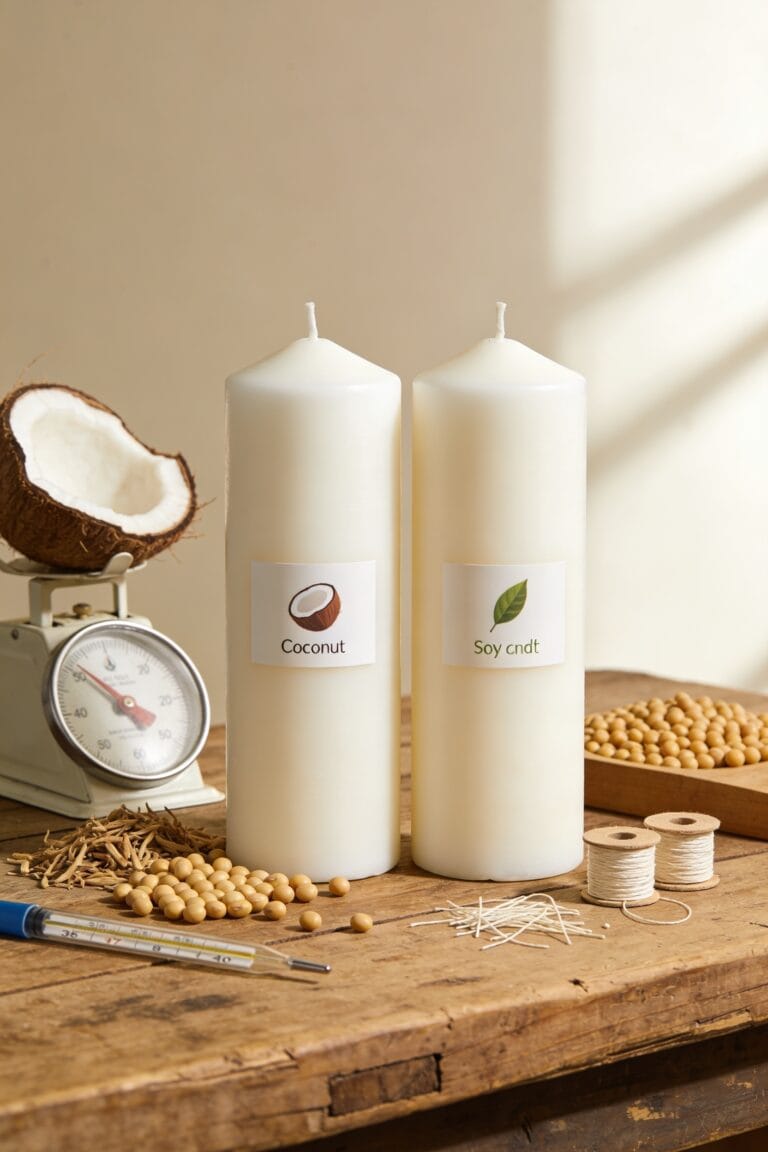
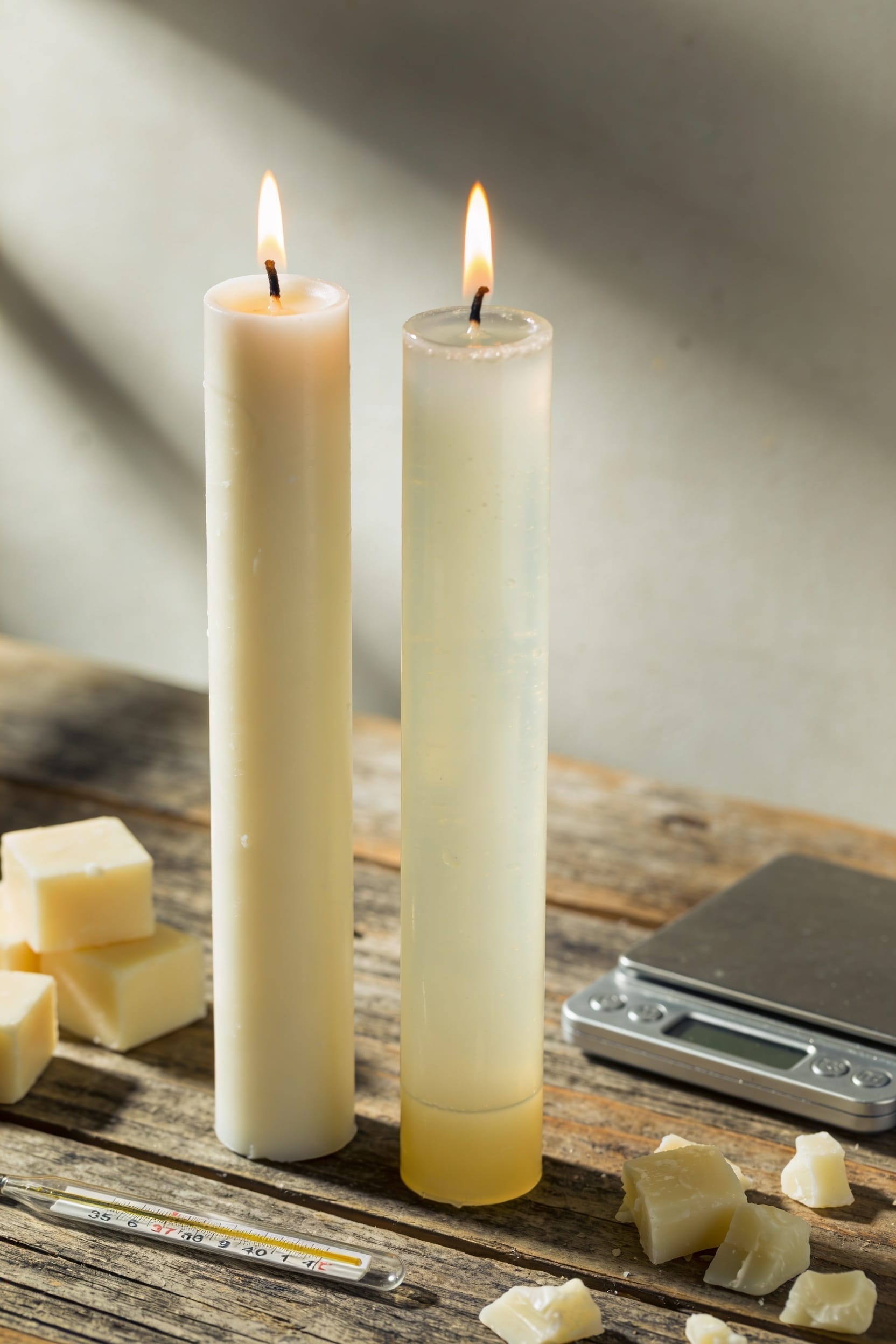
When you’re shopping for candle wax, burn time probably isn’t the first thing that pops into your head—but it should be, because it’s one of the biggest practical differences between soy and paraffin. Soy wax burns 30-50% longer than paraffin, thanks to its higher density requiring more heat retention to fully consume. That means a 30-hour paraffin candle becomes a 40-50 hour soy candle at the same size. Paraffin melts faster with its lower melting point, leading to quicker consumption overall. If you’re pairing soy with longer wicks, you’ll notice an even more dramatic difference in longevity. Sure, wick size and additives affect burn rate, but soy typically delivers that extended performance you’re after.
Recommended Products

Elegant Rose Design: Handcrafted rose shaped soy wax candles topped with real dried flowers — perfect for weddings and romantic events.

Professional Wax Melter for Candle Making or Soap Making, Melter 3 Gallon Stainless Tank, Extra Deep for Your Larger Batches Of Candles or Soap, This Has Been Designed From Customers Requests and is Unlike Other Competitors.

100% Pure Beeswax Candle: Hand-poured from naturally filtered beeswax for a rich, golden glow. These clean burning candles are free from paraffin, soy, and synthetic fragrances. Each 1-wick dripless pillar candle features natural cotton candle wicks and pure candle wax for a long-lasting burn and warm, cozy candle light.
Scent Throw: Why Paraffin Hits Harder, Faster
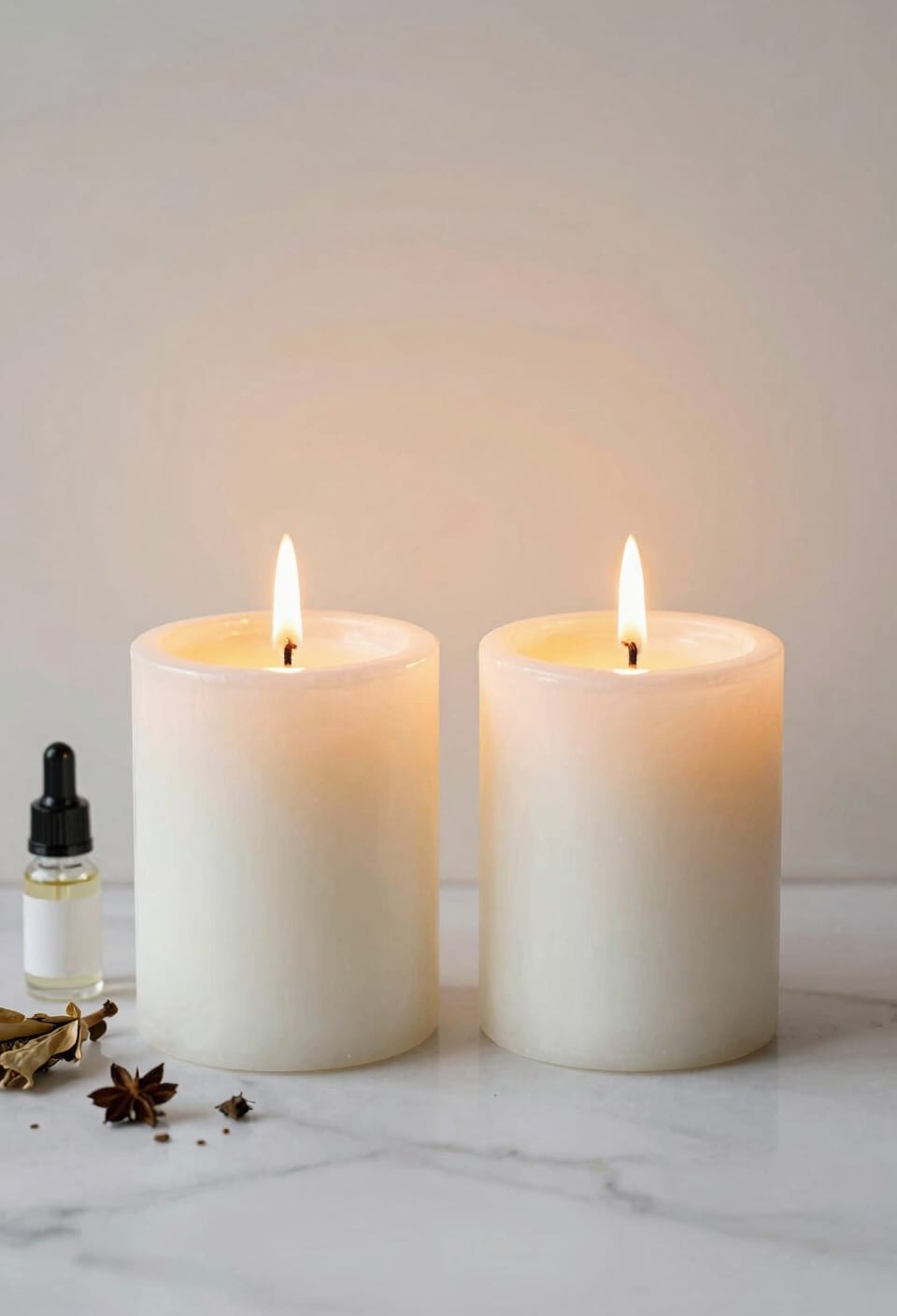
If you’ve ever lit a paraffin candle and had the scent hit you like a wall before you even finished walking away, you’ve experienced what we call scent throw—basically, how effectively a candle releases fragrance into the air around it. Paraffin wins here, hands down. Its less dense molecular structure releases fragrance faster and stronger initially, like a diffuser comparison where one kicks in immediately while the other ramps up gradually. That said, fragrance chemistry matters too. Paraffin excels at holding and throwing scent right away, making rooms smell incredible fast. Soy’s gentler approach means slower, more ambient fragrance release. You won’t get that instant wow factor, but the scent lingers longer. It’s a trade-off worth considering based on what matters most to you.
Recommended Products

The information below is per-pack only

NATURAL SOY WAX BEADS - Best candle making supplies make the best soy candles! These safe, ethically produced, microwavable and paraffin-free soy wax beads are smooth and creamy in appearance, perfect for votives, pillars, tealights, tarts and melts.

All-In-One Starter Kit – Everything you need to dive into candle making! Our Etienne Alair soy candle wax for candle making includes 50 lbs of smooth soy wax flakes, 100 cotton wicks, 100 adhesive stickers, and 2 centering tools. Perfect for beginners or seasoned DIYers.
Soot and Air Quality: The Cleaner Wax Choice
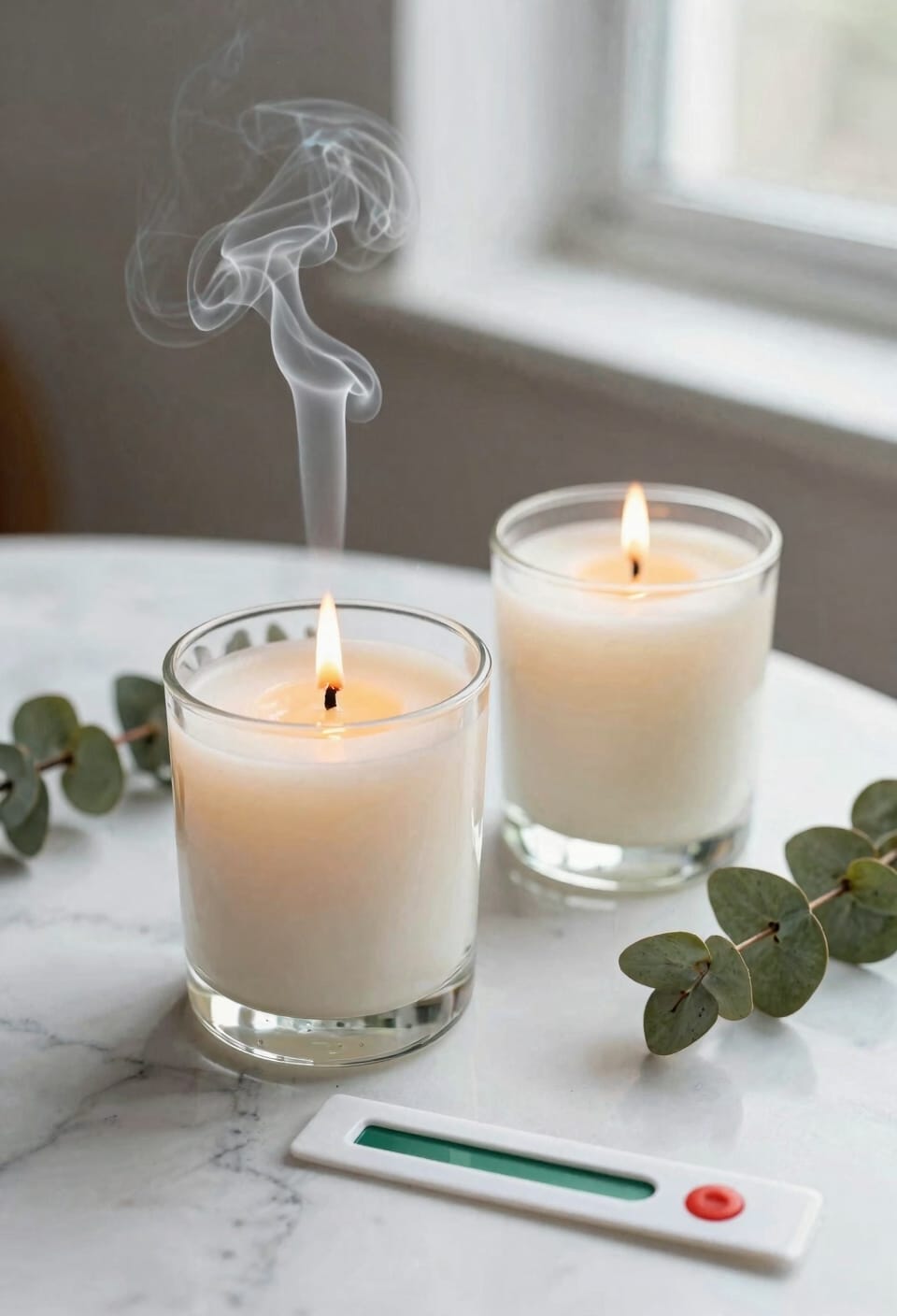
Now here’s where the conversation shifts from how your candle smells to what it’s actually releasing into the air while it burns. Paraffin produces markedly more black soot than soy—we’re talking visible residue that’ll stain your jar, walls, and curtains if you’re not careful. I’ve seen it happen. Soy burns cleaner with minimal soot buildup, which matters if you’re sensitive to indoor allergens or just don’t want that grimy film everywhere. Beyond aesthetics, paraffin emits alkanes and toluene compounds that can compromise air quality, especially for people with respiratory concerns. Soy avoids fossil fuel derivatives entirely. Here’s my practical take: improve ventilation strategies regardless of your wax choice—trim wicks to a quarter inch and make certain proper airflow. But if air quality matters to you, soy’s the smarter pick.
Why Soy Costs More (And Whether It’s Worth It)
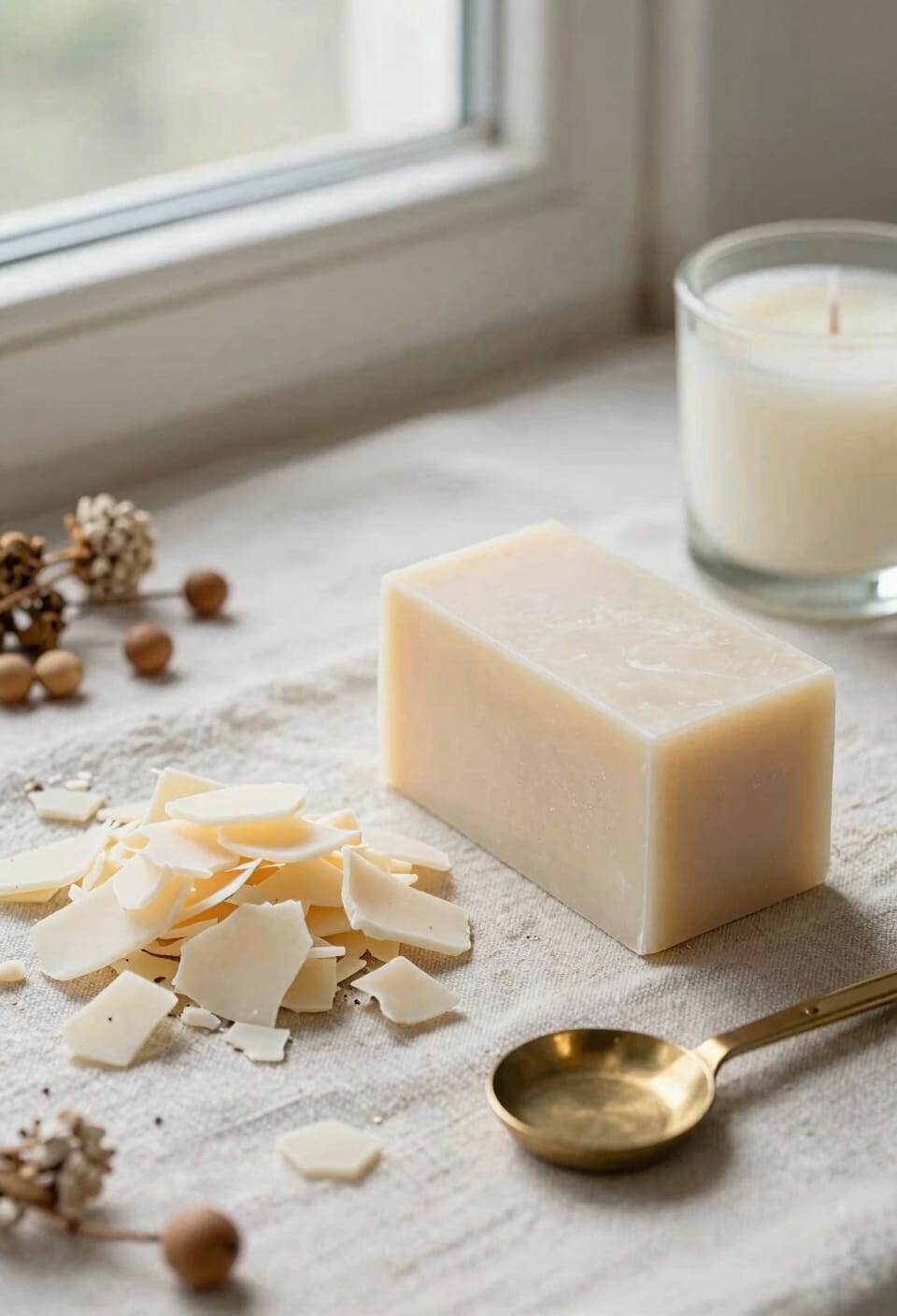
Pull back the price tag on a soy candle and you’ll notice it costs considerably more than paraffin—sometimes double—and that sticker shock stops a lot of people cold. Here’s the thing: soy comes from soybeans, a natural crop, so supply volatility matters. Bad harvests, weather, commodity prices—they all ripple through your final cost. Paraffin’s petroleum-derived, consistent, cheap to refine batch after batch. Now, is the premium worth it? If you’re burning longer (soy goes 40–50 hours versus paraffin’s 30), producing less soot, and running marketing strategies around sustainability and cleaner air, your customers often justify paying more. You’re not just selling wax; you’re selling conscience. That narrative sells.
Recommended Products

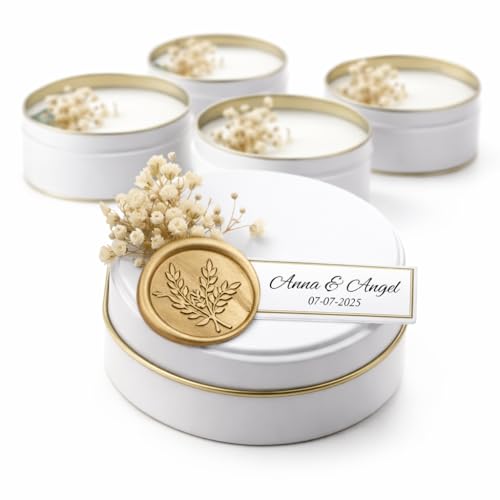
Elegant Wedding Candle Favors: Hand-poured soy candles with mini bouquets — perfect for weddings, showers, and engagement parties.

SCENT - Chamomile Lavender features lavender with warm & enveloping bergamot. Calming chamomile melts into a heart of eucalyptus to create a feeling of well-being. Smoky patchouli is enhanced by hints of sage & rosemary for a quiet, relaxing finish.
Soy or Paraffin: Match Your Priority
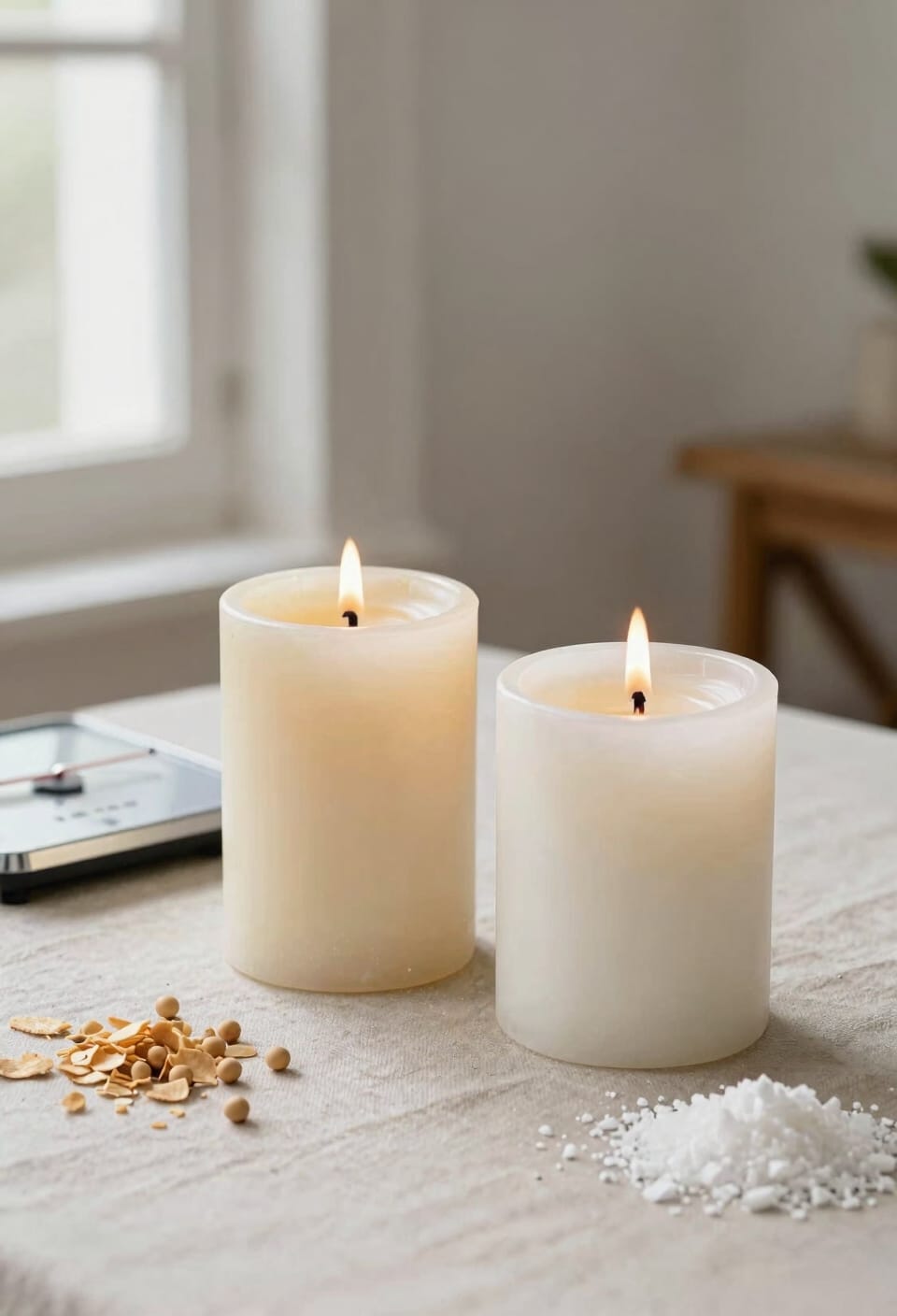
Since you’re standing in front of a supplier catalog or scrolling through wax options online, you’ve got to decide what matters most to your candles—and honestly, that’s where soy and paraffin split hard.
Pick paraffin if you want stronger scent throw and affordability. It’s straightforward, consistent, and your wallet won’t take a hit. But if ethical sourcing and allergy considerations matter to you, soy’s your move. You’re getting renewable, cleaner-burning wax that won’t fill your space with petroleum-derived emissions or soot staining your jars.
Consider your customers too. Are they sensitive to strong fragrance, or do they want that immediate punch? Long burn time or quick candle use? There’s no wrong choice—just the one that aligns with your actual priorities.
Recommended Products

Industrial 67 Lbs Capacity Wax Melting Pot Pro Package Model: Includes Large Spout, Lid, Pouring Pot, Stirring Spoon. Cutting-edge technology ensures rapid melting of soy wax, paraffin, coconut, and beeswax for efficiency. It's perfectly suitable for most Wax types and Melt & Pour soap bases. Its user-friendly temperature guage allows temperature adjustment from from low to high temperature which maintains roughly 100 - 350 degrees Fahrenheit.

65 LBs Capacity Wax Melting Pot Pro Package Model: Includes Large Spout, Lid, Pouring Pot, Stirring Spoon. Cutting-edge technology ensures rapid melting of soy wax, paraffin, coconut, and beeswax for efficiency. While it can't be used for lye soap making due to aluminum's reactivity with lye, it's perfectly suitable for Melt & Pour soap bases. Its user-friendly temperature guage allows temperature adjustment from from low to high temperature which maintains roughly 100 - 350 degrees Fahrenheit.

You know it as: Pearled Wax, Pearled Candles, Candle Pearls, Pearl Wax, Candle Powder, Granulated Natural Plant Based Wax.
Frequently Asked Questions
Can I Mix Soy and Paraffin Wax Together in One Candle?
Yes, you can mix soy and paraffin wax together. I’d recommend wax blending for your specific needs. You’ll want performance testing to find the right ratio that balances burn time, scent throw, and cost for your candles.
Does Soy Wax Work With All Fragrance Oils and Essential Oils?
Soy wax doesn’t work with all fragrance oils, though studies show it retains scent longer than paraffin. I’d recommend checking fragrance compatibility before use, as oil dilution rates vary markedly between premium oils and budget alternatives.
How Do I Reduce Soot Production From Paraffin Candles at Home?
I’d recommend trimming your wicks to a quarter-inch and improving ventilation in your room. These simple steps reduce soot buildup markedly. You’ll notice cleaner burning and less black residue on your jar walls.
Are Soy Candles Safe for People With Asthma or Allergies?
Yes, I’d recommend soy candles for asthma sufferers. A 2002 study showed paraffin produces considerably more soot—I find this alarming. Soy’s hypoallergenic formulation and cleaner emissions, combined with proper indoor ventilation, make them genuinely safer.
Can Paraffin Candles Be Recycled or Disposed of Sustainably?
I’d say paraffin candles aren’t easily recyclable since they’re petroleum-based. You can try reclaiming containers for reuse, but municipal disposal typically means throwing them away—they’re not sustainably disposable like soy alternatives.
Conclusion
Look, I’ve burned through enough wax to know there’s no perfect candle—just the one that matches what you actually care about. Want your room smelling like a fancy hotel? Paraffin’s your friend, soot be damned. Prefer guilt-free burning that lasts forever? Soy’s worth the price markup. Me? I’m Team Hybrid now. Because apparently I’ve learned nothing except that compromise exists.